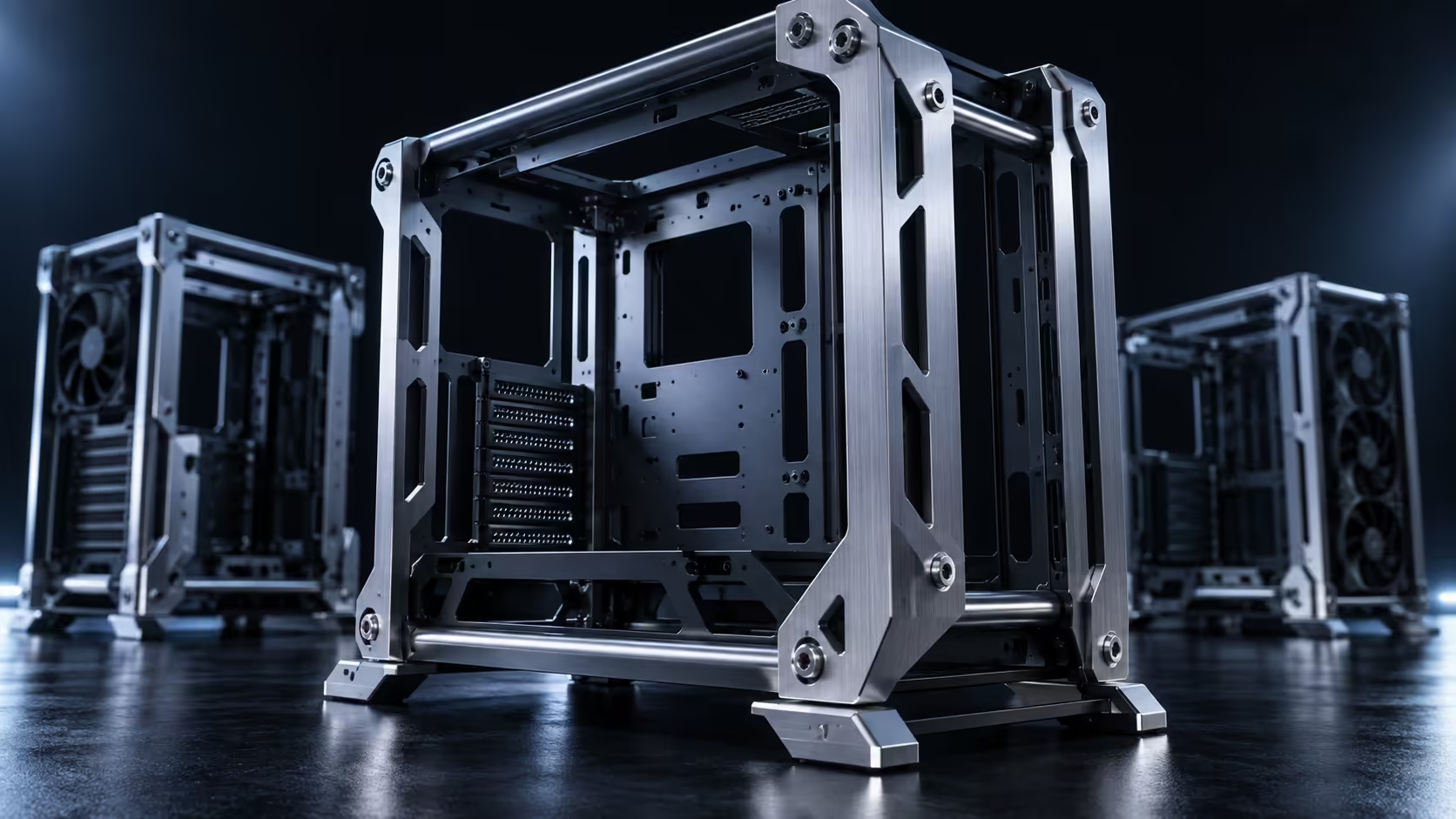
Not all aluminium is the same aluminium, and a case's marketing copy rarely says which alloy family it actually used. An aluminium-alloy PC case frame is a specific engineering choice, not a generic material label, and the differences between alloy grades explain why one open frame flexes noticeably under load while another, built from the same base metal, does not.
Quick Answer
An aluminium-alloy case frame mixes pure aluminium with small amounts of other metals, commonly a 6000-series formulation, to gain strength without losing most of the weight advantage. That trade lets an open frame use a genuinely thick, rigid section, close to 4mm, at a weight steel of the same thickness could not match. The R15,999 ROG GR20 Edition 20 uses exactly that approach, since a structure with no side panels has to hold its own shape without any bracing to help.
🔩 What "alloy" actually adds
Pure aluminium is soft, too soft on its own to hold a structural frame's shape under load. Case manufacturers use aluminium alloys, aluminium mixed with small amounts of other metals such as magnesium or silicon, specifically to raise strength while keeping most of aluminium's weight advantage intact.
The 6000-series alloys, commonly used in extruded case frames and computer hardware generally, balance strength, weight and machinability well, which is why they turn up repeatedly across the industry rather than a single manufacturer inventing something proprietary. A case built from a well-chosen alloy in a genuinely thick section, close to 4mm on a frame with no side panels bracing it, stays true under everything hung off it, a board, a full-length card, a loaded radiator, far better than a thinner section of the same alloy family manages.
⚖️ Strength versus weight, quantified
Aluminium alloys land at roughly a third of steel's weight for a given volume, which is the entire reason an open frame favours the material: a structure with no panels bracing it needs real thickness to stay rigid, and steel at that thickness would make the frame heavier than most builders want to lift, tilt into an angled stance, or mount at all.
That weight saving is not free. Aluminium alloys are generally softer than steel at a comparable thickness, meaning a dropped tool or a dragged cable clip marks the surface more readily, and threads cut into aluminium can strip at perhaps 40 percent less torque than the same thread would tolerate in steel. Both are manageable with reasonable care; neither disappears just because the frame looks solid.
🌡️ Thermal expansion: the detail almost nobody mentions
Aluminium expands and contracts with temperature roughly 60 percent more than steel does for the same size of part, which matters more on an open frame than a closed case because the frame itself, rather than internal panels, is what everything else is screwed to. In practice this rarely causes a visible problem in a home environment, since the temperature swing a PC case actually experiences day to day, perhaps 20C to 40C from a cool room to a machine running flat out, is nowhere near large enough to meaningfully shift screw alignment.
It is worth knowing about mainly because it explains why a frame that felt perfectly snug on a cool morning can feel marginally different after hours of running warm, and why over-tightened screws on an aluminium frame are more likely to bind slightly as the metal shifts, rather than because anything is actually wrong with the build.
🔧 Build considerations that come from the material choice
Torque matters more here than on a steel case. A screw driven with the same force you would comfortably use on steel can strip an aluminium thread, particularly on a frame using thread inserts rather than tapped holes directly into the alloy itself. Ease off as soon as resistance builds, rather than chasing one more turn purely out of habit.
Grounding is worth a specific mention on an open frame. Aluminium conducts electricity as well as steel does, and a frame that is not properly grounded through its standoffs and case connections can, in rare cases, let a static discharge well past 2000V reach a component during a build. Standard anti-static precautions, working on a hard surface, touching an unpainted metal part of the frame before handling components, cover this adequately and are worth treating as routine rather than optional on any open build.
📏 Matching frame thickness to board size
A larger board size generally wants a thicker frame section to stay rigid, since more of the board's mass and the components mounted to it, memory, a full-length card, a heavy cooler, are unsupported by anything other than the frame itself. An EATX-capable full-tower built in aluminium typically uses a thicker extrusion than a compact Mini-ITX open frame needs, simply because there is more weight to carry across a longer unsupported span.
Compare frame thickness figures directly when shopping rather than assuming two aluminium cases at a similar price use the same grade or section size, since the mid-tower range includes both thin decorative aluminium trim pieces and genuine structural frames, and the two are not interchangeable despite sharing a material name.
A quick way to sanity-check this in a showroom or from photos is to look at how thick the material appears at an edge or a cutout. A trim piece reads paper-thin at the edge; a genuine structural section has visible depth even in a photograph, which is a reasonable proxy for the real number when a listing does not state it plainly.
Frequently Asked Questions
What does "alloy" mean on a case spec sheet?
It means the aluminium is mixed with small amounts of other metals, commonly in a 6000-series formulation, to raise strength while keeping most of pure aluminium's weight advantage.
Does thermal expansion cause real problems in a home PC?
Rarely. The temperature range a case experiences day to day is far too small to meaningfully shift screw alignment, though it explains minor differences in feel between a cool and a warm frame.
Why does torque matter more on aluminium than steel?
Aluminium threads strip more easily under excessive force, particularly where a frame uses thread inserts rather than tapping directly into the metal.
Is grounding a special concern on an aluminium open frame?
Standard anti-static precautions cover it adequately. Aluminium conducts as well as steel, so proper grounding through standoffs and case connections is routine good practice rather than an unusual extra step.
Ready to judge an aluminium frame by more than its material name?
Check thickness, alloy grade and grounding before assuming two aluminium cases are equivalent.