Ever tried drawing a perfectly straight line with your mouse, only for it to look like a seismograph reading during a tremor? You’re not alone. Many South African creatives and even some gamers struggle with this. But what if your mouse had a hidden feature to fix it? Enter angle snapping, a little-known setting that could be the secret weapon for your digital toolkit. Let's dive in.
So, What Exactly Is Angle Snapping?
Think of angle snapping—sometimes called line correction—as a digital ruler for your cursor. It’s a clever bit of firmware built into a mouse's sensor that predicts your hand's movement. When it detects you're trying to make a straight line, it smooths out the tiny, unavoidable jitters and deviations, "snapping" your cursor's path to a perfect horizontal or vertical axis. 📐
This isn't magic; it's just smart processing. The quality of this feature often depends on the sophistication of the internal gaming mouse components, with high-end sensors offering more subtle and configurable correction.
The Artist's Edge: Why Creatives Love It
For digital artists, graphic designers, and CAD professionals, angle snapping is a massive productivity boost. Imagine you're a designer in Cape Town finalising a logo, or an architect in Joburg drafting a floor plan. You need crisp, clean lines, not wobbly approximations.
With angle snapping enabled, you can:
- Draw flawless straight lines for technical illustrations.
- Create perfectly aligned shapes and selections in Photoshop or Illustrator.
- Achieve a cleaner, more professional finish on digital paintings.
It takes the frustration out of precision work, allowing you to focus on your creativity. For this kind of stability, many pros still rely on the consistent connection of wired mice.
Check Your Software
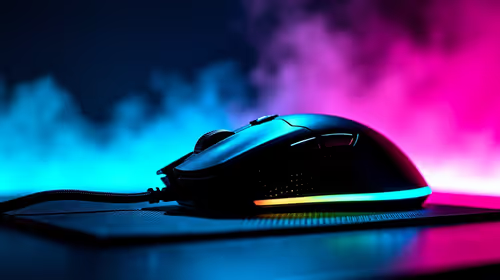
Most modern gaming mice from brands like Logitech, Razer, or SteelSeries allow you to toggle or even adjust the intensity of angle snapping. Dive into your mouse's control software (like G Hub or Synapse) and look for it under the sensor or performance settings.
What About Gaming? The Great Debate ⚡
Here’s where things get interesting. While artists praise angle snapping, most competitive FPS gamers in South Africa and beyond turn it off immediately. Why? Because the same correction that helps draw a straight line can hinder aiming.
When you're trying to track an enemy's erratic movement in Apex Legends or make a micro-adjustment for a headshot in VALORANT, you want raw, unfiltered input from your mouse. Angle snapping can interfere with these tiny diagonal movements, making your aim feel slightly "off" or sluggish. However, if you're not a pro and just want a slightly smoother experience, leaving it on might not be a bad thing. The freedom of movement offered by today's lag-free wireless mice makes testing this for yourself easier than ever.
How to Optimise Your Setup
Whether you decide to use angle snapping or not, getting the most out of your mouse comes down to a complete setup. The surface you use is just as important as the sensor itself. A high-quality mousepad provides a consistent and predictable glide, ensuring your sensor tracks accurately. ✨
If your mousepad is worn, frayed, or just a piece of paper on your desk, you're not getting the performance you paid for. Investing in proper mouse accessories can make a world of difference to both your creative work and your K/D ratio.
Find Your Perfect Stroke of Genius
Whether you need pixel-perfect precision for your art or raw input for the win, your mouse matters. Explore our incredible best gaming mouse deals at Evetech and find the perfect tool for your craft.