Quick Answer
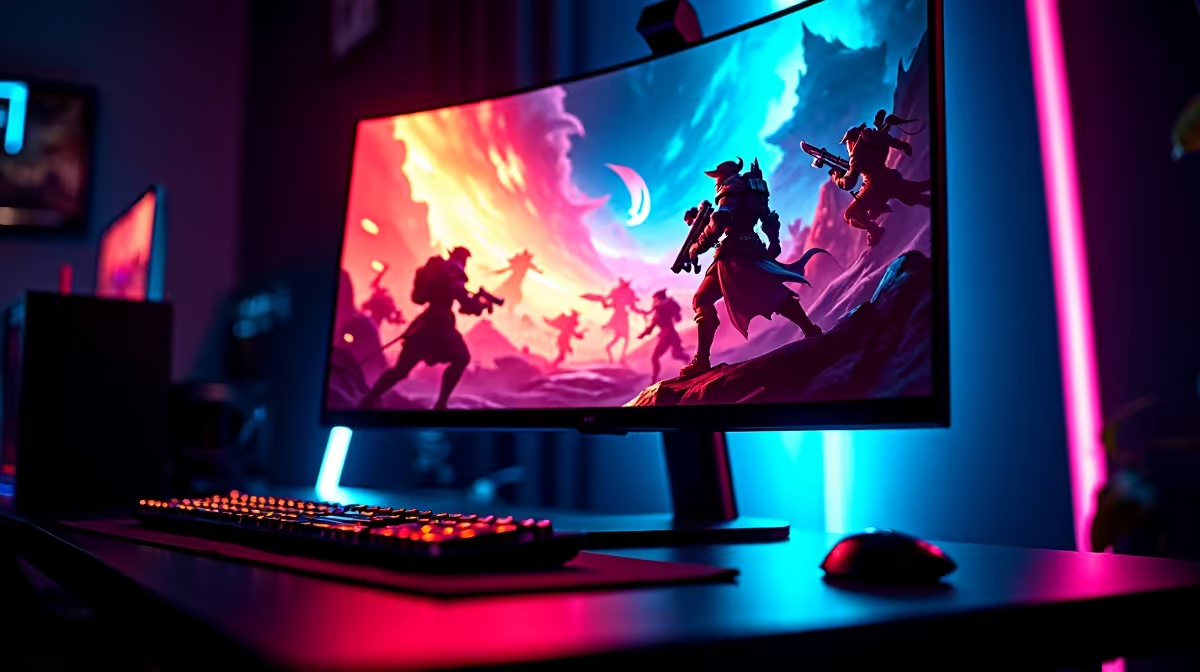
For competitive Dota 2, a 1440p 165Hz or 240Hz IPS monitor is the esports sweet spot. A 1440p 165Hz IPS panel runs near R6,500 and a 1440p 240Hz IPS near R9,000-R12,000; both stay fed since Dota runs past 144fps on a Ryzen 5 7600 and RTX 4060-class GPU.
Why These Specs Win for Competitive Dota
Competitive Dota rewards a clear, detailed screen for tracking spells and team fights, plus smooth motion for reactions. A 1440p panel shows more battlefield detail than 1080p, and 165Hz to 240Hz refresh keeps animation sharp. Look for a 1ms GtG response time to minimise smearing, and low input lag in the low single-digit milliseconds. FreeSync or G-Sync support removes tearing at the high frame rates Dota produces, keeping the picture clean during chaotic fights.
Picks, Pricing and Build Pairing
A 1440p 165Hz IPS monitor near R6,500 is the value competitive pick; a 1440p 240Hz IPS near R9,000-R12,000 is the top tier for players chasing every reaction advantage. Dota runs comfortably past 144fps at 1440p on a Ryzen 5 7600 and RTX 4060-class GPU, so a stronger card only widens the margin. Choose an IPS panel for colour and viewing angles, and enable adaptive sync for tear-free motion.
FAQ
Is 240Hz worth it for competitive Dota 2?
For players chasing every reaction edge, yes. The smoother motion helps in fast fights. Many competitive players are equally well served by a 165Hz panel.
What resolution suits competitive Dota 2?
1440p. It shows more battlefield detail than 1080p for tracking spells and units, and capable builds drive Dota at 1440p well past 144fps.
What FPS will my build reach in Dota 2?
A Ryzen 5 7600 with an RTX 4060-class GPU pushes Dota past 144fps at 1440p, so a 165Hz or 240Hz monitor stays fully fed during gameplay.
Dota 2, a 1440p 165Hz IPS panel hits the value sweet spot; step to 240Hz only if you chase every last reaction advantage.