Quick Answer
Built-in GPU braces integrated into premium cases are better for most builders: they adjust cleanly, match the case aesthetic, and position the support arm at the ideal point under the GPU without improvised mounting. Aftermarket GPU supports are a practical alternative for existing builds where the case has no brace and adding one prevents PCIe slot stress on heavy cards like the RTX 5090 or RX 9070 XT.
How Built-In GPU Braces Work 🔧
Integrated GPU braces are factory-installed vertical rails or adjustable arms inside the case chassis, positioned to contact the underside of the installed GPU. Most designs use a rubber-tipped height-adjustable screw that rises to contact the GPU heatsink without lifting the card.
Premium cases from brands stocked at Evetech in the R2,500 to R5,000 range increasingly include integrated braces as a standard feature rather than an accessory. The advantage is that the brace is designed for the specific case geometry: the arm travel, the mounting angle, and the pad material are all calibrated to the case's interior dimensions.
Aftermarket GPU Supports: Options and Limitations 🛠️
Aftermarket GPU support brackets come in three main styles. Wire-hook designs attach to the PCIe slot and hang a hook under the GPU far end; they work but add visible wire to showcase builds. Magnetic pole designs stand vertically and use a magnetic pad to hold the GPU without touching it with a hard tip.
Cost in South Africa runs R120 to R350 for basic aftermarket supports. The limitations are that they may not align perfectly with every GPU length (RTX 5090 partner cards reach up to 380mm, which stretches some support designs), and the aesthetic can clash with showcase case builds.
Which Protects Better for Very Long and Heavy GPUs 💪
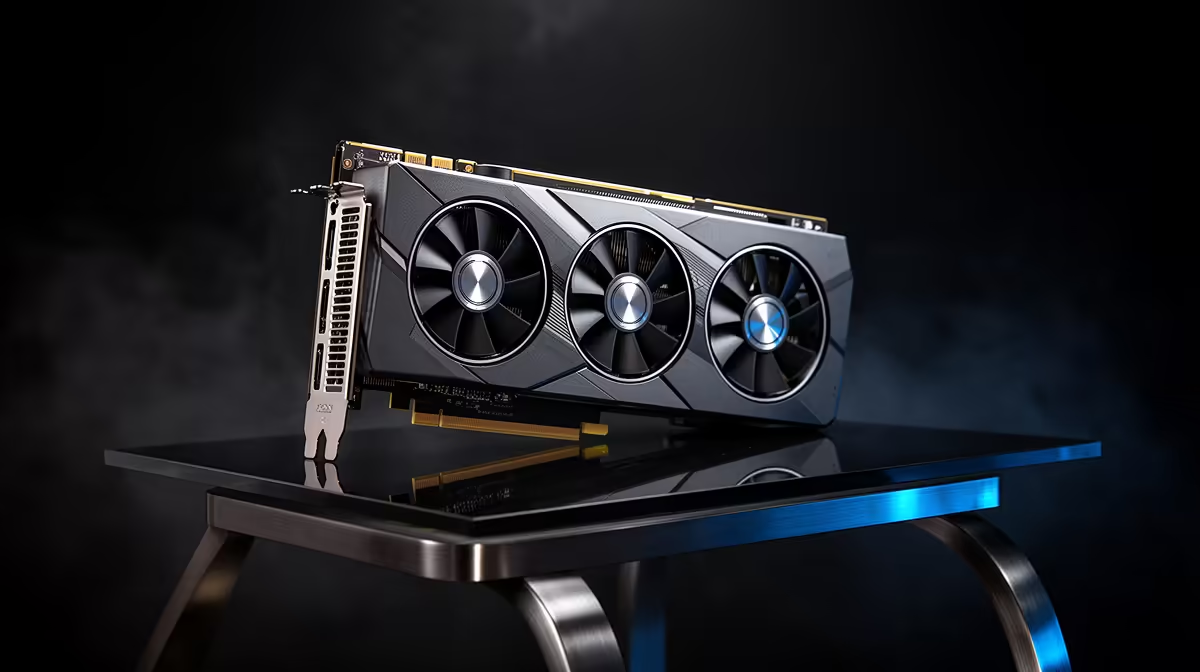
For RTX 5090 Founders Edition and partner cards weighing 1.8kg to 2.3kg, the built-in brace wins on protection. The integrated design allows you to position the support pad directly under the heatsink mid-point for maximum load distribution. Aftermarket hook-style supports contact only the far end of the card, which is better than nothing but leaves the mid-span of the card unsupported where flexion forces are highest.
For more moderate cards like the RTX 5070 or RX 9070 (which weigh around 900g to 1.2kg), both approaches protect the PCIe slot adequately and the choice comes down to case aesthetics and budget.
Check Before You Route Cables ⚡
Install your aftermarket GPU support or set your integrated brace before routing and tying down PSU cables. If you route cables first and then discover the support arm conflicts with a cable bundle near the PCIe area, you will need to untie and re-route. Setting the brace position first saves 20 to 30 minutes of rework.
FAQ
Do I need a GPU brace for a card under 1kg?
Not urgently. PCIe slots are rated for several kilograms of force, and cards under 1kg rarely cause slot damage over normal desktop use. However, if the PC is transported frequently or sits on a surface with vibration, even lighter cards benefit from some support.
Can an aftermarket GPU brace damage my card?
Only if the brace tip material is hard metal or abrasive and it contacts the GPU PCB directly rather than the heatsink base. Always ensure the contact point sits under the heatsink base plate, never touching circuit board components. Rubber or felt-tipped designs are safe when positioned correctly.
Will a GPU brace void my graphics card warranty?
No. A GPU brace does not modify the card, remove any seals, or affect internal components. It is an external physical support that contacts the heatsink shroud. It has no bearing on manufacturer warranty.
Running a heavy GPU and need sag protection?
Browse PC cases with integrated GPU braces and aftermarket support options at Evetech, stocked locally for fast delivery across South Africa.