


PCIe 5.0 vs PCIe 4.0 for Strategy and Sim Games in SA
PCIe 5.0 and PCIe 4.0 differ most in lane support, compatibility, and upgrade value for strategy and sim games. SA buyers should match the choice to their actual hardware and games.
Read moreShort answer: a 420mm AIO pulls 4-6C off a Core i9 or Ryzen 9 at full all-core load. For the answer depends on workload more than budget, and we break it down below. Inside: radiator size, fan choice, and SA ambient notes.
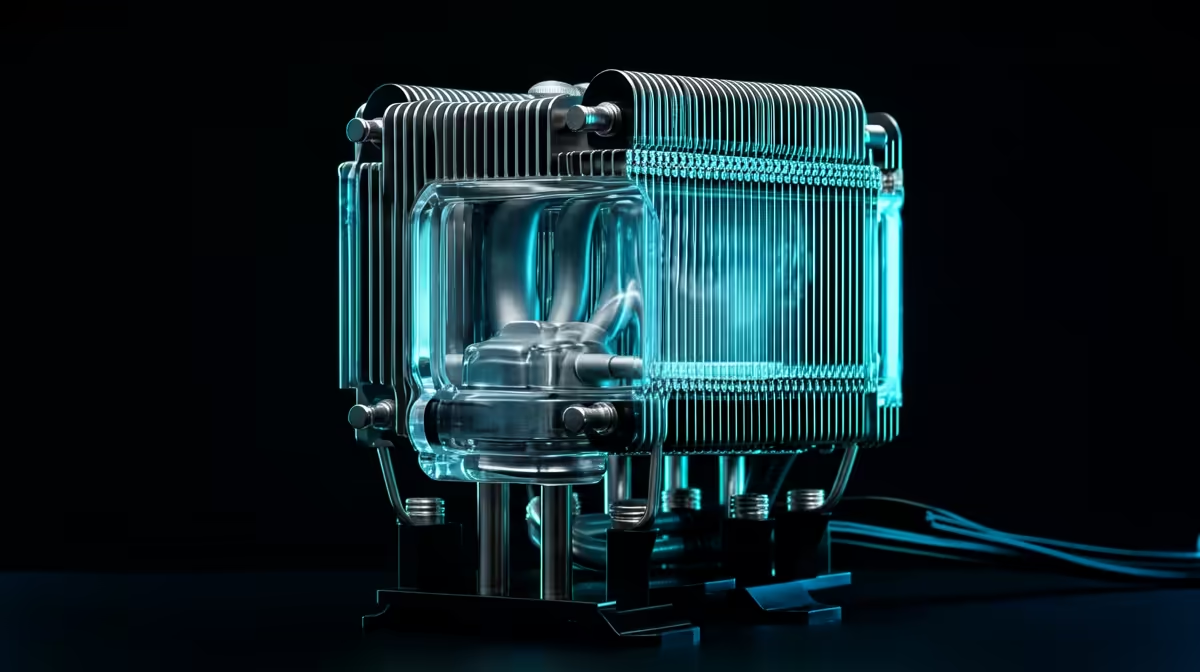
A 420mm AIO (three 140mm fans) fits in most full-tower and a limited number of large mid-tower cases that explicitly list 420mm radiator support. If your case specifications do not mention 420mm, assume it does not fit; do not rely on 360mm support as an indicator, since 420mm and 360mm use different fan hole spacing and dimensions.
A 420mm radiator measures 420mm in length and accommodates three 140mm fans, compared to a 360mm unit that houses three 120mm fans in the same configuration. The width is also slightly different: 140mm fans are 10mm wider per fan than 120mm fans, meaning the overall radiator body is physically larger in both dimensions. Cases designed for 360mm radiators often have mounting holes spaced at 120mm intervals, while 420mm radiators require 140mm fan hole spacing. Attempting to install a 420mm radiator in a position designed for 360mm will not align the mounting holes and cannot be forced without damaging the case.
Beyond the mounting hole pattern, physical clearance requires checking three dimensions. First, the radiator length must not exceed the available mounting rail dimension in your case. Second, the radiator thickness plus fan thickness must fit within the internal case dimension without conflicting with the motherboard, RAM sticks, or GPU power connectors. A standard 420mm radiator is 27mm thick; add two 25mm fans for push-pull and the total depth is 77mm, which is tight in many mid-tower cases. Third, if mounting at the top of the case, check that the radiator-plus-fan stack clears your tallest RAM heatspreader by at least 30mm to avoid contact.
Front-mounted 420mm radiators in full-tower cases occasionally conflict with drive bay cages positioned in the lower front of the case. Removing the drive cage frees the necessary length for a front 420mm position in many cases. Top-mounted 420mm radiators can conflict with tall ATX PSU shrouds or motherboard extension brackets. The pump head tubing connection point is another common conflict: rigid tubing on some AIOs exits the pump head at a fixed angle that works with specific radiator positions but binds or kinks with others.
Many case manufacturers publish detailed internal dimension diagrams in their product manuals, available for download on their websites. Cross-referencing the radiator mounting dimensions, fan hole spacing, and internal clearance measurements against the 420mm AIO's spec sheet takes 15 minutes and can prevent a costly incompatible purchase.
A small number of large mid-tower cases support 420mm front-mounted radiators; the Fractal Design Torrent and certain Phanteks cases are known examples. These are larger than typical mid-tower dimensions. Most standard mid-tower cases cap at 360mm. If compact footprint matters, a 360mm AIO in a well-supported case is a more accessible option.
Yes, measurably. The three 140mm fans move more air at lower RPM than three 120mm fans, and the larger fin area dissipates heat more efficiently. Under sustained load on a Ryzen 9 9950X, a 420mm AIO typically runs 4 to 8 degrees Celsius cooler than a 360mm at equivalent fan noise levels. This matters most for extreme overclocking and sustained rendering workloads.
Consider adding a push-pull fan configuration to your 360mm radiator, which closes roughly half the performance gap between 360mm and 420mm at the cost of three additional fans. Alternatively, upgrade to a case with 420mm support if the thermal headroom is genuinely required for your workload.
Checking whether a 420mm AIO fits your case? Browse the AIO cooler range at Evetech to compare 360mm and 420mm options alongside their case clearance requirements.
PCIe 5.0 and PCIe 4.0 differ most in lane support, compatibility, and upgrade value for strategy and sim games. SA buyers should match the choice to their actual hardware and games.
Read more
AM5 vs AM4 for video editing in 4K Difference explained is mostly about compatibility, budget, upgrade path, and setup fit. SA buyers should check device support and real needs before expecting a clear win from either option.
Read more
OLED vs QD-OLED for strategy and sim games buyers - what changes is mostly about compatibility, budget, upgrade path, and setup fit. SA buyers should check device support and real needs before expecting a clear win from either option.
Read more
DisplayPort 2.1 and 1.4 differences matter when SA PC builders match GPUs, monitors, and refresh targets. Use this difference between displayport 2 1 and displayport 1 4 explained pc builders guide to avoid mismatched parts.
Read more
Ray tracing vs Path tracing depends on Strategy and sim games needs, platform limits, and budget fit. Compare compatibility, latency, upgrade path, and real setup constraints before choosing for an SA build.
Read more
wireless mouse guide for Gqeberha gamers should be shortlisted around the job it must do. South African buyers should compare sensor, shape, weight, and wireless latency, warranty path, and upgrade room before treating any pick as best.
Read more
From 1 October 2026, WhatsApp Business Platform service replies in South Africa are expected to cost about $0.0076, or 12 cents, per delivered message.
DDR5-8000 RAM Kits pros and cons depend on the build, budget, and workload. Weigh gaming needs, platform fit, power, cooling, warranty support, and South African pricing context before shortlisting it.
Wi-Fi 6E vs Wi-Fi 6 depends on AAA single-player gaming needs, platform limits, and budget fit. Compare compatibility, latency, upgrade path, and real setup constraints before choosing for an SA build.
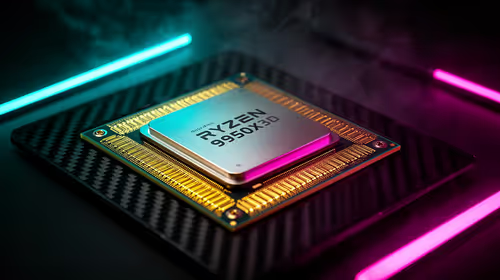
Ryzen 9 9950X3D dead pixel checks should isolate the panel first. Run colour fills, inspect the monitor menu, test another cable or input, and capture proof before linking it to the SA CPU upgrade.

YouTube will count public views from the first frame across video formats from 24 August, while earnings and eligibility remain tied to engaged viewing.
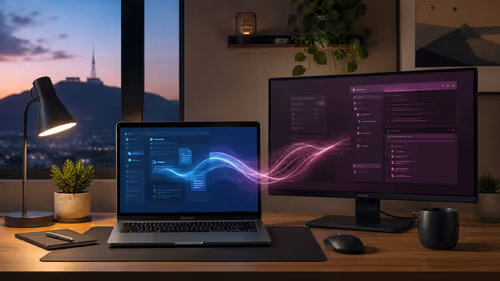
Canonical expects Ubuntu on WSL users to outnumber native Ubuntu desktop users before the end of 2026. The software is open source and runs inside supported Windows PCs.
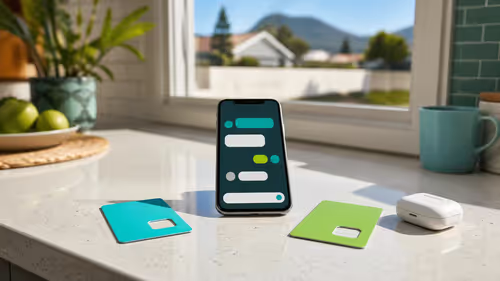
Telkom's daily bundles pair WhatsApp access with 10 all-network voice minutes. The R15 option includes 300MB, while the R17 option uses a fair-use threshold.
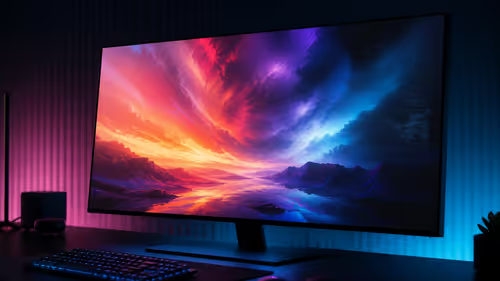
A 10,000-hour test found similar image retention across older and newer OLED TVs, while newer panels were brighter and more efficient. Local OLED monitors started at R9,999.
650W for RTX 5090 needs a full-build check, not a simple yes. Review GPU guidance, CPU draw, transient load, connectors, PSU quality, and upgrade plans before deciding.
PCIe 5.0 and PCIe 4.0 differ most in lane support, compatibility, and upgrade value for strategy and sim games. SA buyers should match the choice to their actual hardware and games.
How to fix FPS drops Windows 11 RX 9070 XT starts with GPU drivers, overlays, power plans, and frame pacing checks. For SA gaming PCs, verify chipset updates, HAGS, refresh rate, thermals, and per-game graphics settings.
AM5 vs AM4 for video editing in 4K Difference explained is mostly about compatibility, budget, upgrade path, and setup fit. SA buyers should check device support and real needs before expecting a clear win from either option.