Mag-Res TMR is a specific stick-sensing approach, not a promise that every control issue disappears. This guide to Cyclone 2 TMR stick features explains magnetic direction sensing, resistance to contact wear, calibration and physical care. The R999 GameSir Cyclone 2 includes TMR sticks alongside Hall triggers and its Smart Start-Stop dock.
Quick Answer
Mag-Res TMR sticks measure directional position magnetically and avoid the rubbing track used by standard potentiometer designs. This can improve resistance to contact-related drift. Evaluate the R999 Cyclone 2 through calibration, stable mechanics, sensible deadzone and observed consistency over time.
🧲 TMR measures stick direction magnetically
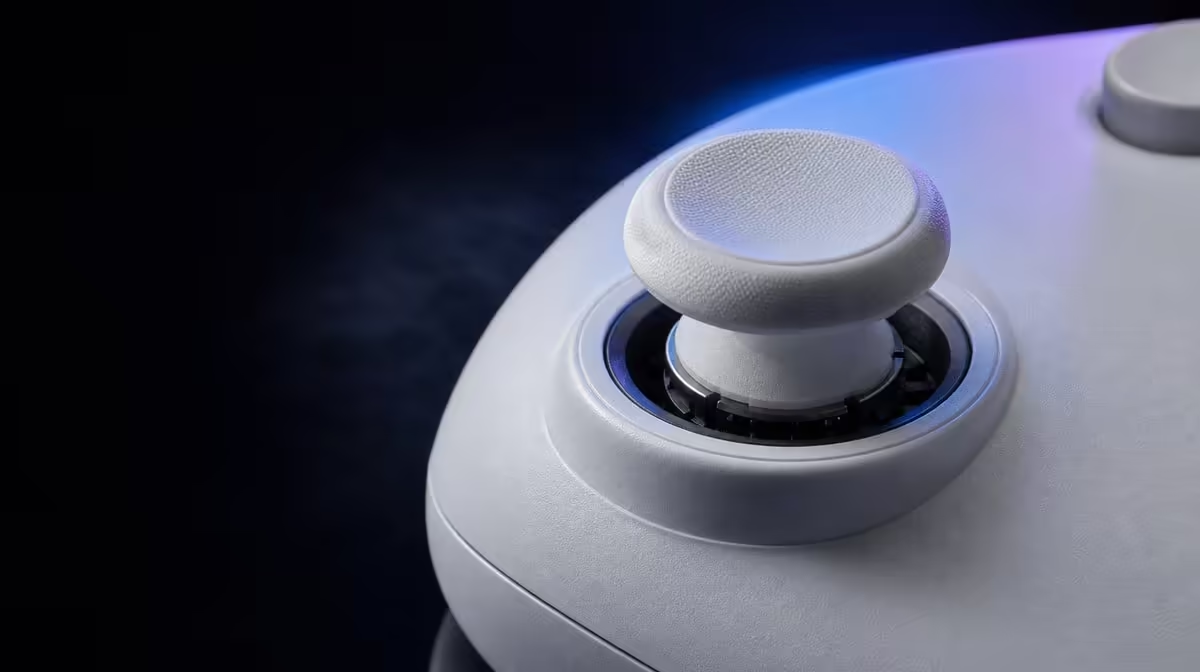
A controller stick moves across two axes around a central resting point. TMR sensing detects this changing position through magnetism rather than a conventional sliding contact.
Removing that rubbing measurement path is the central anti-wear benefit. The Cyclone 2 names its implementation Mag-Res TMR.
This does not mean the Hall analog triggers are TMR. They use another magnetic sensor approach for one-direction press travel.
The distinction matters because a stick and trigger have different neutral and range. A stick moves around a centre; a trigger begins released and travels in one direction. Do not apply trigger language to the TMR features.
Mag-Res is the Cyclone 2 name for its TMR implementation. It identifies the sensor approach without establishing an unsupported precision percentage.
The R999 package gives buyers a concrete way to judge TMR inside a complete controller rather than treating it as a laboratory component.
The Evetech gaming controller range lets buyers compare magnetic stick implementations inside complete products.
🎯 Precision requires a controlled baseline
Rest the controller on a stable surface, release both sticks and observe neutral. Make small corrections in four directions, then test the outer range.
Repeat the sequence. A single perfect return cannot establish lasting precision, while one poor movement may come from hand input or profile settings.
Keep connection, game sensitivity and deadzone fixed. A fair comparison changes only the stick or controller being evaluated.
Save the stable default before customising. If a later setting introduces overshoot, return to baseline rather than compensating with another adjustment.
Add a hold test near centre. Move to a small off-neutral position, keep the thumb steady and observe repeatability. Then release and confirm the return.
Repeat the sequence in another supported game if the first uses an unusual response curve. Software can shape the feel even when the magnetic sensor remains unchanged.
Keep the connection fixed throughout. A missed wireless command is not a TMR measurement result.
🛡️ Durability includes the mechanics
TMR avoids potentiometer contact wear, but the stick still contains moving mechanical parts. Debris, impact, storage pressure and centring behaviour can affect input.
Keep the controller clean and do not pack it with a stick held against another object. Recheck neutral after travel or a major profile change.
Use the included dock as a consistent resting point. Seat the Cyclone 2 correctly so charging and storage remain stable without awkward pressure on controls.
Before travel, protect both sticks from being held at an edge inside the bag. After arrival, recheck neutral before changing deadzone. This prevents a temporary pressure issue from becoming a permanent profile edit.
Clean externally and gently. Magnetic sensing does not make the surrounding mechanism immune to grit, moisture or impact.
Durability should be monitored through stable behaviour over time, not promised through a fixed lifespan figure. Keep baseline notes and compare them when a real symptom appears.
Browse Evetech gaming accessories once the control-care routine is clear.
🧭 Judge TMR in the full controller
Tri-mode and multiplatform support decide where the sticks can be used. Test each intended PC or Android combination rather than assuming identical response.
Hall triggers add graduated presses, customisable RGB adds visual preference and the Smart Start-Stop dock adds charging management. Keep those benefits separate from TMR precision.
Tri-mode value also depends on actual devices. Test default stick input on each host and preserve platform-specific profiles where response differs.
RGB can help identify those profiles, but the light does not change sensor data. The dock can protect storage routine, but the base does not make the stick more precise.
At R999, the Cyclone 2 offers a broad package. A buyer concerned with stick drift may value TMR highly, while someone with an unsupported host should end the shortlist despite the sensor.
Create an unequal scorecard: compatibility, neutral consistency, fine control, full range, connection and charging. TMR contributes strongly to the stick rows but not to every row.
The final TMR feature is therefore not a single performance claim. It is a magnetic measurement path that should be judged through repeatable input, correct calibration and the rest of the controller.
Build a baseline record containing host, connection, game, neutral, fine movement and outer range. The record gives future comparisons a starting point and prevents memory from exaggerating change.
Repeat it after transport or a significant profile edit. If only one game differs, inspect its response settings. If only one connection drops commands, diagnose that route. If neutral changes everywhere, return to calibration and physical checks.
Do not convert a small offset immediately into a large deadzone. Identify the cause first, then adjust in small steps while preserving fine control.
At R999, Mag-Res TMR sits inside a package with Hall triggers, tri-mode support, RGB and the included smart dock. Buyers should appreciate the sensing feature while still requiring the whole controller to fit their devices and games.
Monitor durability through behaviour rather than prediction. Compare neutral and range only when a symptom appears or after a meaningful change, using the same test card. Avoid constantly adjusting a stable profile in search of theoretical perfection.
Score the feature by daily impact. Every movement and aim uses the sticks, giving TMR broad relevance. RGB or the dock may add value elsewhere, but they should not inflate the stick judgement.
The final lesson is practical: magnetic measurement strengthens the Cyclone 2 control foundation, while setup, mechanics and care determine how well that foundation serves the player.
The Evetech accessory favourites page can provide wider context after compatibility and stick response both pass.
Use the same TMR test when a new profile or game is introduced. Begin at neutral, add slow two-axis movement and finish with normal play. A consistent routine makes it easier to distinguish a title's response curve from the controller's sensing and mechanics.
Store the successful settings with the host and game name. The RGB cue can support recognition, but written profile details remain more dependable. This keeps the magnetic-stick assessment grounded after the controller moves through its tri-mode device plan.
Frequently Asked Questions
What does TMR measure?
It measures magnetic position as the stick moves across two axes around centre.
Why can TMR resist contact wear?
It avoids the conventional rubbing measurement path used by potentiometer stick sensors.
Does Mag-Res confirm a fixed precision figure?
No. The complete mechanism, calibration, software and test method still shape the result.
Can TMR sticks need calibration?
Yes. Magnetic sensing does not remove the need for a correct neutral baseline.
How much is the Mag-Res controller?
The Phantom White Cyclone 2 package costs R999 and includes its smart charging dock.
Ready to judge every TMR benefit with a clean baseline?
Compare magnetic-stick gaming controllers at Evetech and test neutral, fine response, full range and host support before choosing.