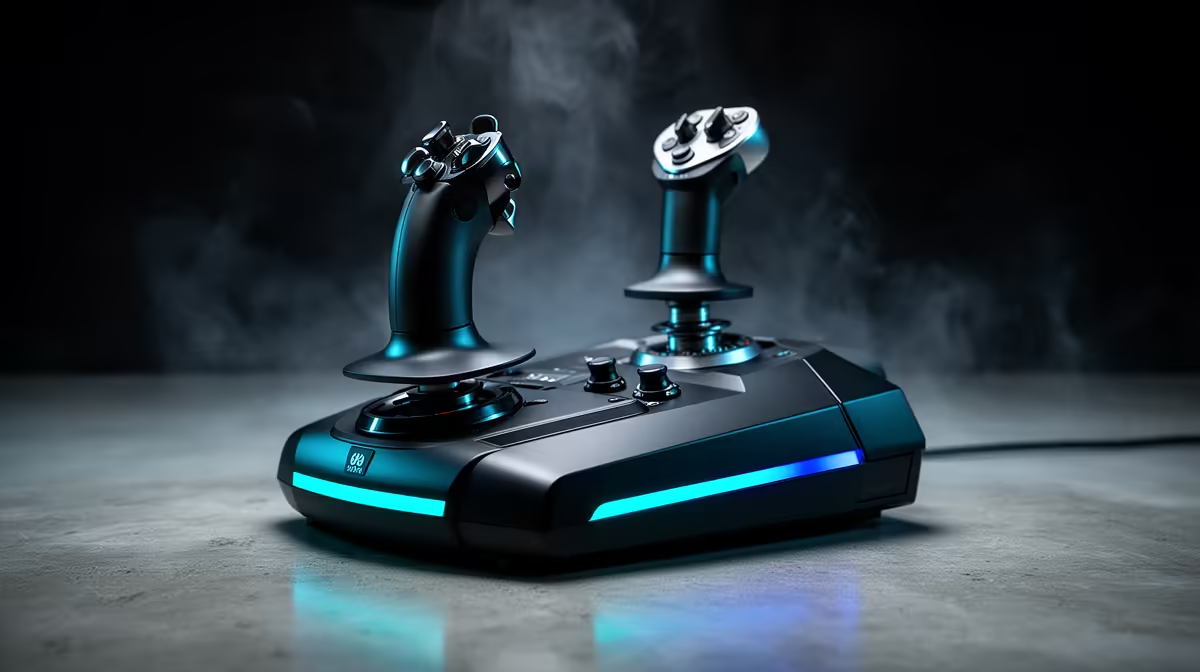
Ever felt like a passenger in your own cockpit? You’ve just landed a brand-new flight stick from Evetech, but your plane is drifting like a taxi in Friday afternoon traffic. Understanding your Flight Stick Axes: Simple Guide to Pitch, Roll, Yaw & Rudder is the difference between a smooth landing at Cape Town International and a costly repair bill in Microsoft Flight Simulator. Let's master the basics.
Mastering the Three Dimensions of Flight
In the world of aviation... and virtual dogfights... movement happens across three main axes. Unlike a car that only moves left or right, an aircraft operates in a 3D space. Your flight stick is the bridge between your hand and those complex physics. To get started, you need to ensure your flight simulator gear is calibrated correctly within your Windows settings. This ensures every slight nudge of the stick translates into a smooth movement on screen.
Pitch and Roll: The Foundations of Maneuverability
The most intuitive movements are pitch and roll. Pitch refers to the "up and down" movement of the aircraft's nose. When you pull the stick back, the elevators on the tail move, and the nose rises. Push forward, and you dive.
Roll is controlled by moving the stick left or right. This engages the ailerons on the wings, causing the plane to bank. If you find your movements feel jerky, it might be time to check your hardware. Many enthusiasts who enjoy sim racing often find that the transition to flight requires a much lighter touch... especially when banking into a tight turn over the Drakensberg.
Calibration Pro Tip ⚡
Always set a small "deadzone" (roughly 2-5%) in your flight sim settings. This prevents "ghost inputs" where your plane might slowly drift even when you aren't touching the stick. It is a lifesaver for older hardware or high-sensitivity sensors.
Yaw and Rudder: The Secret to Professional Precision
Yaw is often the most misunderstood axis. It is the left-to-right rotation of the aircraft on a vertical axis... think of it like a spinner on a table. In flight, this is controlled by the rudder. While some flight sticks allow you to "twist" the handle to control yaw, dedicated rudder pedals offer far more immersion.
If you are looking to build a full cockpit, investing in various simulation gear and accessories can help you separate these inputs. Using your feet for the rudder while your hands manage pitch and roll is how real pilots fly. It allows for "coordinated turns," ensuring your plane doesn't side-slip through the air.
Optimising Your Setup for Local Skies
Whether you are flying a bush plane or a fighter jet, precision is king. High-quality sticks use Hall Effect sensors which rely on magnets rather than physical contact. This means they won't wear out after a few hundred hours of flight time. In South Africa, where gear can be a significant investment in ZAR, choosing durable hardware is essential for long-term value. 🔧 🚀
Ready to Take to the Skies?
Mastering your axes is just the beginning of the journey. For the best precision, comfort, and value in South Africa, our curated selection of hardware is ready for takeoff. Explore our massive range of flight simulation gear and find the perfect tools to conquer the virtual heavens.