Staring at a wall of specs like "144Hz," "1ms GTG," and "FreeSync Premium" can feel more confusing than a last-minute loadout change in Warzone. You've built a beast of a PC, but are you seeing its true power? In South Africa, getting the right gaming monitor is the final, crucial step to unlocking buttery-smooth gameplay and vibrant worlds. This beginner's guide will explain those key gaming monitor specifications, turning you into a savvy buyer.
The Core Four: Resolution, Refresh Rate, Response Time & Panel Type
Understanding these four pillars is the foundation of choosing the right screen. Get these right, and you're 90% of the way to a perfect picture. These are the most critical PC monitors specs to get your head around.
Resolution: The "How Sharp" Spec ✨
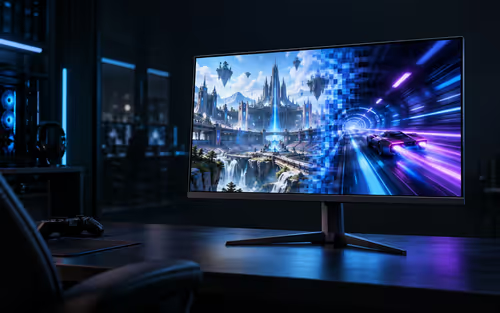
Resolution is the number of pixels on your screen, written as width x height. More pixels mean a sharper, more detailed image.
- 1080p (1920x1080): The long-standing standard. It's easy for most graphics cards to run, making it ideal for high-frame-rate competitive gaming.
- 1440p / QHD (2560x1440): The current sweet spot for many gamers. It offers a significant visual upgrade over 1080p without demanding a top-tier GPU like 4K does.
- 4K / UHD (3840x2160): The pinnacle of detail. Perfect for cinematic single-player games where visual fidelity is king. Just be sure your graphics card is up to the task! If you're chasing ultimate clarity, exploring high-resolution 4K and 5K monitors is the next logical step.
Refresh Rate: The "How Smooth" Spec (Hz)
Refresh rate, measured in Hertz (Hz), is how many times your monitor updates the image per second. A higher number means smoother motion.
- 60Hz: The baseline for basic computing and older consoles. For PC gaming, it's the absolute minimum.
- 144Hz / 165Hz: The standard for serious PC gamers. The difference from 60Hz is massive, making tracking fast-moving targets in games like Apex Legends or Valorant feel incredibly fluid.
- 240Hz+: The domain of esports professionals and competitive players where every millisecond counts.
Response Time: The "How Fast" Spec (ms)
Response time, measured in milliseconds (ms), is how quickly a pixel can change from one colour to another. A lower number is better, as it reduces motion blur and "ghosting"—that blurry trail behind moving objects. For gaming, aim for a monitor with 1ms (GTG or Grey-to-Grey) response time for the crispest image during fast action.
Panel Types: The "How Colourful" Spec
The technology behind the screen affects its performance.
- IPS (In-Plane Switching): Best for colour accuracy and viewing angles. The top choice for gamers who value vibrant, beautiful worlds.
- VA (Vertical Alignment): Offers the best contrast, meaning deeper blacks and more "pop." A great middle-ground choice.
- TN (Twisted Nematic): The oldest tech, but often the fastest in terms of response time. Colours and viewing angles aren't as good, making them less popular today unless you're on a tight budget.
Understanding Adaptive Sync: G-Sync vs. FreeSync
Ever seen a "tear" across your screen during a fast pan? That's your GPU and monitor being out of sync. Adaptive Sync technology solves this.
- NVIDIA G-Sync & AMD FreeSync both match your monitor's refresh rate to your graphics card's frame rate in real-time. The result? No more screen tearing, less stutter, and a much smoother experience.
Pro Tip: G-Sync Compatible 🔧
Many FreeSync monitors are now officially certified as "G-Sync Compatible." This means you can get the benefits of tear-free gaming with an NVIDIA graphics card without paying the premium for a native G-Sync module. Always check the monitor's official spec sheet for compatibility before you buy!
Beyond the Basics: Other Key Monitor Specs
Once you've nailed the core four, a few other features can elevate your experience.
Screen Shape and Ergonomics
The physical aspects of the monitor matter too. An immersive ultrawide or one of the many popular curved monitors can pull you deeper into your game world. Also, consider the stand. Good ergonomics—like height, tilt, and swivel adjustments—can save your neck during long gaming sessions. If the included stand isn't enough, you can always find VESA-compatible monitor accessories to get the perfect setup.
A Niche Option for Gamers on the Go
For those who frequent LANs or want a second screen for their gaming laptop, a whole category of portable monitors now exists. They offer a simple plug-and-play solution for extending your display wherever you are.
Putting It All Together: Which Specs for Your Games? 🚀
So, which gaming monitor specifications should you prioritise?
- For Competitive Shooters (CS2, Valorant): Focus on a high refresh rate (144Hz+) and a 1ms response time. A 1080p or 1440p resolution is perfect.
- For Cinematic Adventures (Starfield, Cyberpunk 2077): Go for resolution (1440p or 4K) and a quality panel (IPS or VA) for stunning colours and contrast. A 60Hz-120Hz refresh rate is plenty for these titles.
This guide to monitor specs should give you the confidence to pick the perfect screen. Now you know exactly what to look for in the list of all gaming monitors available.
Ready to See the Difference?
Armed with this knowledge, you can now shop with confidence. Stop letting a slow screen bottleneck your performance. Explore our massive range of gaming monitors and find the perfect display to dominate the competition.