Quick Answer
Gold-plated display connectors last significantly longer than nickel-plated ones because gold resists oxidation indefinitely while nickel forms a non-conductive oxide layer within months. For display cables in SA's coastal humid environments, gold plating maintains low contact resistance over years of use; nickel-plated contacts begin showing signal instability within one to three years.
The Electrochemistry Behind Connector Corrosion 🔧
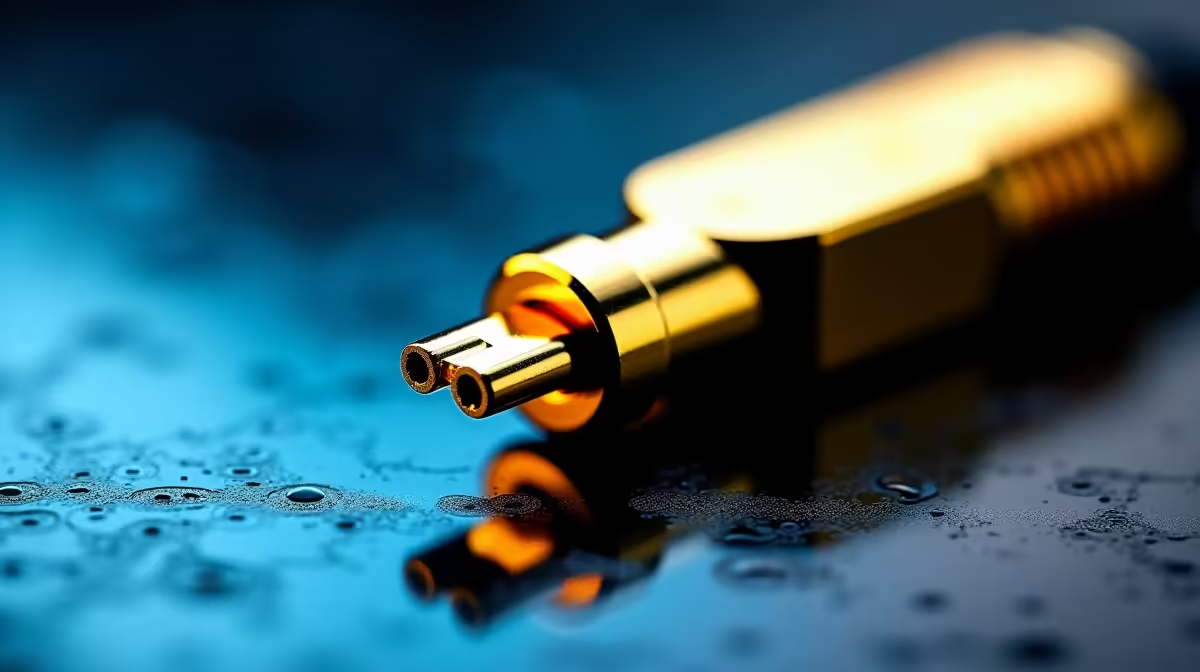
Nickel reacts with atmospheric oxygen and moisture to form nickel oxide, a non-conductive surface layer. This oxide builds up on the contact points carrying the differential signal pairs of HDMI and DisplayPort connections. As resistance climbs from under 5 milliohms (new, clean) to 50 milliohms or more (oxidised nickel), received signals degrade and the receiver's error correction works harder. Gold forms no stable oxide under normal atmospheric conditions. In the salt-laden air of Durban or Cape Town's southern suburbs, a 15-micron gold flash plating on a display connector maintains its low-resistance surface for the lifetime of the cable.
Plating Thickness and Durability 📡
Gold plating thickness on connector contacts is measured in microns. A 3-micron flash plating is common on budget cables and wears through within two to four years of regular plug and unplug cycles. A 15-micron plating handles 3,000 or more cycles before base metal shows through. For a fixed desktop cable plugged once and left for years, even a thin flash plating provides adequate corrosion protection. For monitor cables on desks where displays are regularly swapped, 15-micron or thicker plating is worth the modest R50 to R150 premium over budget alternatives.
Identifying Quality Plating at Point of Sale 💰
Product listings rarely specify plating thickness, but proxy indicators exist. Connectors described as "24K gold-plated" or "gold-flash plated" have genuine gold surfaces. Listings that say "gold-tone" or "golden colour" frequently mean a brass alloy with no actual gold content. Physically, genuine gold plating appears distinctly yellow and bright, while nickel plating is silver-grey. A gold-coloured connector appearing slightly dull or orange-tinted is often a lower-quality alloy. At Evetech, cables with genuine gold-plated contacts are marked in the product specification, removing the guesswork of evaluating online listings.
Protect Unused Ports With Dust Caps ⚡
DisplayPort and HDMI ports that sit unused for extended periods accumulate dust and airborne contaminants on the contacts, accelerating oxidation even on gold-plated surfaces. Inexpensive dust caps inserted into unused ports on monitors and GPUs keep contacts clean and extend the period before any maintenance cleaning is needed.
FAQ
Is there a visible quality difference between gold-plated and nickel-plated cables?
New cables look similar. The difference appears after six to eighteen months in humid SA environments, where nickel-plated contacts develop an oxide film causing intermittent signal issues, while gold-plated contacts remain stable.
Does gold plating affect the cable's electrical conductivity?
No. Gold is an excellent conductor, and plating thickness of 15 to 30 microns does not meaningfully affect the electrical properties of the underlying copper conductor. The benefit is purely corrosion resistance at the contact junction.
Can I clean oxidised nickel-plated connectors?
Isopropyl alcohol on a lint-free swab can temporarily reduce oxidation on nickel contacts. This is not permanent: the oxide re-forms once the cleaning agent evaporates. Replacing the cable with a gold-plated alternative is the lasting solution.
Looking for display cables built to last in SA conditions?
Evetech stocks DisplayPort and HDMI cables with quality connectors suited for both coastal and inland South African environments.