Quick Answer
95 percent DCI-P3 coverage means the monitor reproduces 95 percent of the cinema colour standard, producing richer greens, deeper reds, and more saturated blues than a standard sRGB display. For gaming, the effect is vibrant but not always accurate. For streaming and content creation, it is directly useful if managed with proper colour mode switching.
What DCI-P3 Coverage Actually Means for Your Display 🎨
DCI-P3 is a colour space standard defined by the Digital Cinema Initiatives group, covering a wider range of colours than the sRGB standard used in most Windows productivity applications. A monitor covering 95 percent of DCI-P3 can display colours that sRGB monitors cannot reproduce, particularly in the green and red regions of the visible spectrum.
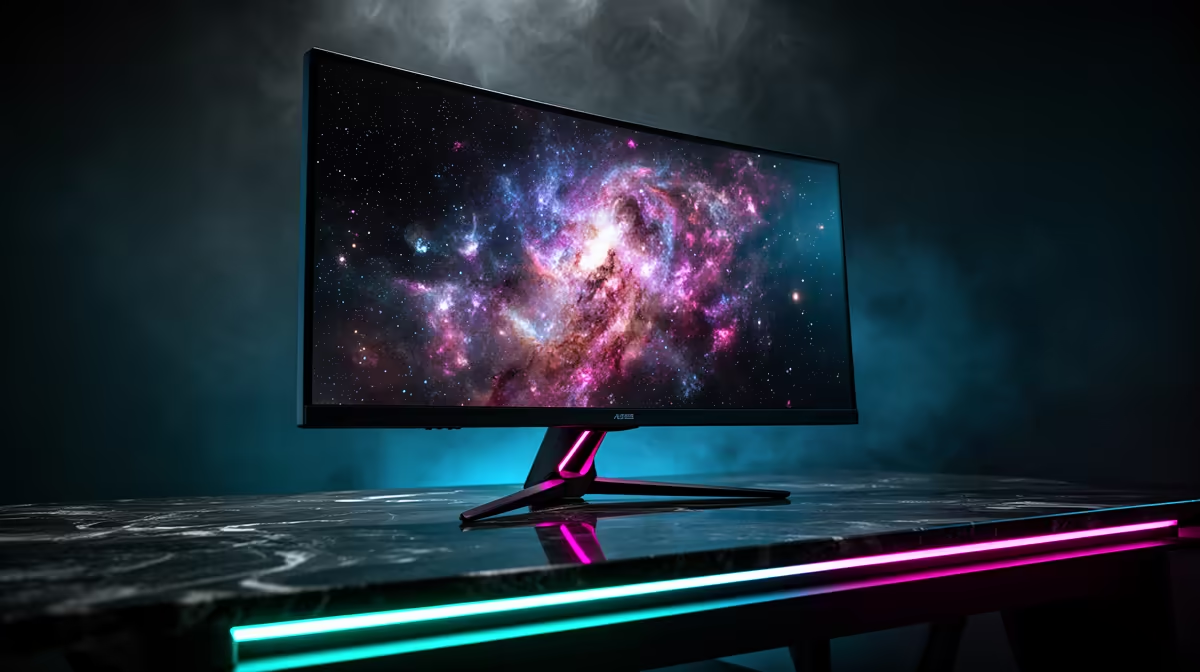
In practice, a monitor rated at 95 percent DCI-P3 looks visibly more vivid than a standard sRGB display. Game environments with lush foliage, sunset lighting, or neon cyberpunk colour palettes appear more saturated and punchy.
Impact on Streaming and Content Creation Workflows 🎬
For South African streamers editing thumbnails in Canva or Adobe Express, a 95 percent DCI-P3 monitor reveals more of the colour range in your graphics. However, most viewers watching streams on mobile or standard monitors see sRGB content.
The correct workflow is to design in sRGB mode and use wide-gamut mode for gaming or video viewing. Most gaming monitors with 95 percent DCI-P3 coverage include an sRGB emulation mode in the OSD, which clamps the displayed colour to sRGB accuracy.
How Wide Colour Gamut Affects Competitive Gaming Specifically 🎮
For competitive titles like CS2 and Valorant, neither wide-gamut saturation nor strict sRGB accuracy offers a decisive advantage. What matters is clarity of enemy contrast against backgrounds. Some players prefer slightly boosted saturation because enemy character models pop more obviously against natural environment tones.
For open-world and narrative games, 95 percent DCI-P3 coverage is a genuine enhancement. Games like Cyberpunk 2077, Horizon Forbidden West (PC), or Microsoft Flight Simulator use wide colour grading that rewards a capable display. Running these at 1440p on a fast IPS monitor with near-full DCI-P3 coverage is noticeably more immersive than on a standard sRGB screen.
Create Separate OSD Profiles for Gaming and Work ⚡
Most modern gaming monitors allow you to save two to four OSD profiles. Save one profile with wide-gamut mode, gaming brightness, and VRR active for gaming sessions. Save a second profile with sRGB mode and lower brightness for content creation or work. Switching between profiles takes three button presses and ensures colour consistency in both workflows.
FAQ
Is 95 percent DCI-P3 the same as 100 percent sRGB?
No. 100 percent sRGB is a subset of DCI-P3. A monitor at 95 percent DCI-P3 covers approximately 130 to 135 percent of sRGB, meaning it can display significantly more colours than a standard sRGB monitor. These two specifications measure entirely different colour spaces and cannot be directly compared by percentage alone.
Will a wide-gamut monitor make games look worse?
Only if the game's colour pipeline does not support wide gamut and the monitor has no sRGB mode. Most modern gaming monitors include an sRGB clamp mode that prevents oversaturation in sRGB content. Without this mode, some games may look unnaturally vivid, but enabling sRGB emulation restores intended colour balance.
Does DCI-P3 coverage matter for YouTube streaming output?
YouTube HDR content uses the Rec.2020 colour space, which is wider than DCI-P3. Standard YouTube SDR content uses sRGB. For watching YouTube HDR streams on a 95 percent DCI-P3 monitor, you will see a portion of the HDR colour range, noticeably more vivid than sRGB.
Need a monitor that handles gaming and content creation?
Evetech stocks gaming monitors with wide colour gamut coverage and sRGB modes from brands suited to both competitive play and creative work. Browse the monitors section to find a panel that fits your workflow.