Quick Answer
You can stop GPU sag using four proven methods: a built-in or aftermarket GPU support bracket under the card, a vertical GPU mount with a PCIe riser cable, a GPU sag hook on the case fan grille, or a thin fishing-line tie-off to the case frame. The bracket method is the most reliable and least invasive.
Why Heavy GPUs Sag and What It Does 🔩
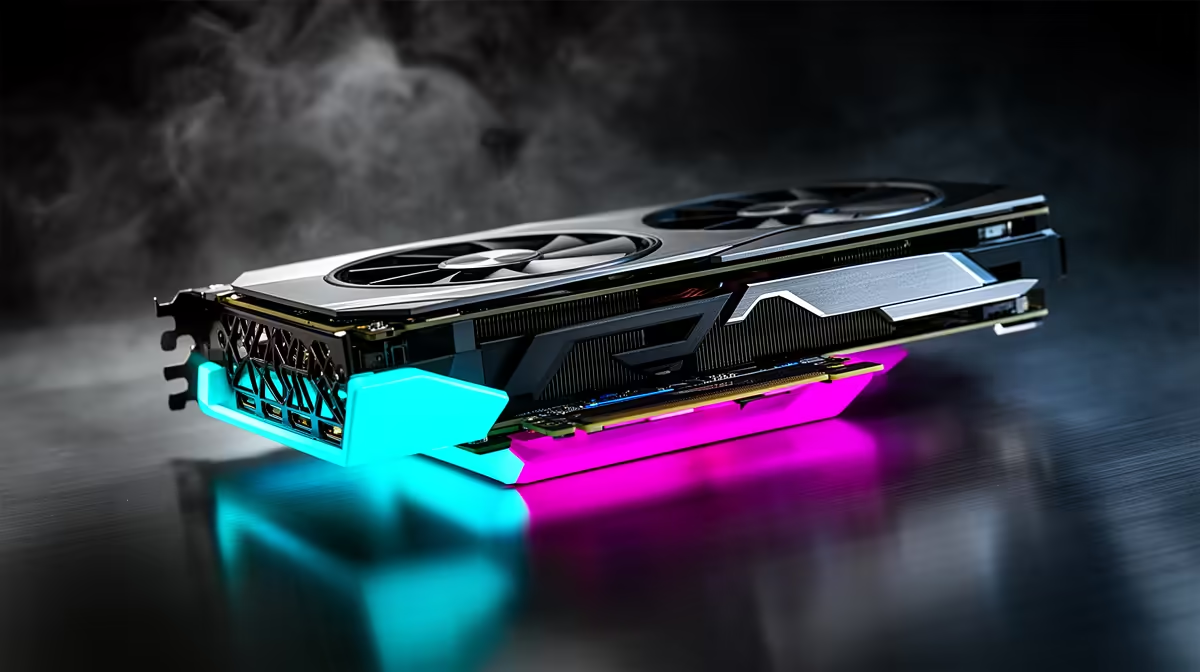
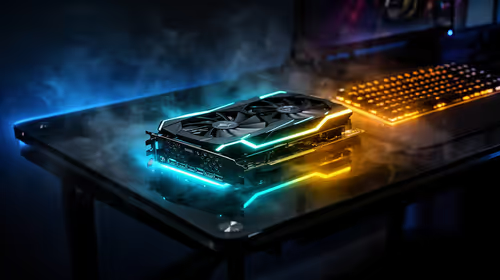
Modern flagship GPUs have grown dramatically in size. An RTX 5090 AIB variant with a triple or quad-fan cooler can weigh 2.0 to 2.4kg, all suspended from a single PCIe x16 connector at one end of the card. Gravity acts on the unsupported length of the GPU, creating a lever arm that bends the PCIe slot downward over months. The result is visible sag at the far end of the GPU, which looks unappealing in glass-panel cases and stresses the PCIe electrical contacts. Sag rarely causes electrical failure in a stationary desktop, but for LAN-goers who transport PCs regularly, repeated vibration combined with the sag load can eventually cause intermittent PCIe errors.
The Four Methods Compared 🔧
A built-in case GPU support bracket is the cleanest solution. It is an adjustable arm included in premium cases like the Phanteks Enthoo 719 and Lian Li O11D EVO XL. Set the arm height to just touch the GPU without lifting it. Aftermarket universal GPU support stands are telescoping rods with padded tips that sit on the case floor, available from R200 to R600 locally and compatible with virtually any case. A vertical GPU riser mount eliminates sag by repositioning the GPU perpendicular to the motherboard, supported by the riser bracket rather than the PCIe slot alone. Riser kits cost R500 to R1,200 at Evetech but require at least 30mm clearance between GPU fans and the side glass panel. The fishing-line method works and costs nothing but looks DIY and risks scratching the GPU shroud without a protective wrap.
Choosing the Right Fix for SA Builders 🇿🇦
For a glass-panel showcase case, the built-in bracket or vertical riser is preferred because both are invisible or aesthetically integrated. The bracket preserves horizontal GPU orientation (best for thermals). The vertical riser looks dramatic but reduces airflow to GPU fans if the case is not deep enough; verify 30mm GPU-to-glass clearance before proceeding. For a practical build prioritising function, the aftermarket stand at R200 to R400 is the fastest solution. PCIe slot replacement on a flagship motherboard can reach R8,000 to R15,000 if the connector fails, making a cheap sag bracket worth every rand.
Readjust the Bracket After the First Week ⚡
Set your GPU support bracket on build day, then re-check it after seven days of normal use. GPU PCBs and cooler assemblies settle slightly as thermal cycling causes minor material expansion. A bracket that had 1mm of gap on day one may be correctly contacting the GPU after a week, or it may need a half-turn adjustment. A correctly set bracket holds the GPU level with zero visible droop at the far end.
FAQ
Will a GPU support bracket affect airflow to the GPU fans?
No, if installed correctly. The bracket contacts the underside of the GPU shroud (the plastic housing), not the fans themselves. The fans face downward and draw air from the case interior, unobstructed by a correctly positioned support arm.
Can GPU sag cause my PC to crash or fail to boot?
In severe cases, yes. If sag is significant enough to partially unseat the PCIe edge connector, the system may fail to detect the GPU or crash during operation. This is more likely in transported PCs where vibration compounds the sag load.
Is a PCIe riser cable safe for long-term GPU use?
Yes, provided you use a quality riser rated for PCIe 4.0 or PCIe 5.0. Low-quality risers can introduce PCIe signal integrity issues. Branded risers from Lian Li, Phanteks, and Thermaltake carry proper shielding and are safe for permanent installation.
Building with a flagship GPU and want it perfectly level?
Evetech stocks GPU support brackets, vertical riser kits, and full-tower cases with built-in sag prevention for RTX 50-series and RX 9000-series builds.