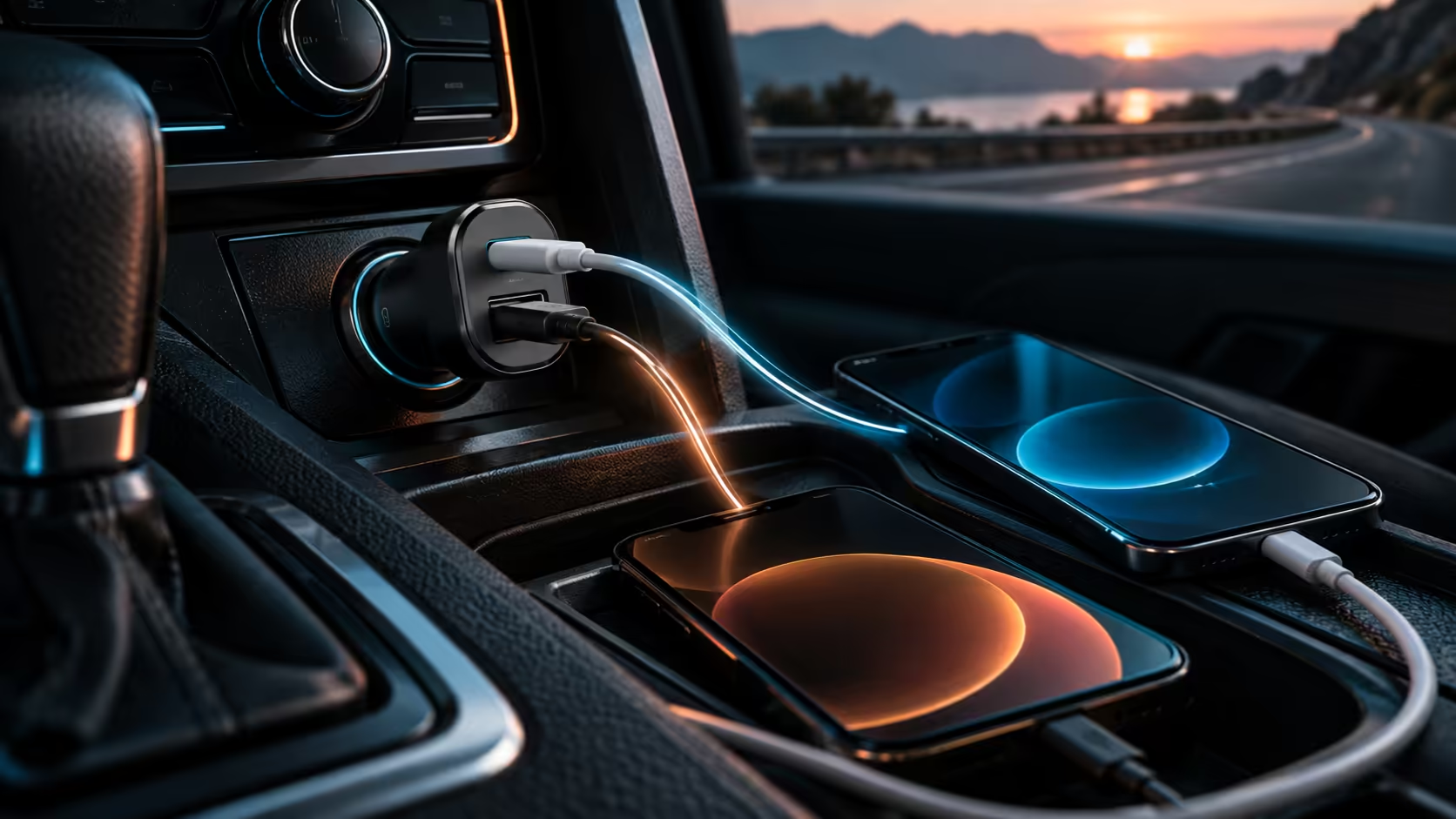
Two numbers on a charger's box, 30W and 22.5W, describe what each port can do on its own, not what happens the moment both are busy at once. A dual-port car charger does not run two independent power supplies; it runs one, split between two outputs, and that single fact changes almost every answer about how much a passenger's phone actually gets. Here is what the split looks like in practice, not just in marketing copy.
Quick Answer
Each port on Anker's 30W two-port charger carries its own individual ceiling: 30W on the USB-C side with PPS, 22.5W on the USB-A side. Plug in only one device and it can draw up to that port's full figure. Plug in both, and the two ports settle at 12W each, because one internal converter is feeding both rather than two separate supplies stacked together. The charger costs R349.
🔌 One converter, two mouths to feed
A dual-port charger this size does not contain two independent power bricks glued into one shell. It has a single DC-DC conversion stage wired to a single 12V input, and that stage has a real ceiling on how much total current it can produce at once, regardless of how the two output sockets are labelled.
When one port is in use, the full ceiling is available to it and the per-port number on the box is the honest figure. The moment a second device joins in, the same converter has to divide its output between two negotiations running at the same time, which is why the combined total does not simply add the two printed numbers together and hand each device its own maximum.
On this charger that combined state settles at 12W to each port when both are drawing at once, well under the 30W and 22.5W figures either port can reach alone. That is a stated design figure, not a worst case, and it is worth knowing before assuming two phones charging together will each behave as if they had the port to themselves.
⚡ Why the ports never simply add up
It helps to think of the two individual figures as the ceiling for a port operating alone, not a budget that gets carved in two whenever a second device shows up. 30W plus 22.5W does not equal a 52.5W total the converter is built to sustain; it equals two separate best cases that only one device at a time can fully claim.
This is normal for compact multi-port chargers generally, not a shortcoming specific to one brand. Building a converter that could give both ports their individual maximum simultaneously would mean sizing it for the sum of the two, which costs more, runs hotter and rarely matches how the charger gets used, since most trips only need one port most of the time.
🔋 Does it matter which device you plug in first?
Order plays a role because Power Delivery negotiations happen independently, each time a device connects or asks for a change. The first phone to plug in negotiates against whatever headroom the converter currently has spare, which at that moment is effectively the whole thing.
Add a second device afterwards and both negotiations run again: the converter tells each port what it can now offer given the other is drawing too, and both devices settle near the 12W figure rather than either keeping its earlier 30W or 22.5W claim. Unplugging the second device frees that headroom back up within a second or two, and the remaining phone can renegotiate upward again. None of this needs the driver to do anything; it happens automatically at the protocol level every time a socket's load changes.
🚗 What this means for a real trip
For a solo driver, none of this matters. One phone on one port gets that port's full rating the entire drive, because there is nothing else drawing from the shared converter.
It starts to matter with a passenger, a second gadget on a dashcam power lead, or a lift-club car where more than one phone competes for the same plug most days. In those cases the honest expectation is 12W per device once both ports are active, which is still well above what an old-style 5V car socket ever offered, but noticeably below either port's solo figure. Anyone planning to run two devices at once most of the time is better served thinking in terms of that shared number rather than the two headline figures.
For occasional overflow, a standalone power bank sidesteps the split entirely, since it charges from its own reserve rather than sharing the car charger's output. That makes it a reasonable answer for a third device in the car, a dashcam that never gets unplugged plus two phones, where a single dual-port unit would otherwise be stretched across three negotiations at once. A USB hub solves a different problem, spreading data and low-power charging connections at a desk, and is not built for the current a phone pulls on the road.
🧮 Working out your own numbers
The two figures worth remembering are the solo ceiling and the shared figure, and which one applies depends entirely on whether the other port is occupied at that moment. A single commuter charging one phone each morning never sees the 12W number at all; it only appears the day a passenger joins for a lift and plugs in on the other port.
That makes the shared-supply behaviour easy to overlook until the day it actually shows up as a slower charge than expected. Reading a charger's spec sheet for a combined figure, rather than assuming the two solo numbers simply run side by side, is the one habit that avoids the surprise.
Frequently Asked Questions
If I only ever charge one phone, does the second port matter?
No. An idle port draws nothing from the shared converter, so a single device in use gets that port's full rated ceiling the whole time.
Does the 12W figure apply the instant a second device is plugged in?
The renegotiation happens within the first moments of the new connection, as both ports agree new terms with the shared converter.
Is 12W enough to still gain charge while driving?
Yes, for most phones it is a net gain over normal use, though a heavy task like navigation with the screen on will narrow that margin considerably.
Would two single-port chargers avoid the split entirely?
Only if each plugs into its own separate 12V socket, since two chargers sharing one socket through a splitter face the same shared-supply limit as one dual-port unit.
Ready to work out what your setup actually needs?
Look at the car charger range and plan around the shared 12W figure if two devices will run together.