


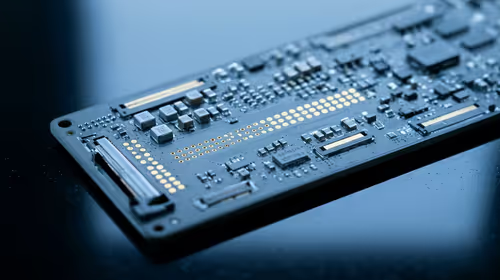
Hot-Swappable PCB Architecture in Modern Keyboards: Guide
Learn hot-swappable PCB architecture in modern keyboards—what it is, how sockets and traces work, and how to pick the right board. Speed up swaps, reduce risk, and upgrade faster 🔧⚡
Read moreUp front: a 2.4GHz wireless headset crosses PC, console, and mobile cleanly. For travel and mobile users, this stays compact without giving up day-to-day performance. Inside: driver, ANC, mic, and battery numbers compared.
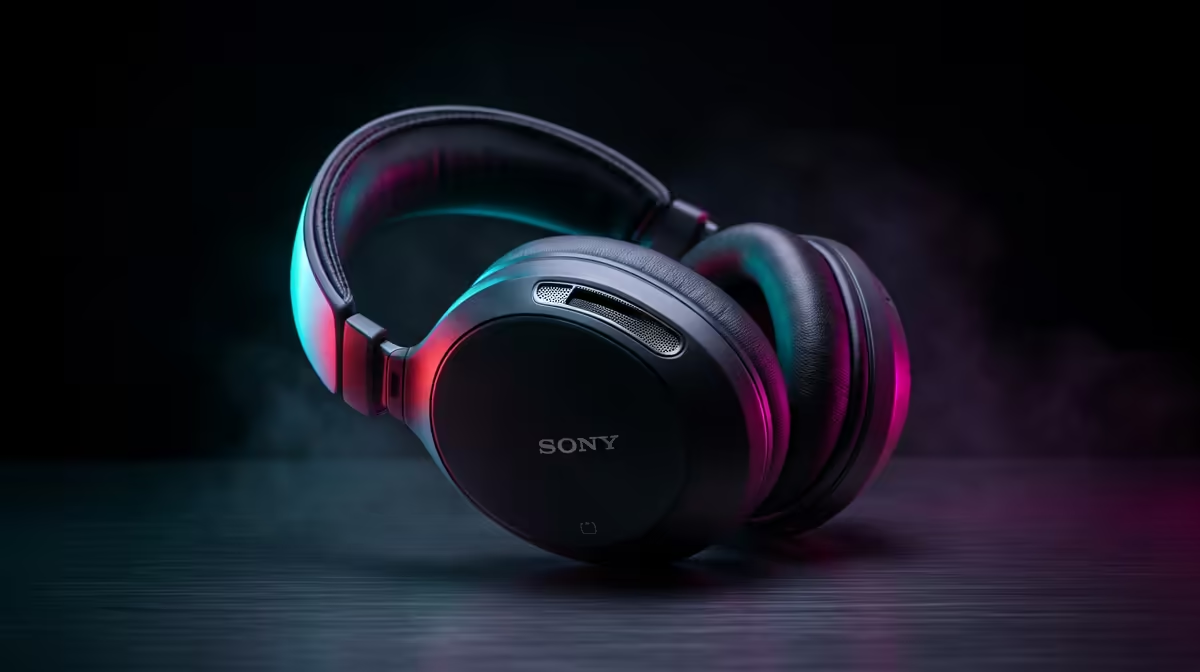
To optimise a hidden beamforming microphone: position the headset's mic array toward your mouth (front of headset facing forward), keep background noise sources behind you rather than beside you, and configure noise suppression at medium rather than maximum in the companion app to avoid voice clipping artefacts.
A beamforming mic array uses two or more capsules at measured intervals inside the headset earcup or headband. By comparing tiny time-of-arrival differences between the same sound reaching each capsule, the DSP calculates the direction of the dominant audio source (your mouth) and amplifies from that direction while suppressing other angles. This is more sophisticated than simple noise gating, which just cuts all audio below a volume threshold. Beamforming headsets deliver voice clarity comparable to a mid-range boom mic while maintaining a clean aesthetic free of visible microphone arms.
In the companion app, set microphone sensitivity to 60 to 75 percent: too high picks up room noise; too low clips consonants. Noise suppression should sit at medium; maximum suppression introduces an underwater artefact that sounds unnatural to listeners. If the app offers a sidetone slider, set it to 15 to 25 percent. Zero sidetone causes you to subconsciously raise your voice, which can overdrive the beamforming array. For SA gamers near open windows in warm Gauteng or Durban summers, rotating your desk so traffic noise arrives from behind rather than from the side reduces background capture significantly.
On mobile calls via Bluetooth, beamforming performance depends on the Bluetooth codec. SBC compresses microphone audio aggressively; if your phone supports aptX Voice (available on many mid-range Android devices), enable it for cleaner voice capture. In WhatsApp and Teams calls, disable in-app noise suppression (WhatsApp: Settings, Calls, Reduce Background Noise: Off) to prevent double-processing artefacts where both the headset and the app independently filter the voice signal, producing a harsh metallic tone.
Beamforming arrays in hidden mics assume the dominant voice source is forward-facing. If you slouch significantly or tilt your head sideways during long gaming sessions, the array's calculated beam drifts off your mouth. SA gamers on marathon weekend sessions who habitually tilt sideways report improved call quality simply by adjusting sitting posture to keep the headset facing consistently forward.
Boom mics capture more consistent audio in loud environments because proximity to the mouth is fixed regardless of head position. Beamforming closes the gap significantly in quiet-to-moderate environments and outperforms basic single-capsule hidden mics by a wide margin.
Not ideally. Beamforming mics are tuned for voice clarity in call-quality bandwidths. Professional recording requires flat frequency response across the full audible range, which a beamforming gaming headset does not deliver. A dedicated condenser microphone is the correct tool for content creation.
Yes. SBC compresses microphone audio heavily. aptX, aptX HD, and LC3 preserve more detail. On Android phones supporting aptX Voice, the improvement in call clarity is audible, particularly for capturing consonant-heavy sounds that beamforming arrays process most.
Want clearer gaming chat and hands-free calls in one headset? Evetech stocks wireless gaming headsets with advanced microphone technology, available with fast nationwide delivery across South Africa.
Learn hot-swappable PCB architecture in modern keyboards—what it is, how sockets and traces work, and how to pick the right board. Speed up swaps, reduce risk, and upgrade faster 🔧⚡
Read more
Mechanical switch lifespan explained—what the 50 million keystroke rating really means, plus tips to extend switch life and reduce double-press issues 🔧⌨️
Read more
60-percent vs full-size mechanical keyboard layouts—learn what each layout includes, who it suits, and how to choose the right fit 🧩⌨️ for typing, gaming, and productivity.
Read more
Double injection keycaps last far longer than standard printed keycaps in most setups. Learn typical lifespan ranges, what shortens them, and how to maximize durability for smoother daily typing and gaming 😊⌨️
Read more
Full-key anti-ghosting: does it stop missed inputs during fast-paced gaming? We break down latency, polling, and key matrix limits so you can buy smarter 🎮⚡
Read more
Protect mechanical keyboard switches from South African dust and summer humidity with practical cleaning and storage habits. Keep your switches smooth, reduce failures, and extend lifespan. 🌬️💧
Read more
Wondering if a TKL wireless mechanical keyboard is worth it for everyday productivity? We break down latency, battery life, comfort, and workflow gains for real work. ⚡⌨️
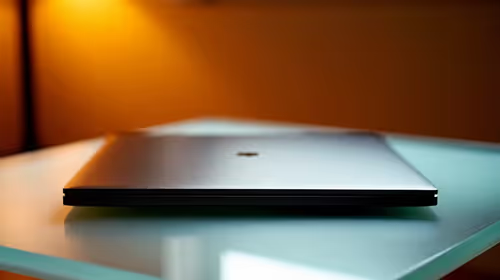
Maximise battery life on a fanless 15-inch laptop using efficiency core architecture. Cut idle drain, tune power profiles, and improve thermals for longer runtime. 🔋⚙️
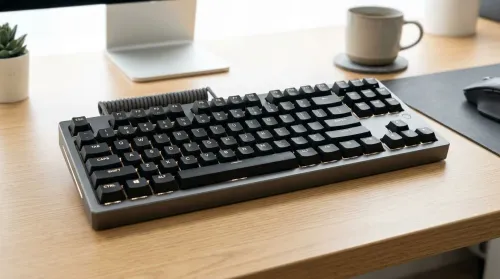
Learn how to reduce desk clutter with a TKL wireless keyboard using fewer cables, smart placement, and tidy essentials. Get a faster, calmer workspace with better ergonomics. ✅🧼
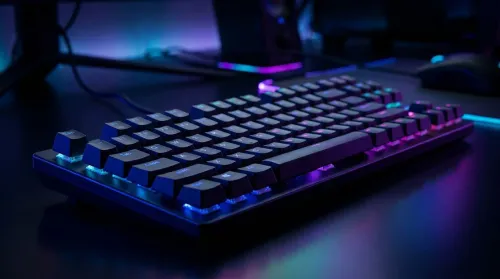
RGB keyboard lighting too distracting? Learn how to manage backlight modes, set brightness, and reduce distraction for focus and productivity 😌🖱️
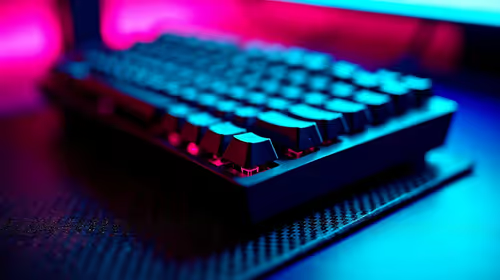
Are themed gaming keyboards worth the extra cost? Compare build quality, switch options, features, and resale value to find the best fit for your setup 🎮⌨️
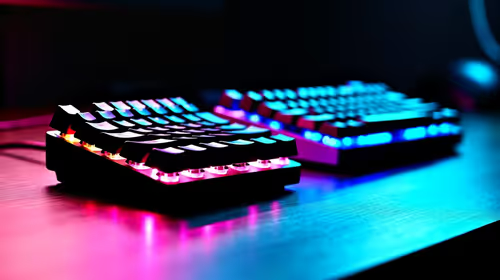
Full-Size vs Tenkeyless mechanical keyboards for gaming: find out if a smaller layout truly improves aim, speed, and comfort. We break down layout, desk space, latency-feel, and keybinds 🎮⌨️
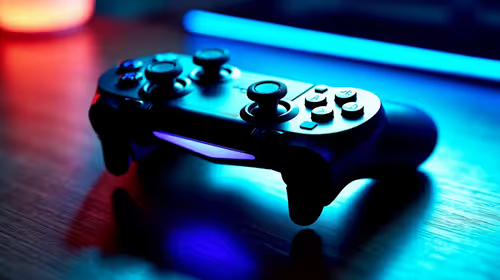
Dedicated media rollers vs function key shortcuts: learn which setup gives you better workflow control, faster media access, and fewer mistakes. 🖱️🎧
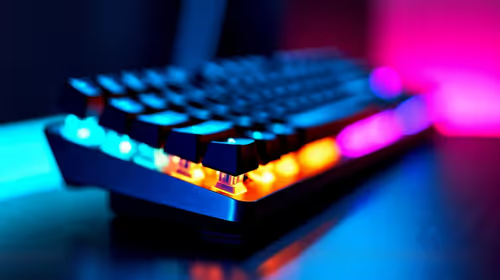
Best Mechanical Switch Type for Gaming: Clicky vs Linear vs Tactile. Find your feel, speed, and noise balance with practical guidance for FPS, MOBA, and productivity 😄🎮
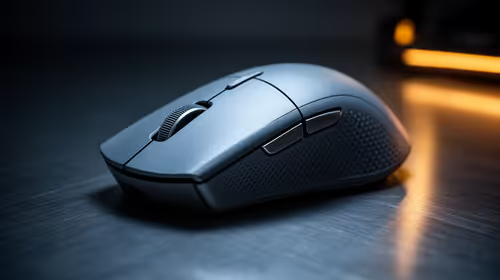
Direct mouse answer: Mouse not keeping up with your work? Everything that matters about dual-mode 2.4GHz + BT 5.0: DPI behaviour, channel switching, battery curves and per-app button mapping. Covers when 2.4GHz USB wins (low-latency desk) and when BT 5.0 wins (laptop, d
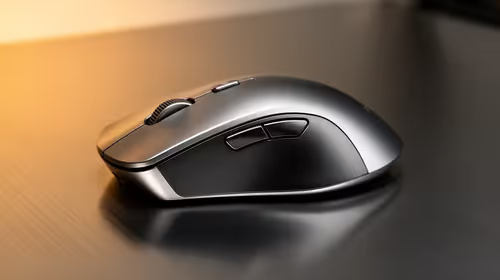
Plain wireless mouse guide: Mouse not keeping up with your work? Everything that matters about wireless productivity mouse: DPI behaviour, channel switching, battery curves and per-app button mapping. Includes DPI tuning tips, channel switch shortcuts, and ZAR-aware fea
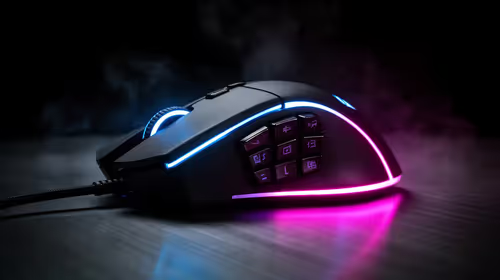
Real productivity numbers: Set up your wireless mouse in this order: everything that matters about wireless productivity mouse: DPI behaviour, channel switching, battery curves and per-app button mapping. Includes DPI tuning tips, channel switch shortcuts, and ZAR-aware
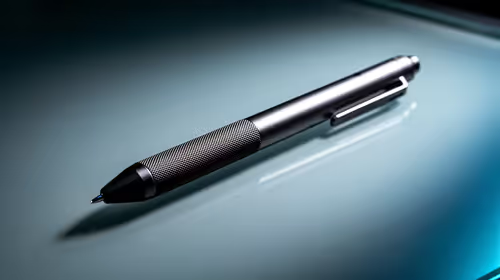
Pen not feeling like paper? Stylus lag and skipping usually trace to old drivers, dirty nibs, or display refresh mismatches, not the pen itself. Covers pressure curve tuning, tilt thresholds, nib swap timing, and SA pricing brackets.