Quick Answer
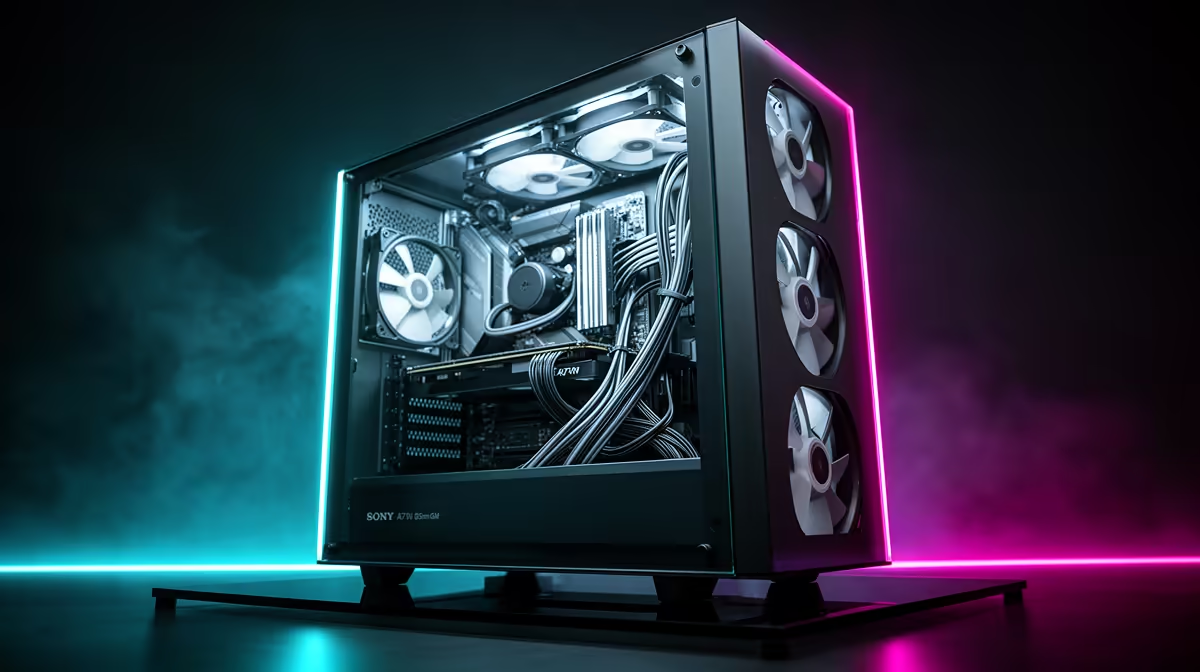
Cable management cutouts are pre-cut openings in the motherboard tray that route cables from the front panel, PSU, and storage behind the tray and out of sight. Used correctly, they are the single most effective technique for achieving a clean showcase build with no visible cable clutter through the tempered glass panel.
The Purpose and Layout of Cutouts on a Modern Tray 💡
Most quality ATX and E-ATX cases include eight to twelve cutouts positioned at critical connection points: top-left for the EPS CPU power cable, right-side for the 24-pin ATX main power, lower-right for front-panel connectors (USB, audio, power button), and multiple lower cutouts for SATA and fan cables. The cutouts are covered with rubber grommets that grip the cable as it passes through, reducing vibration transmission and hiding the raw metal edge. A case with well-placed grommeted cutouts allows a builder to route every cable behind the tray first, then push each connector through the nearest grommet and connect it to the motherboard from the front side. This method keeps all cable bulk invisible from the glass side.
Routing the Five Critical Cables for a Showcase Build 🔧
Five cables dominate cable management in a showcase build. First: the 24-pin ATX cable. Route it behind the tray, bring it through the large right-side grommet, and fold the excess behind the PSU shroud. Second: the EPS 8-pin or dual 8-pin CPU power cable. Route it behind the tray along the spine and exit through the top-left grommet, which positions it close to the CPU socket with minimal slack. Third: PCIe GPU power (16-pin 12VHPWR for RTX 50-series cards). Exit behind the GPU bracket and fold to hide the slack below the card. Fourth: front-panel USB and audio headers. Bundle these together with a zip tie and route them through the lower-right grommet as a single bundle. Fifth: SATA power for any 2.5-inch drives. Mount drives on the rear of the tray and loop SATA cables entirely behind the panel.
Grommet Quality and What to Do Without Rubber Covers 🎨
Budget cases often ship with bare cutouts and no grommets. Without grommets, cables rest against bare metal edges that can abrade cable insulation over years of use. Aftermarket rubber grommet kits are available for R80 to R200 and cover standard 25mm to 35mm cutout sizes. If your case has unusually shaped cutouts, self-adhesive rubber edge trim from a hardware store cut to length achieves the same protective result. For a white showcase build, use white-edged grommets or white edge trim to maintain visual consistency.
Zip Tie Behind, Velcro in Front ⚡
Use rigid zip ties for bundles that will not be disturbed (SATA, front-panel wiring) and hook-and-loop velcro straps for cables you will disconnect during upgrades (CPU power, GPU power). Velcro allows cable removal without cutting ties and re-routing from scratch, which saves significant time during your next platform upgrade.
FAQ
How much cable management space do I need behind the tray?
A minimum of 20mm is needed to fit bundled cables without bulging the rear panel. Premium cases offer 25mm to 35mm of clearance, which accommodates even thick custom sleeved cables and multiple SSD mounts without the rear panel struggling to close.
Can I add cutouts to a case that does not have them?
Possible but not recommended. Drilling or filing steel motherboard trays creates metal shavings that can short-circuit components if not cleaned up meticulously. Use a case with appropriate cutouts from the start.
Do cable extensions improve the look of visible cable runs?
Yes. Extensions from CableMod or similar brands replace the short stock PSU cables with longer, colour-matched sleeved versions. For a showcase build where the GPU power cable must travel a visible distance, a matching extension cable in white or black is a meaningful visual upgrade for R300 to R800.
Want a build that looks as good as it performs?
Evetech stocks cable-management-ready cases, modular PSUs, and accessories for showcase builds, available for delivery across South Africa.