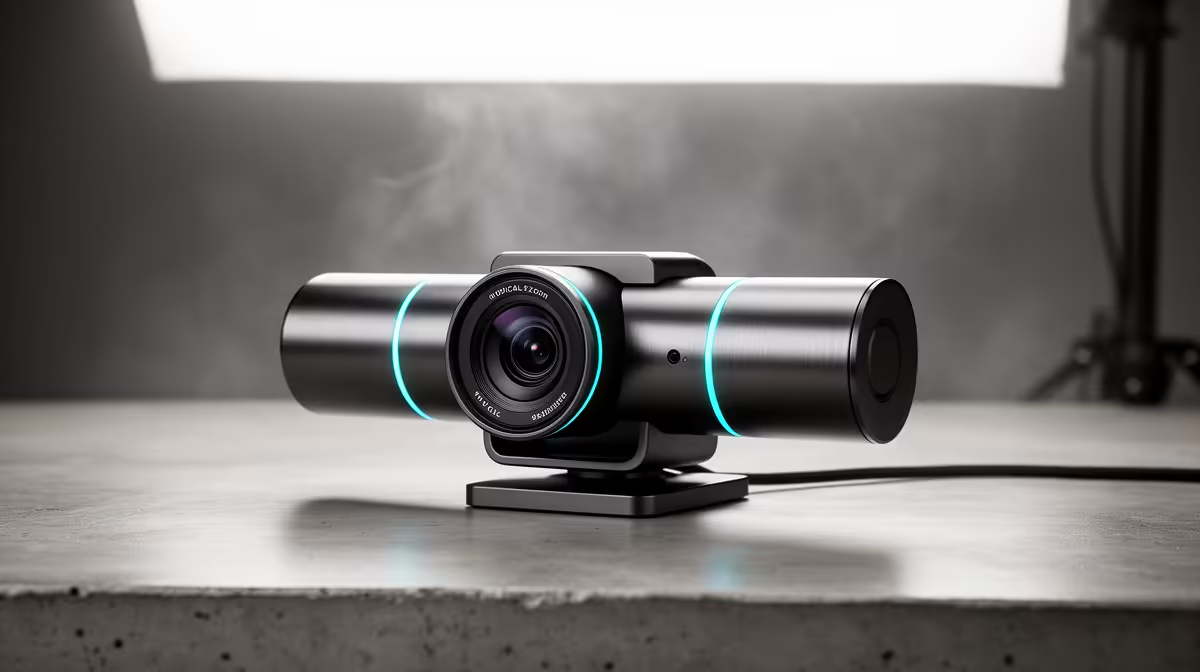
Most cameras on a content desk stay at one focal length all session, which is fine until the creator needs to tighten onto a product, zoom into a screen, or pull back for a wider conversation angle. Hybrid optical zoom webcams solve this without physically repositioning the camera, and for South African creators who produce varied content from a single fixed desk, the question of whether the cost is justified is worth working through carefully.
Quick Answer
A hybrid optical zoom webcam is worth the extra Rand when you regularly shift between wide and tight framing in a session. The optical step preserves detail a digital crop cannot, making it the right choice for product and demo creators. If your framing never changes, a fixed camera at the right position is cheaper and equally good.
🔧 What Hybrid Zoom Actually Means
Pure digital zoom is a software operation. The camera captures its full frame and then crops into the centre of that frame, discarding the outer pixels and enlarging what remains. The result is a tighter shot that has lost the resolution it would have had at that angle natively, because you are starting with 100 percent of the sensor's detail and ending with a fraction of it blown up.
Optical zoom moves a physical lens element to change the focal length before the sensor records anything. The sensor receives a genuinely tighter image rather than a cropped wide one, so the full resolution of the sensor is applied to the narrower view. Detail is preserved at the closer framing rather than sacrificed to achieve it.
Hybrid zoom combines both: an optical step that shifts the lens to a tighter position, and digital continuation beyond that point when even more reach is needed. For a webcam, this is most commonly a 2x to 4x optical range followed by additional digital extension. The optical range is where quality is maintained. The digital range beyond it trades resolution for reach the way a standalone digital zoom does.
The practical implication is that a hybrid zoom camera is sharp at tight framings that would look notably degraded on a digital-only model.
⚡ Which Creators Benefit and Which Do Not
The value of optical zoom maps directly to whether your content involves reframing during a session. If you are a creator who shoots product reviews, demonstrations, or instructional content where you regularly pull in close to show detail and then pull back to explain, optical zoom is doing meaningful work every time you shift angles.
A tightly zoomed shot of a mechanical keyboard's switches, a CPU being seated, or a pair of headphones' connector quality retains the sharpness that justifies showing the close-up at all. The same shot on a digital-only crop would be soft enough that pulling in close stops being useful.
Conversely, if your content is a talking-head interview or gaming commentary where the camera points at your face throughout the session and never moves, you are paying for a motor and lens assembly you will not use. A fixed webcam positioned correctly at the start of the session serves that content equally well at a lower price point.
The honest buying question is: do I actually change my framing during sessions, or do I set the camera once and leave it? Creators who answer yes to the first part have a genuine use case for the premium. Those who answer yes to the second can save money on a fixed lens without losing anything.
💰 Cost Versus Value in the SA Market
Webcams with optical or hybrid zoom mechanisms command a higher price than their fixed-focus equivalents. The additional hardware, including the motorised lens and the precision assembly it requires, adds material cost that flows into the retail price. Locally, pricing for zoom-capable webcams runs from a few hundred Rand above an equivalent fixed-lens 1080p model at the entry end, climbing substantially for the more capable optical zoom configurations.
That cost needs to be weighed against the alternative. For a creator who wants both a wide angle and a tight angle without reframing physically, the comparison is not to a fixed camera but to two fixed cameras at different positions, one wide and one telephoto. A hybrid zoom webcam, even at a higher price point, often undercuts the combined cost of two separate cameras plus the management overhead of switching between feeds.
For a solo creator running a single-PC desk setup without the infrastructure to switch camera inputs mid-stream, one camera that covers multiple focal lengths is more practical than two cameras that would need a capture device and software management to alternate between.
Pro Tip ⚡
Before setting the zoom level for a session, mark your desk position with a small piece of tape. A hybrid zoom cam re-frames the shot optically, but the framing changes if you shift your body position. A consistent seating reference keeps your tight shots and wide shots looking equally composed rather than randomly placed in the frame.
🎯 Optical Zoom for Product and Demo Creators
The strongest case for hybrid zoom in a South African content context is product creators. Tech reviewers who cover peripherals, components, and accessories regularly need to show close-up detail: the texture of a keycap, the connector quality on a headset cable, the thickness of a laptop chassis. At the wide setting, these details are too small to read. At the tight setting, they are the shot.
A sharp optical zoom into product detail keeps the content from looking amateurish at the exact moments when detail matters most. A digital crop that softens the same shot reduces the credibility of the review and wastes the camera time on a shot that does not deliver what it promised.
Demo content, tutorial creation, and any format where the creator shows something on a surface or screen rather than just talking about it follows the same logic. The zoom serves the content format directly rather than being a feature in search of a use.
Frequently Asked Questions
When does a hybrid zoom webcam justify the higher price?
When your content involves regular framing changes during a session. If you pull in to show product detail, tighten on a screen, or vary your framing between wide context shots and close-up explanation, optical zoom maintains the detail that makes those tight shots useful. If your camera position never changes, the zoom hardware adds cost without a corresponding content benefit.
How much more does a zoom webcam typically cost in South Africa?
The premium over a comparable fixed-lens webcam varies with the specific model, but generally starts a few hundred Rand above an equivalent fixed 1080p camera and climbs from there. The relevant comparison is not to the cheapest webcam but to a fixed camera at a similar quality level, where the zoom adds a defined cost increment for a defined capability.
Is optical zoom better than just moving closer to the camera?
Moving the camera changes your physical relationship to the mic and your whole desk arrangement. Optical zoom changes the framing while everything else stays fixed. For a desk where the layout is set and moving the camera means reconfiguring cables, lights, and desk position, zoom is practically more useful than physical repositioning, especially mid-session.
Can a zoom webcam replace two separate cameras?
For a single-person desk setup, largely yes. A hybrid zoom camera covers the wide and tight framings that two cameras at fixed positions would serve, without the need for a capture device, input switching, or the cost of a second camera. The trade-off is that a dedicated telephoto camera at the right fixed position may be sharper than the zoom range on a webcam at the equivalent reach.
Which content formats benefit most from optical zoom?
Product reviews, hardware demonstrations, instructional content showing hands-on detail, and any format where the creator alternates between explaining concepts on camera and showing something close up. These formats create the specific demand, tight framing with maintained sharpness, that optical zoom is designed to satisfy.
Ready to cover every framing your content needs from one fixed desk position?
Browse the zoom-capable webcam range for South African creators and find the camera that shifts angles without moving the hardware.