Quick Answer
For SA creators who prioritise desk aesthetics, noise management, and a distinctive professional look, an E-ATX wood-panel case is worth it at the R3,000 to R5,000 price point. If raw thermal performance at the lowest possible cost is the only goal, an all-mesh steel case delivers better value. The wood case earns its premium through longevity, aesthetics, and differentiated desk presence.
What a Wood-Panel E-ATX Case Offers a Creator 🎨
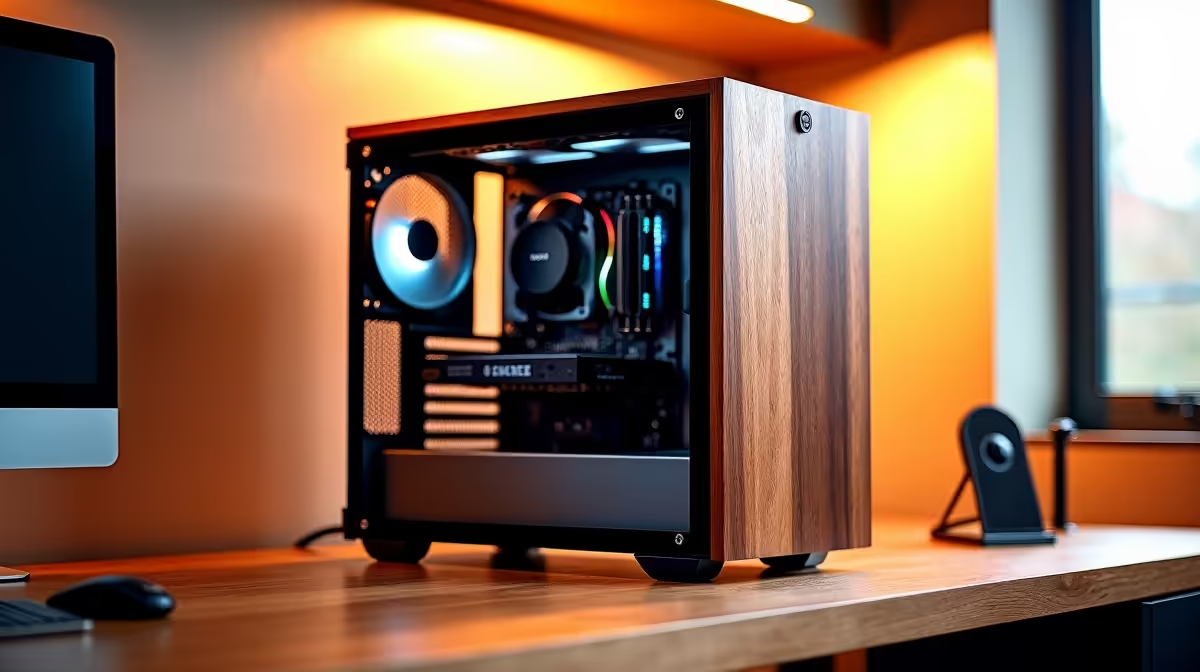
A creator workstation running DaVinci Resolve, Blender, or Premiere Pro stays under sustained CPU and GPU load for hours, making thermal stability the first requirement. E-ATX wood-panel cases address this by using steel or aluminium for the structural chassis and thermal management surfaces, while applying FSC-certified wood panels to cosmetic elements: typically the top panel, a side accent, or the front fascia. This means wood does not impede airflow through the high-traffic intake and exhaust zones. The wood elements contribute to noise absorption. Natural wood density is higher than ABS plastic, and wood panels act as a mild acoustic damper for fan and pump vibration.
The SA Creator's Practical Budget Assessment 💡
In South Africa, high-quality E-ATX wood-panel cases are imported and carry pricing that reflects rand-dollar exchange pressure. Expect to pay R3,200 to R5,500 depending on design, included fans, and whether the front panel is wood or mesh. Compare this to a premium all-steel E-ATX mesh case at R2,200 to R3,500. The wood premium is typically R800 to R2,000 extra. For a creator whose workstation appears in YouTube content or client-facing video calls, that premium buys a meaningful visual upgrade. A middle path is to buy a compatible steel case and add a custom wood side panel, which local woodworking suppliers can cut to spec for R300 to R600.
Longevity and Upgrade Compatibility 🔩
An E-ATX case is a long-horizon purchase. The E-ATX form factor accommodates current-generation Threadripper Pro, HEDT, and standard E-ATX boards, and the format has remained dimensionally consistent for over a decade. A quality E-ATX case bought today will accommodate three to four complete component upgrade cycles. Wood panel cases from established manufacturers use replaceable panel mounting systems, meaning a damaged panel can be sourced as a spare rather than requiring full case replacement. In a market where replacement parts can take weeks to arrive, this serviceability matters.
Wood Panel Care in SA Summers ⚡
In Gauteng or the Northern Cape where indoor temperatures can exceed 28 degrees for months, keep the workstation away from direct sunlight. UV rays bleach and crack natural wood finishes over time, and direct sun can raise surface temperature enough to affect the fit of the panel clips over the long term.
FAQ
Do wood-panel E-ATX cases run hotter than mesh steel cases?
Only if the wood panels cover ventilation zones. Quality wood-panel cases place wood on cosmetic surfaces while keeping airflow intake and exhaust sections open. In this configuration, thermal performance is within 2 to 3 degrees Celsius of a comparable mesh case.
Are E-ATX wood cases available with dual-chamber designs?
Some flagship E-ATX cases with wood accents feature a dual-chamber layout separating the PSU and storage from the motherboard zone, improving airflow distribution for workstations running multiple hard drives and a large AIO.
Can I fit a 440mm GPU and a 420mm AIO in an E-ATX wood case simultaneously?
Yes, in full-tower-volume E-ATX cases designed for high-end builds. Confirm both measurements against the case specifications before purchase. Most E-ATX wood cases targeting creators are designed around this exact hardware configuration.
Want a creator workstation that performs well and looks the part?
Evetech stocks E-ATX cases across the premium range, including options with distinctive design touches suited to SA creator desk setups. Explore the case lineup and find your build's centrepiece.