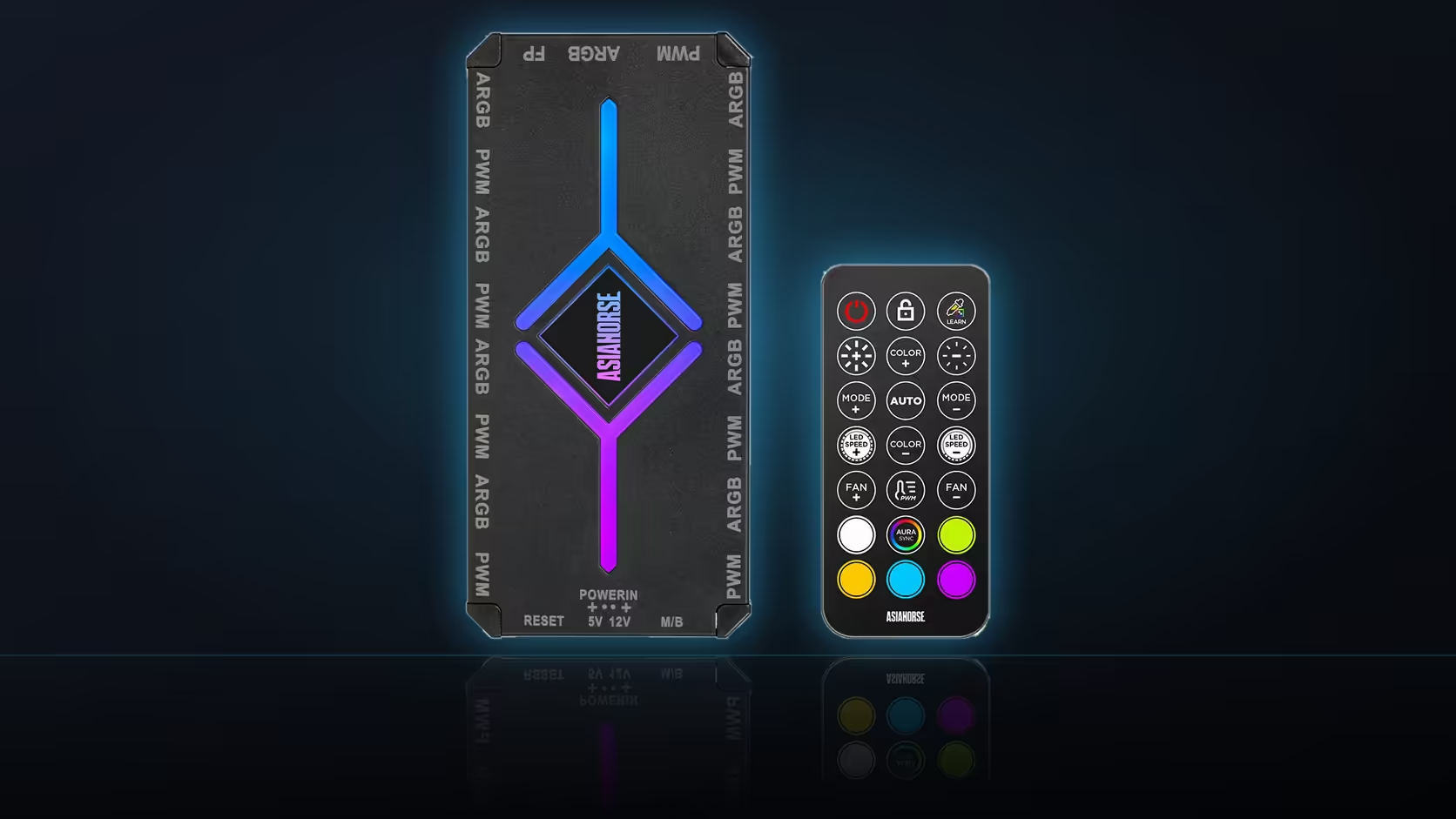
A magnet does not care what colour a panel is, or how premium it looks, or whether it matches the rest of a build's aesthetic - it cares about one thing, which is whether the metal underneath it is actually magnetic. That single fact is what decides whether the ASH-S1's mounting system works at all in a given case, and it is a question a lot of builders never think to ask before assuming the mount will simply hold wherever it is pressed.
Quick Answer
The ASH-S1's magnetic mount grips steel, and only steel - it has nothing to hold onto against an aluminium panel, since aluminium is not magnetic regardless of its thickness or finish. Many cases mix the two materials, often with an aluminium exterior sitting over a steel internal frame, so the practical answer is to test the specific surface with any small magnet before assuming the mount will work there. Where no steel is reachable, adhesive mounting or a cable tie through a nearby anchor point are the usual fallbacks.
🧲 The physics behind why this matters
Magnetism is a property of specific metals, and steel - an iron alloy - is one of them, which is why the description names steel specifically rather than metal generally. Aluminium, despite being a metal that looks and feels similar to steel in a lot of case panels, is not magnetic in any practically useful sense. A magnet pressed against a bare aluminium surface simply does not hold, no matter how strong the magnet is or how flat the contact. This is not a quality issue with either the magnet or the panel - it is a basic property of the materials involved, and no amount of pressing harder changes it.
This distinction gets lost easily because both materials often look identical once painted or anodised, and both are commonly described loosely as "metal" in case marketing and reviews, without distinguishing which specific metal is doing the structural work. A builder reasonably assuming that any internal metal panel will hold a magnetic mount is making an assumption the physics does not actually support.
🏗️ Why cases mix materials in the first place
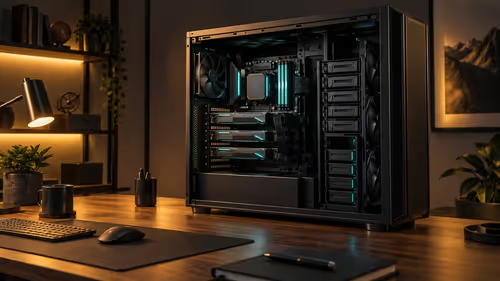
Case manufacturers frequently combine aluminium and steel deliberately, playing to each material's strengths rather than using one throughout. Aluminium is lighter and often used for exterior panels, front and top covers, and anywhere reduced weight or a particular finish matters aesthetically. Steel tends to be reserved for structural elements - the main chassis frame, the motherboard tray, and load-bearing sections where rigidity matters more than weight. The result is a case that can have an entirely aluminium exterior while the internal skeleton, including the tray a hub would typically mount to, is steel throughout.
This is actually good news for mounting the ASH-S1, since the motherboard tray - usually the most convenient and central mounting location anyway - is disproportionately likely to be steel even in cases with aluminium exteriors. But it means the assumption "this case has an aluminium panel, so the magnet definitely will not work anywhere" is just as wrong as assuming it will work everywhere. The honest answer depends on which specific surface is being considered, not on the case as a whole.
🔍 Testing a surface before committing to it
The practical test costs nothing and takes seconds: hold any small magnet - a fridge magnet, a spare from a toolbox, anything with reasonable pull - against the candidate surface. If it holds with a firm, positive grip, the ASH-S1's mount will hold there too, since the physical requirement is identical regardless of the magnet's size. If it does not hold, or holds weakly, that surface is not steel, or not steel of sufficient thickness, and a different mounting approach is needed.
This test is worth running on every candidate position before finalising a plan, not just the first spot that looks convenient, since case interiors can have steel in some areas and aluminium in others depending on where structural strength was prioritised during design. A few minutes spent testing several candidate spots avoids discovering mid-build that the chosen position was never going to hold in the first place.
🔧 What to do when no steel is reachable
Not every case interior offers a convenient steel surface exactly where a hub would ideally sit, and for those situations the magnetic mount simply is not the mechanism to rely on. Double-sided adhesive mounting tape is the most common fallback, provided the surface is clean and the adhesive is rated to hold the hub's weight along with the cables pulling on it. A cable tie routed through any nearby anchor point - a drive cage mounting hole, a grommet, or a case tie-down point - is another option, particularly useful in combination with adhesive for extra security.
Neither fallback is as convenient as the magnetic mount's tool-free, repositionable nature, which is worth factoring into case selection if reliable steel mounting matters to the build. Cases marketed around a steel chassis, or reviews and spec sheets that explicitly mention steel construction for the tray and frame, are a reasonable signal that the ASH-S1's intended mounting method will work without needing a fallback at all. Read case descriptions in Evetech's case fan range for steel construction before assuming any magnetic mount will simply work, and for a case interior that turns out predominantly aluminium, the NZXT fan controller is worth comparing as a different mounting approach entirely.
Frequently Asked Questions
What does the magnetic mount actually attach to?
Any steel panel, which the description names specifically, so the surface material decides whether it holds.
Why does the mount not work on aluminium?
Aluminium is not magnetic, so a mount relying on magnetism has nothing to grip on an aluminium surface.
Do cases commonly mix steel and aluminium internally?
Often. A case can have an aluminium exterior over a steel frame, so the inner surfaces are worth testing individually.
How do I actually test whether a surface will hold?
Hold any small magnet against it. If that holds, the ASH-S1's mount will too.
What if no steel surface is reachable in the case?
Adhesive mounting or a cable tie through a nearby anchor point are the usual alternatives where magnetism is unavailable.
Is the magnet's hold strong enough on its own?
On steel it holds the hub without screws, which is the point of the design, though its cables should not be pulling on it constantly.
Does the mounting position matter for reasons beyond the material?
It does, since both nine-port banks need to stay reachable and the SATA lead has to reach the hub comfortably.
Not sure whether your case interior is steel or aluminium?
Browse Evetech's case fan range and check each listing's construction details before planning your mount.