A build that already has a lighting scheme running rarely needs a whole row of fans to make a statement. One extra fixture at the right spot often finishes the look better than three doing the same job together. The Nyota Ultra range sells both ways, a single fan and a three-pack, and the honest answer to which one suits a given build depends on whether you are adding an accent or building the light source from scratch.
Quick Answer
A single Nyota Ultra is R249 and a three-pack is R649, so a lone fan costs roughly a third of a full row while a pack works out cheaper per fan. Choose a single to add one lit point to a build that already has lighting elsewhere, and choose the pack when the fan row itself needs to carry the display.
✨ What one fan can and cannot do on its own
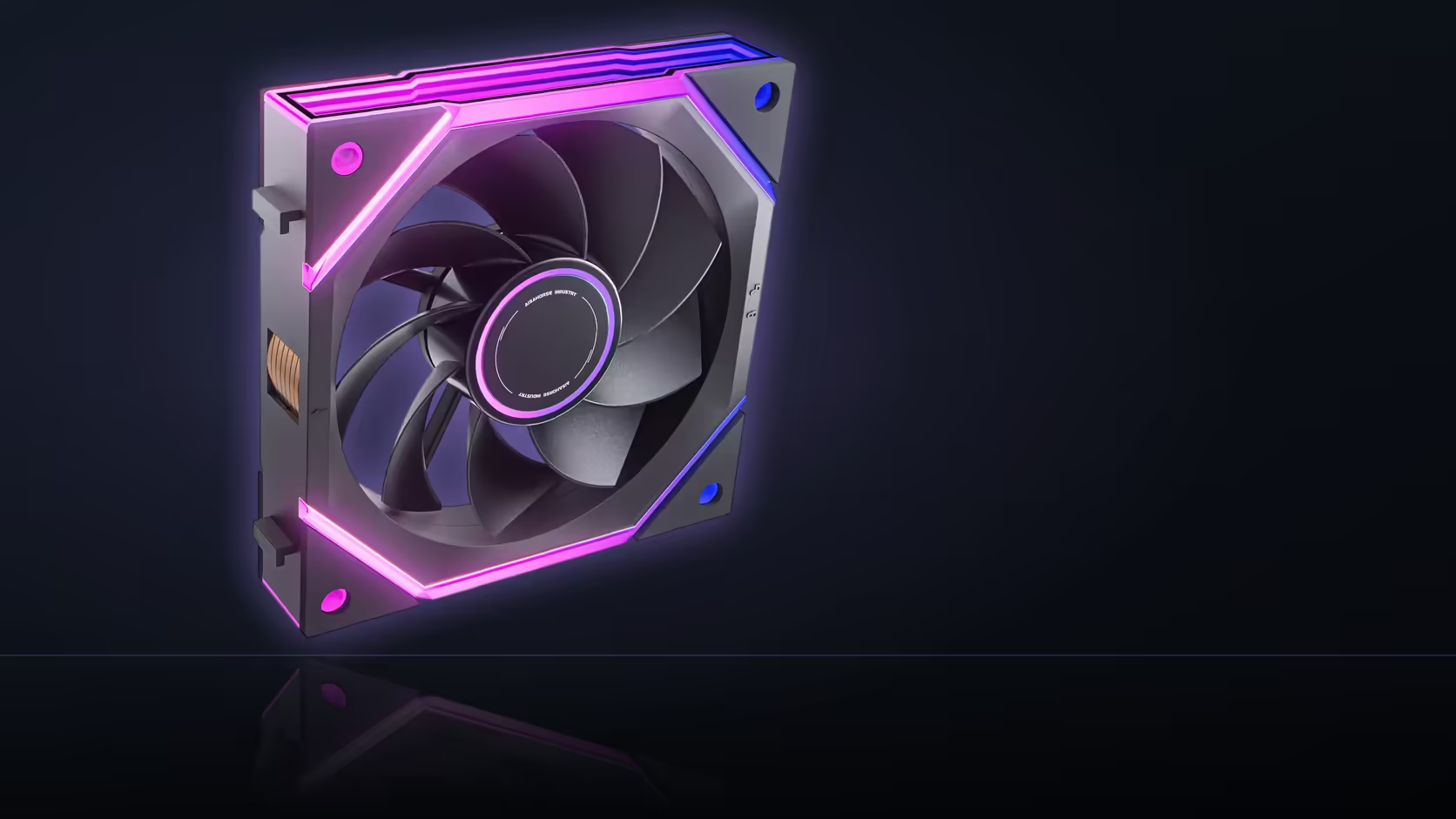
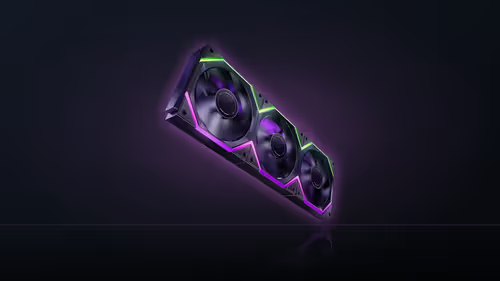
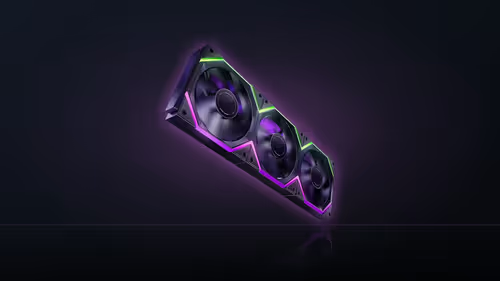
A single Nyota Ultra brings the infinity-mirror ring and its 16 addressable ARGB LEDs to whichever position it occupies, at 800 to 2000 RPM under PWM control and up to 58.5 CFM of airflow on a nine-blade, hydro-bearing design. As a standalone light source in an otherwise dark case, one ring reads as an isolated glow rather than a pattern. It works far better as a deliberate accent, placed where a case already has a motherboard header strip, a memory kit, or another fan supplying the rest of the display. In that context the single fan is a finishing touch rather than the whole job, and R249 is a modest outlay for that role.
There is also a practical case for starting with one fan: it lets you confirm the lighting sync and the mounting position before committing to a full row. If the ring reads well from your seat and the cabling routes cleanly, a second and third fan can follow later without wasted spend on a scheme that needed adjusting.
🔁 Why three fans read as a pattern rather than a repeat
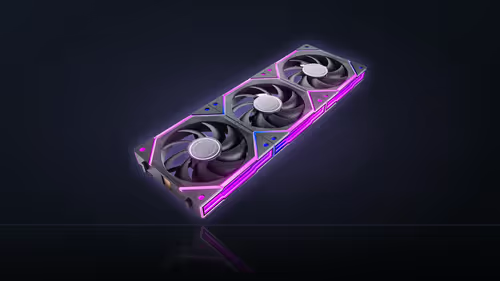
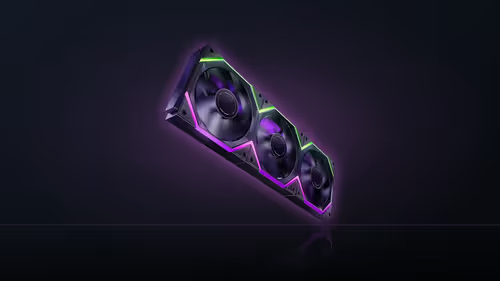
Put three identical mirror rings side by side and the eye reads them as a deliberate row rather than three separate accessories. That repetition is what a full front intake bank or a radiator mount actually needs, because a single ring on a three-fan mounting bracket looks like a gap rather than a choice. The three-pack at R649 is built for exactly that scenario, and because each fan shares the same 800 to 2000 RPM range, 58.5 CFM airflow figure, and 6 to 30 dBA noise window, the row behaves consistently once it is wired together.
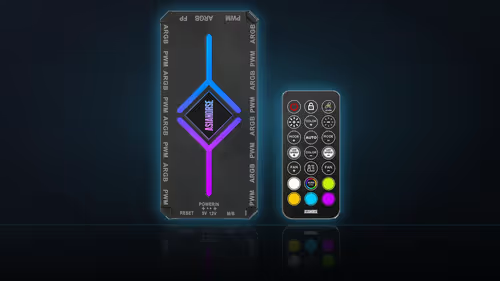
AsiaHorse also describes cable daisy-chaining on a 550mm run across the Ultra range, which is what lets a three-fan row share one motherboard connection instead of tying up three headers. That detail matters more for a pack than for a single fan, since a lone unit rarely needs to share a chain with anything else.
🧮 Working out the cost per fan either way
Buying three singles at R249 apiece comes to R747, against R649 for the three-pack, so the pack is the better route whenever three fans are genuinely the plan. Where the plan calls for exactly one fan, though, the single at R249 remains the only sensible purchase; buying a three-pack to use one fan and shelve two spares is not a saving. Knowing which scenario you are in before ordering avoids paying for fans that end up doing nothing.
🪟 Matching the choice to where the fan actually sits
A rear exhaust visible through a side window is a common single-fan position, since it sits alone by design and one lit ring completes that spot without needing company. A front intake bank, by contrast, is built for a row, and filling it with one fan and two blanks looks unfinished rather than restrained. Colour choice interacts with this too: with only one fan in view, matching it to the case interior matters more than it does in a full row, where three identical fans set their own visual rule regardless of the surrounding panel colour.
Anyone assembling a fan order for a specific case layout can compare options in the case fan range, and the case accessories selection covers daisy-chain leads and mounting hardware for extending a row later.
🧱 Building a scheme in stages rather than all at once
Some builds are better served by treating lighting as a project that develops over a few months rather than a single purchase. Starting with a single Nyota Ultra in the position that matters most, confirming it works and looks right, and only then adding a second and third fan later spreads the R649 pack cost across a longer timeframe while still ending up at the same finished row. The 550mm daisy-chain run AsiaHorse specifies for the range means later fans can join the same connection point the first single already used, so building in stages does not mean rewiring earlier work once the row is complete.
That staged approach also leaves room to change plans partway through. A single fan that turns out to sit in the wrong spot, or whose colour clashes once the rest of the build comes together, is a far smaller loss to reposition or replace than three fans bought as a committed set from the outset. For a build still finding its final look, that flexibility is worth more than the small per-fan saving the three-pack offers.
🎨 How pack and single choices interact with colour
Black and white are both available across the single and the three-pack, which means a mixed-colour scheme, three black fans as intake with one white fan as a highlighted exhaust, for instance, is achievable without any awkward gaps in what is available to buy. Because the specification does not change between colours any more than it changes between pack sizes, colour becomes a purely visual decision layered on top of the single-versus-pack question rather than one that limits it. A build planning a two-tone scheme can settle the fan-count question first and the colour split second, without either decision constraining the other.
🔁 Revisiting the choice as a build evolves
A build finished today rarely stays exactly as it was assembled, and the single-versus-pack decision is one that can reasonably be revisited later. A case upgrade, an additional radiator, or simply a change in taste can turn what started as a single accent fan into the first unit of a future three-pack, or turn a once-complete row into the source of spares for a different chassis. Because both the single and the pack share the same specification and the same ring design throughout the range, mixing purchases made months apart rarely causes a visible mismatch, which keeps that kind of gradual change low-risk.
Frequently Asked Questions
When is a single fan the better buy?
When a build already has other lighting and needs one more accent point, rather than a full row to establish the scheme from nothing.
Why does a full row look better than one fan alone?
Because three matching mirror rings form a visible pattern together, where a single ring in an otherwise plain case can look isolated.
Is the three-pack actually cheaper per fan?
Yes. Three singles cost R747 combined against R649 for the pack, so buying three fans together saves roughly R100.
Does a single fan differ in specification from a pack fan?
No. Both share the same 58.5 CFM airflow, the 800 to 2000 RPM PWM range, and the infinity-mirror ARGB ring.
Can a fourth fan be added to a three-pack row later?
Yes, since singles are sold separately with the same design, so a fourth position can be filled after the initial pack is installed.
Does colour matter more with one fan than with three?
It tends to, since a lone fan's colour stands against the case interior on its own, while a full row of matching fans reads as its own block regardless.
Ready to decide between an accent fan and a full row?
Have a look at where the fan needs to sit, then browse Evetech's case fan range for the single or the pack that fits.