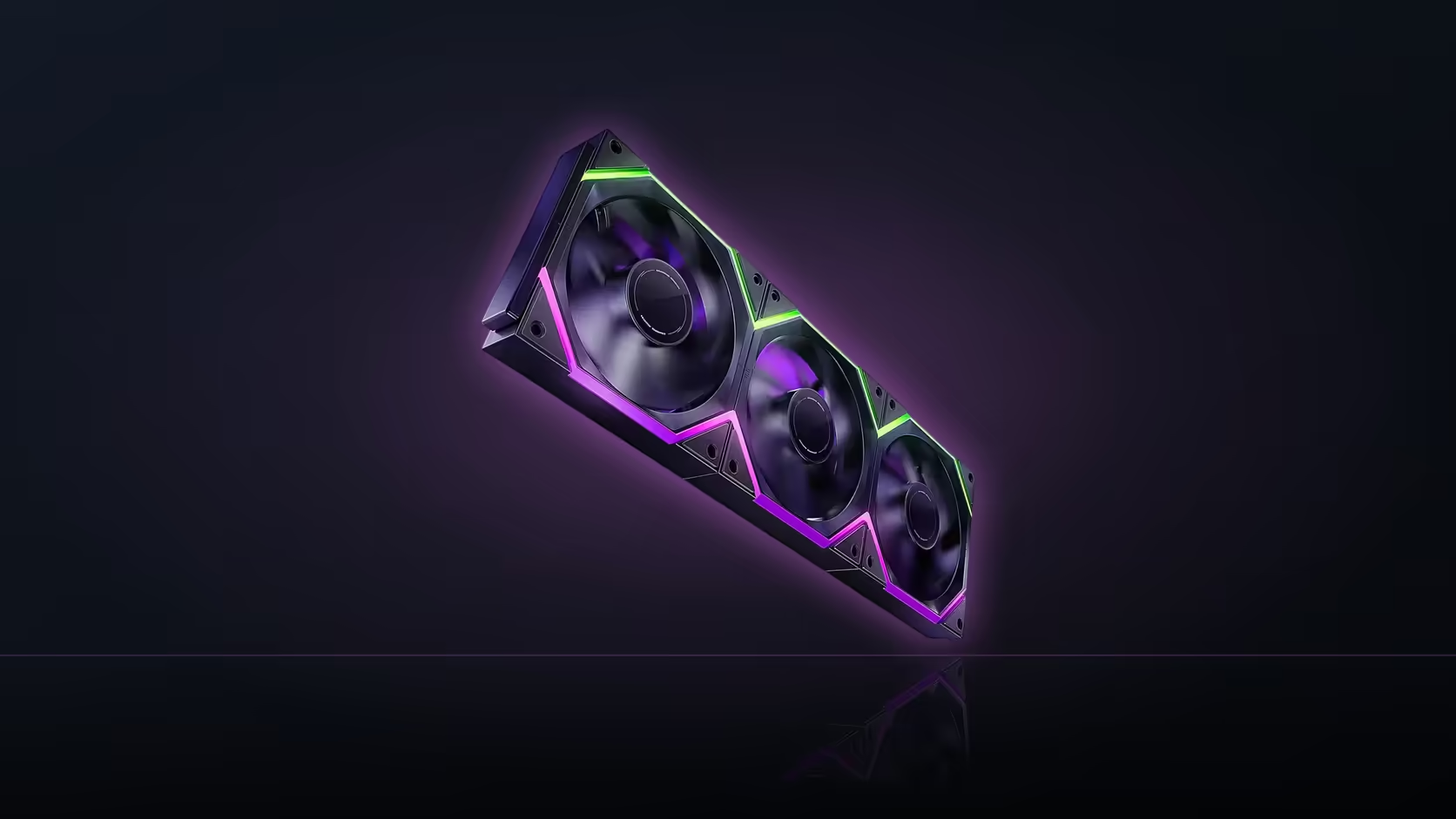
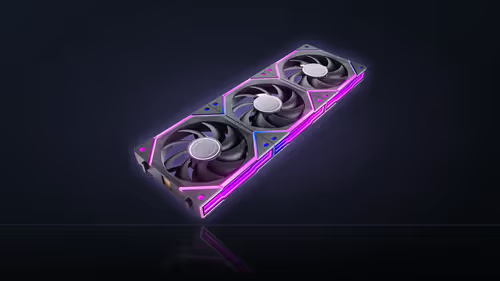
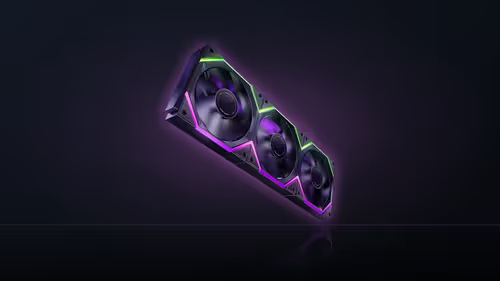
A row that comes out as one piece and a row that comes apart fan by fan solve opposite problems, and the Nyota Pro sits firmly in the first camp. Its modular interlock trades the flexibility of individual cabling for a cleaner install, and whether that trade works in a given build's favour depends heavily on how the row is actually likely to be serviced down the line.
Quick Answer
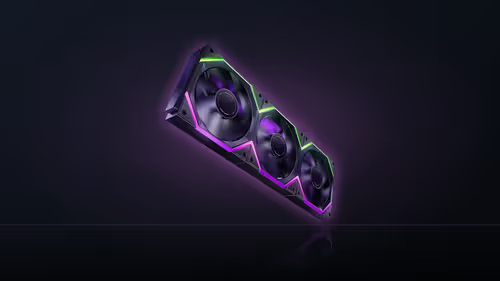
A modular interlock, like the one joining the Nyota Pro's three fans, helps when a row is removed whole for cleaning or filter access, since it lifts out as a single assembly. It works against you when a single fan needs replacing, since that means disassembling the joint rather than unplugging one lead, a task loose cable links handle more easily. The R599 (VAT included) three-pack uses the interlock design as standard, with no single-fan purchase option available in this model.
🧹 When the interlock genuinely helps
Removing an entire row for cleaning behind it, or to access a filter mounted underneath, is where a physically joined assembly earns its keep. One lift, one connection to release, and the whole row comes clear, compared with the multiple individual disconnections a cabled row would require for the same job.
🔧 When it works against you
Replacing a single failed fan is the clearest downside. The interlock has to be released to isolate the faulty unit, which usually means taking the row apart and, in many cases, removing it from the case first just to get at the joint. A cabled row, by contrast, generally allows one fan to be unplugged and swapped without touching the others at all.
Why this matters more than it might seem
Fan failures, while not common, do happen over a product's lifetime, and a design that makes single-unit replacement more involved adds friction exactly when a build owner is least likely to want it: mid-troubleshooting, with a fan already down.
🧩 Is single-fan replacement actually likely here?
With the Nyota Pro specifically, replacing one fan already means buying a full three-pack, since no single unit is sold for this model at all. That reduces, though does not eliminate, the practical sting of the interlock's servicing downside: a buyer facing a failed fan is already committing to a new pack regardless of chaining style, and the interlock only adds the extra step of separating the working spares from the assembly.
🧵 What the cabled approach costs in return
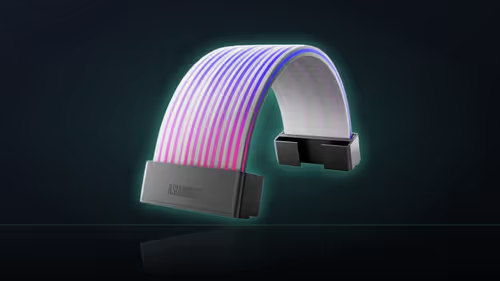
Loose cable links between fans introduce more visible wiring along the row, precisely what the interlock is designed to eliminate. For a build where the fans sit in full view, that visual trade-off is real and worth weighing against the servicing convenience on the other side of the comparison.
⏱️ Install speed across the two approaches
Broadly comparable. The interlocked row is assembled first as a single unit and then mounted complete, while cabled fans are typically installed individually and linked together as a second step. Neither method takes meaningfully longer in practice; they simply order the work differently.
🛡️ Does either affect the warranty?
No. The same one year local warranty applies across the AsiaHorse fan range regardless of whether the model in question uses an interlock or linked cables, so this decision has no bearing on cover.
🚫 Can a row mix both methods?
Not meaningfully. The interlock is engineered specifically for the fans it ships with, so combining it with a cabled fan from another model, or attempting a partial interlock, is not how either system is designed to work, and is not something either method's documentation supports.
🗃️ What two spare fans are worth after a repair
Because a failed fan already means a fresh three-pack regardless of chaining style, whoever ends up doing the repair is left holding two working spares once the faulty unit is set aside. Those spares are genuinely useful stock rather than waste: a future case with more fan positions, a like-for-like replacement if a second fan fails down the line, or simply a backup that removes any urgency the next time something goes wrong with the row. The interlock's extra step at repair time doesn't change what those two spares are worth once they're separated from the failed unit - they're still full-specification Nyota Pro fans either way.
🎯 Weighing the trade-off against how a build is actually used
A build that's unlikely to be opened again once it's finished - built once, run for years, rarely serviced - leans toward the interlock's strengths mattering more than its weaknesses, since the clean install and tidy cable run are worth more day to day than the servicing cost of a repair that may never happen. A build that gets opened regularly, whether for upgrades, cleaning, or general tinkering, shifts the calculation the other way, since the interlock's extra step at teardown time gets paid repeatedly rather than as a one-off cost tied to a single failure.
Visibility changes the answer too
Where the row sits in full view through a windowed panel, the interlock's tidier look carries real weight that a hidden row simply doesn't offer. A fan row mounted somewhere a customer or builder never actually sees gets no visual benefit from the interlock at all, which tips the practical case toward whichever chaining method costs less or services more easily, since the one advantage the interlock holds over cabled links doesn't apply in a position nobody looks at.
For fans that use linked cables instead, or to compare both chaining approaches directly, Evetech's case fan category is worth browsing, and fan controller hardware covers the separate question of hub-based lighting control for either design.
Frequently Asked Questions
When does an interlock genuinely help during servicing?
When the whole row comes out together, for cleaning behind it or accessing a filter, since it lifts as one assembly.
When does it get in the way instead?
When a single fan needs replacing, since the assembly has to be taken apart rather than one lead simply unplugged.
Is single-fan replacement actually common with the Nyota Pro?
Since no single fan is sold for this model, replacing one already means buying a full three-pack regardless of chaining style.
Does the cabled alternative have a real downside?
Slightly more visible cable running between the fans, which is precisely what the interlock is designed to remove.
Which method installs faster?
Broadly similar, with the interlock assembled first as one piece and cabled fans mounted individually before being linked.
Does chaining style affect the fan's warranty?
No, the same one year local warranty applies regardless of whether a model uses an interlock or linked cables.
Can a row combine both interlocked and cabled fans?
No, the interlock is built for its own pack specifically, so mixing methods within one row is not supported by either design.
Thinking through how your fan row will actually be serviced?
Browse Evetech's case fan range to compare interlocked and cabled options side by side.