There is a meaningful visual difference between one lit accent and a whole matching row, and it is worth deciding deliberately which of those two effects a build is actually going for before ordering a RAM cover for a single module or enough for every populated slot at once.
Quick Answer
One lit point among otherwise plain or mismatched sticks - that is what a single AsiaHorse RAM Cover ARGB Heatsink gives you. Cover every populated slot instead and the result is a continuous lit band across the memory area. Both cost the same R249 per unit, VAT included - what differs is how many you order, and quantity per pack is worth confirming on the listing before planning either arrangement.
💡 The single-cover effect
One covered module, surrounded by bare sticks, reads as either a deliberate accent or an unfinished job, and which impression it makes depends heavily on the rest of the build. In a case where lighting elsewhere already draws the eye - fans, a strip, a lit cooler - a single covered module can work as a quiet complement rather than looking incomplete. In a mostly dark case with little else lit, it is more likely to read as a job someone started and did not finish.
🌈 The full-row effect
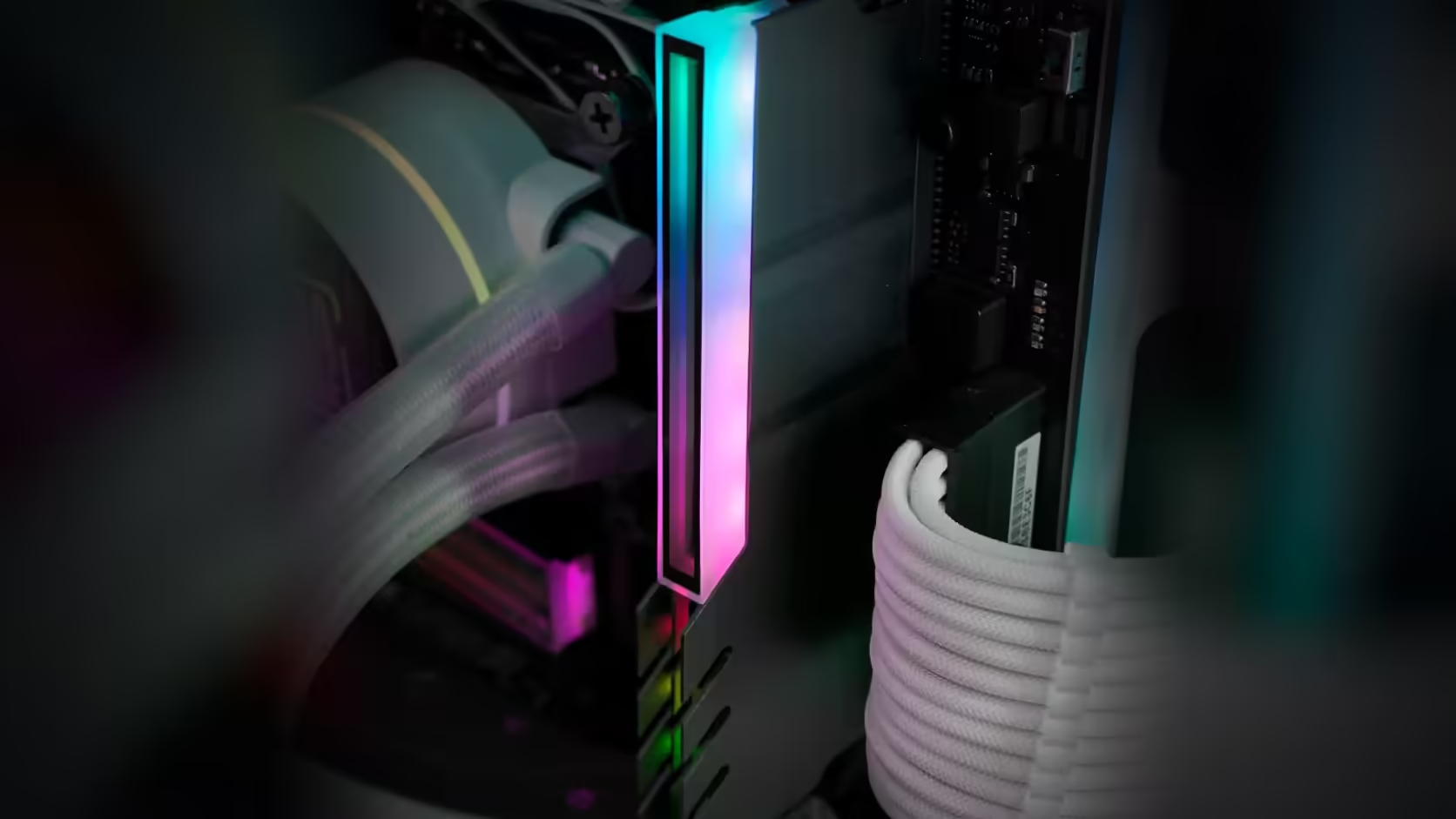
Covering every populated slot removes that ambiguity entirely. The result is a continuous band running across the memory area, topped by the infinity-mirror panel on each module, which is closer to what the product description means by unifying mismatched RAM under one lit finish. This is the arrangement that most directly delivers on the product's stated purpose, at the cost of buying one cover per populated slot rather than just one.
📦 Working out the actual cost
A common four-slot board running two or four populated channels needs exactly that many covers for a full row - two covers for a dual-channel kit, four for a fully populated board. Confirming how many units come in a single purchase matters here, since ordering piecemeal to reach the right count is more fiddly than buying the correct quantity from the start.
⚖️ Weighing the two arrangements
A single accent costs less and commits to less - if the effect does not suit the build, removing one cover is a minor change. A full row is the bigger commitment, both in cost and in how much it reshapes the memory area's appearance, but it is also the arrangement that actually delivers a unified finish rather than a partial one.
🔗 Chaining supports either choice
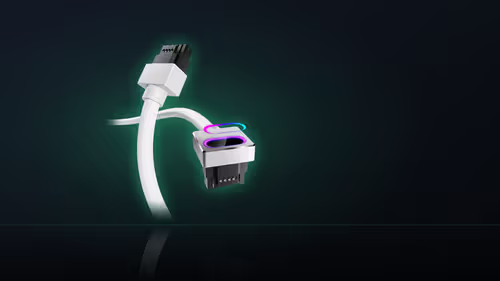
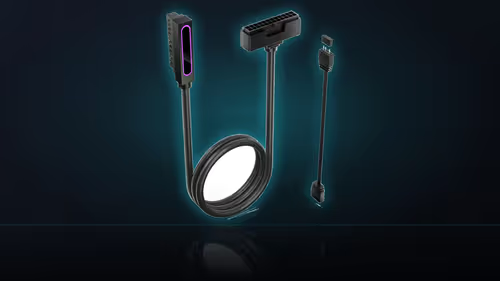
The lead's male and female ends let covers link along a row into a single connection reaching the board, which suits a full-row arrangement particularly well - one run rather than several separate leads. For a single cover, that chaining capability goes unused but costs nothing either way.
🎯 Where a single accent genuinely works best
A single covered module reads most convincingly as deliberate when it sits somewhere the eye already goes for another reason - the slot nearest a lit CPU cooler, or the one most visible through a windowed side panel from the machine's usual viewing angle. Placed at random among otherwise bare sticks with no other lighting nearby to connect it to, the same single cover has a harder time reading as intentional, simply because nothing in the build explains why that particular module was singled out. Thinking about placement, not just quantity, is what separates an accent that looks planned from one that looks like a leftover from an order that ran short.
🧮 Working backward from a target look
Rather than deciding on a quantity first, it can help to work backward from the finished look you actually want. If the goal is a continuous band, count the populated slots and buy exactly that many - no more, since a spare cover with nowhere to go is simply a purchase that overshot. If the goal is a single accent, buying one and confirming it reads the way you hoped before considering a second is the lower-risk order, since the first unit also serves as the fit test described elsewhere for this product.
🔁 Changing your mind later
Because a cover clips on rather than being permanently fixed, moving from one arrangement to the other later is entirely possible - a single accent can grow into a full row simply by ordering the remaining covers once the first has been lived with for a while. Removing covers to go the other direction, from a full row back to a single accent, is just as straightforward mechanically, though it is worth considering upfront that going backward on a decision like this is a less common path than building forward from a smaller start.
🧪 A sensible way to start
Fitting one cover first, on either DDR5 or DDR4 memory, and living with it for a few days before deciding on the rest is a reasonable way to judge how the effect reads in your own build, rather than committing to a full set based on photographs alone.
Frequently Asked Questions
What does a single cover look like?
One lit module among plain ones, which reads as a deliberate accent or as an unfinished job depending on the build.
And a full row?
A continuous lit band across the memory area, which is the unified finish the description positions the product for.
How many covers come in a purchase?
Quantity per pack is worth confirming on the listing, since that determines how many modules one order dresses.
What does a four-slot build need?
One per populated slot, so a build with four modules needs four covers to achieve a continuous finish.
Would two look balanced?
Two covered modules among two bare ones rarely reads as intentional, so an even split is usually the weakest arrangement.
Does the chaining suit a row?
It does, since the male and female ends let covers link along the row into a single connection.
Is starting with one sensible?
It is, both for confirming the fit and for seeing how the lit panel reads in your own build before buying more.
Can the arrangement be changed after the first purchase?
Yes - covers clip on rather than being permanently fixed, so moving from a single accent to a full row, or the reverse, is a matter of buying or removing units rather than redoing anything already fitted.
Deciding between one lit accent and a full matching row?
Browse Evetech's DDR4 and DDR5 memory range and picture either arrangement across your own slots before ordering.