Article (MDX)
You’ve specced out your new rig, but one question remains: do you splash out on a lightning-fast PCIe 5.0 SSD, or stick with the tried-and-true PCIe 4.0? With Gen 5 drives promising double the speed, South African gamers are wondering if the performance boost is real or just marketing hype. Let's break down the PCIe 5.0 vs 4.0 SSD debate and see if the extra cost is actually worth it for your gaming sessions. 🚀
What's the Real Difference: PCIe 4.0 vs 5.0?
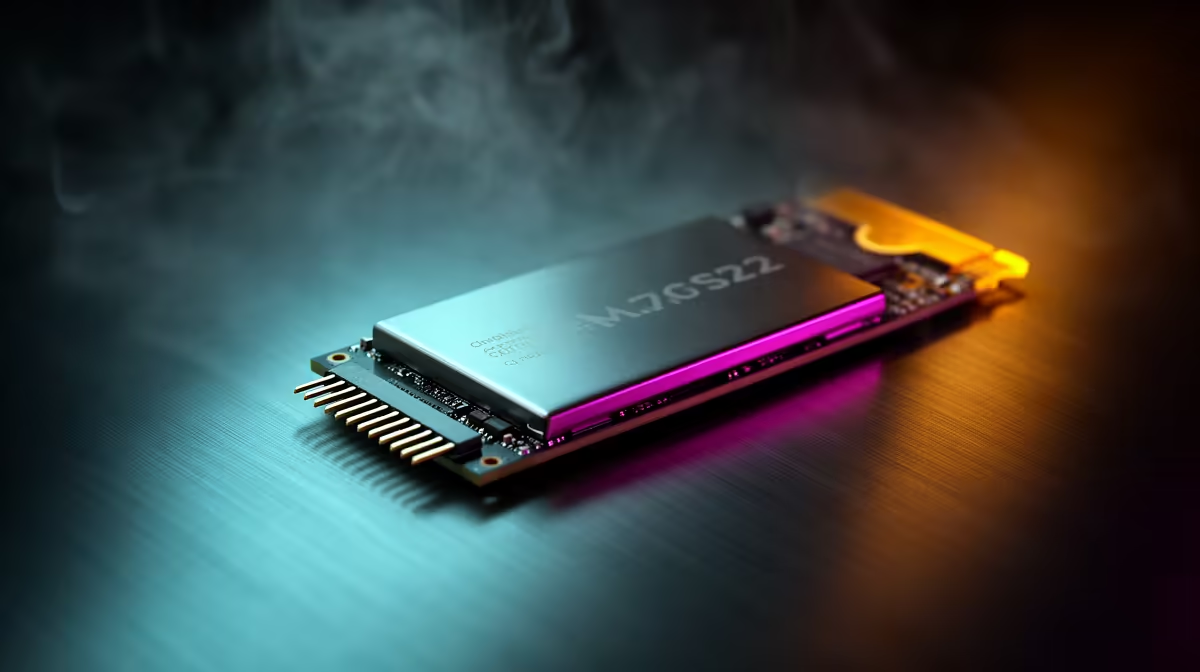
At its core, Peripheral Component Interconnect Express (PCIe) is the data highway inside your PC. Each new generation effectively doubles the bandwidth. A top-tier PCIe 4.0 drive might hit sequential read speeds of around 7,400 MB/s. By contrast, a PCIe 5.0 drive can scream past 14,000 MB/s.
Think of it like upgrading from a two-lane road to a four-lane highway. The potential for data to move is massive. But does your gaming traffic actually need all those extra lanes right now? For a full comparison of available drives, it's worth browsing the latest NVMe SSDs to see the specs side-by-side.
How SSD Speed Actually Affects Your Gaming
The most noticeable impact of a fast SSD is on loading times. But when comparing a high-end Gen 4 drive to a new Gen 5 drive, the difference in current games is often... underwhelming. You might shave off a second or two loading into Baldur's Gate 3 or fast-travelling in Starfield, but it’s hardly a revolutionary leap.
The real potential for the PCIe 5.0 vs 4.0 SSD battle lies in future technologies like Microsoft's DirectStorage. This tech allows the GPU to stream assets directly from the SSD, bypassing the CPU. As more games adopt it, the blistering speed of Gen 5 drives could eliminate texture pop-in and enable more detailed game worlds. For now, however, a quality Gen 4 NVMe SSD provides more than enough performance for a fantastic gaming experience.
Don't Forget the Heatsink! 🔥
PCIe 5.0 SSDs run significantly hotter than their Gen 4 counterparts due to their incredible speeds. Most motherboards with Gen 5 M.2 slots include a built-in heatsink, and it's crucial to use it! Without proper cooling, your drive can thermal throttle, slashing its performance when you need it most. Always check your motherboard's cooling solution before installing.
When Does a PCIe 5.0 SSD Make Sense?
So, who should consider a Gen 5 drive?
The Future-Proofer and Hardcore Enthusiast
If you're building a top-of-the-line rig with the latest components and want to be ready for the next wave of games, a Gen 5 SSD is a logical, albeit expensive, choice. You're investing in performance that will become more relevant over the next couple of years. These are the absolute fastest drives on the market for those who demand the best. You can find the latest bleeding-edge models in our Gen 5 NVMe SSDs category.
The Content Creator
The discussion of PCIe 5.0 vs 4.0 for gaming is one thing, but for productivity, it's a different story. If you're a video editor scrubbing through 8K footage, a 3D artist working with massive files, or a programmer compiling huge codebases, the speed boost is immediately noticeable and can save you valuable time. Here, the investment pays for itself. ✨
The ZAR Factor: Is the Price Justified?
Let's be honest, tech in South Africa isn't cheap. PCIe 5.0 drives carry a hefty price premium over their Gen 4 siblings. For the price of a 1TB Gen 5 SSD, you could often get a 2TB Gen 4 drive with excellent performance.
For most gamers, that extra cash is better spent on a more powerful graphics card, a faster CPU, or more RAM... upgrades that will deliver a much bigger and more immediate boost to your in-game frame rates. Always weigh the cost against the tangible benefit, and check out the best SSD deals to see how the prices stack up.
Final Verdict: Is the Gen 5 Speed Boost Worth It?
For the vast majority of South African gamers in 2024, a high-quality PCIe 4.0 SSD is the smarter buy. It offers incredible speed, fantastic value for money, and more than enough performance for today's and tomorrow's games.
A PCIe 5.0 SSD is an enthusiast-grade component for those who are building a cost-no-object machine, need maximum productivity performance, or are determined to future-proof their rig for the next five years. The technology is impressive, but its in-game advantage is still on the horizon.
Ready to Slash Those Loading Screens?
Whether you're chasing ultimate value with Gen 4 or future-proofing with Gen 5, the right drive is waiting. Explore our massive range of SSD deals and find the perfect storage to power up your rig.