Building a new gaming rig in South Africa? It’s tempting to save a few hundred Rand on the power supply unit (PSU) to afford a beefier GPU. But is it a smart move? The debate over a premium vs budget PSU isn't just about wattage; it’s about the hidden component quality and the dangerous ripple effects that can silently kill your expensive parts. Let's plug in and find out what really matters. ⚡
Beyond the Wattage: Unpacking PSU Component Quality
When you compare a premium vs budget PSU, the price difference often comes down to what's inside the box. High-end power supplies from premium brands like Corsair typically use superior components, like Japanese-made capacitors rated for higher temperatures (105°C) and longer lifespans. Budget units might use Taiwanese or Chinese capacitors rated for 85°C, which can degrade faster under the heat of a heavy gaming session.
This difference in component quality directly impacts stability and longevity. A well-made PSU delivers consistent, clean power, protecting your sensitive motherboard, CPU, and GPU from voltage fluctuations. It's an investment in the health of your entire system.
The Danger of Dirty Power: Understanding Ripple Effects
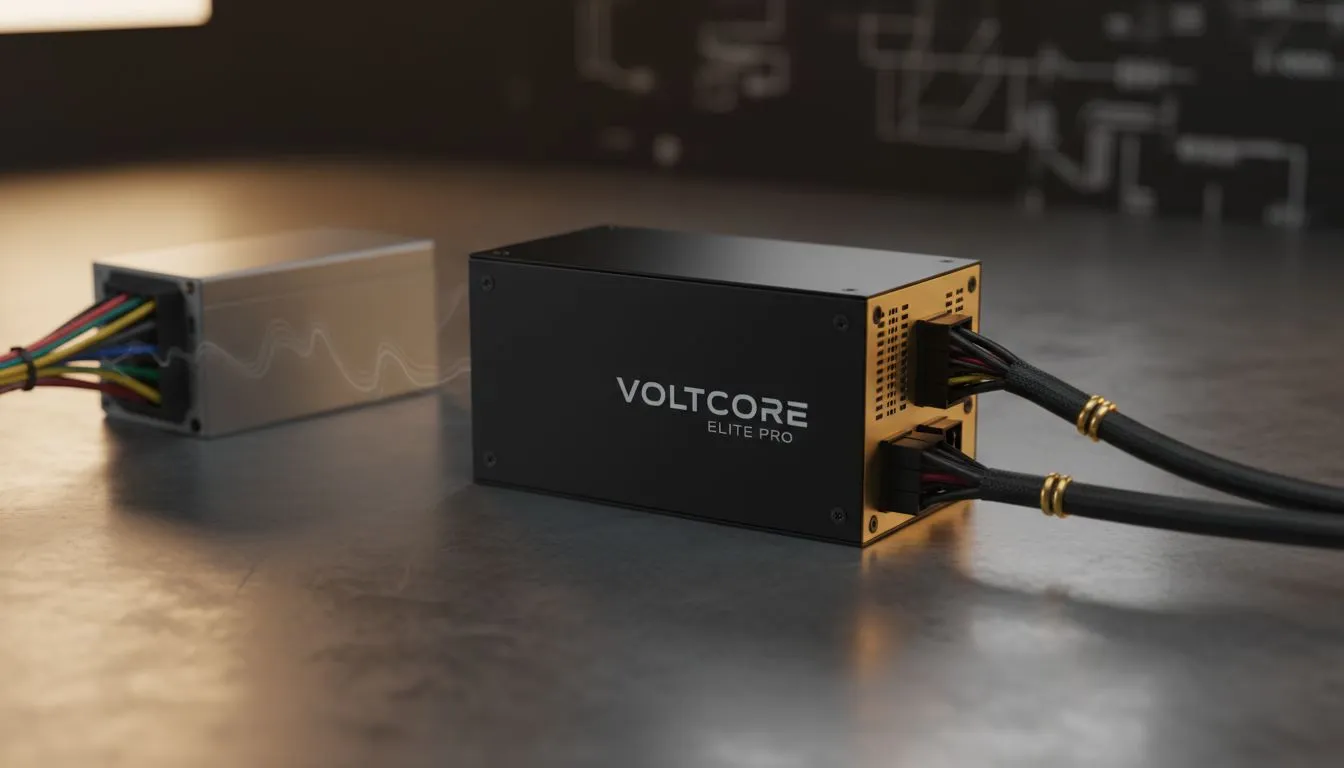
One of the most critical, yet least discussed, aspects of PSU performance is "ripple." In simple terms, ripple is the small, unwanted AC voltage that rides on top of the DC voltage your components use. Every PSU has some ripple, but the key difference between a premium and budget PSU is how much they have.
Excessive ripple puts stress on the voltage regulators on your motherboard and graphics card, forcing them to work harder to clean up the power. Over time, this can lead to:
- System instability (random crashes and blue screens).
- Reduced overclocking potential.
- A significantly shorter lifespan for your expensive components.
Think of it like giving your high-performance car dirty, contaminated fuel... it might run for a while, but you're causing damage under the hood. ✨
PSU Wattage Pro Tip 🔧
Not sure how much power you need? Use an online PSU calculator! Just plug in your components (CPU, GPU, RAM, drives), and it will estimate your total power draw. Always add a 20-30% headroom to ensure your PSU runs efficiently and has room for future upgrades. This prevents it from running at 100% load, which generates more heat and noise.
More Than a Sticker: Why 80 PLUS Efficiency Matters
You've probably seen the 80 PLUS sticker (Bronze, Silver, Gold, Platinum, Titanium) on PSU boxes. This isn't just marketing; it's a certification for power efficiency. An 80 PLUS Gold PSU, for example, is at least 87% efficient at 100% load, meaning only 13% of the power drawn from the wall is wasted as heat. A lower-rated Bronze unit might waste 18% or more.
Why does this matter in South Africa?
- Lower Electricity Bills: Less wasted energy means you pay less to Eskom over the life of your PC.
- Cooler & Quieter Operation: A more efficient PSU generates less heat, so its fan doesn't have to spin as fast or as often, leading to a quieter gaming experience.
Choosing a unit with a good efficiency rating is a smart financial and performance decision. You can explore various 80 PLUS certified options to find the sweet spot for your budget and build.
So, Is a Budget PSU Ever a Good Idea?
After all that, you might think budget PSUs are a complete no-go. Not necessarily. The right PSU depends entirely on the PC it's powering. For a basic office computer or a home theatre PC with no dedicated graphics card, a power supply from reputable budget-friendly brands like GAMDIAS can be perfectly adequate.
The danger comes from pairing a cheap, low-quality PSU with power-hungry gaming components. A budget unit simply lacks the robust internal components and ripple suppression needed to safely power a high-end GPU and CPU under load. The rule is simple: the more you spend on your core components, the more you should invest in protecting them with a quality power supply. 🚀
Ready to Power Up Your Build?
Choosing between a premium vs budget PSU is a crucial decision for your rig's health and longevity. Don't let the heart of your system be its weakest link. Explore our massive range of Power Supply Units and find the perfect, reliable power for your PC.