Quick Answer
Protect your hardware by improving case airflow, setting aggressive fan curves before summer, and keeping ambient room temperature below 30 degrees Celsius where possible. A GPU in a 35-degree room idles 10 to 15 degrees hotter than the same card in a 22-degree room, which shortens component lifespan measurably over several seasons.
Why SA Summers Stress Hardware Beyond What Reviews Show 🌡️
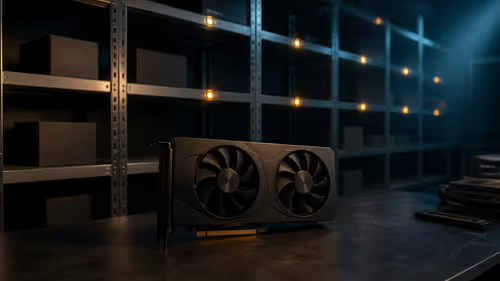
Most international thermal reviews run at 21 to 23 degrees Celsius ambient. Gauteng and the Western Cape regularly hit 35 to 38 degrees indoors without air conditioning in summer. This gap shifts GPU idle temperatures from a typical 45 degrees to 58 to 65 degrees, and gaming load peaks that top out at 78 degrees in a cool European studio can reach 88 to 92 degrees on identical hardware in a SA lounge. Most GPUs throttle performance at 83 to 87 degrees, so thermal protection circuits actively reduce clock speeds before damage occurs, but repeated thermal cycling accelerates solder joint fatigue and capacitor ageing. An RTX 5080 or RX 9070 XT in a poorly ventilated room loses performance headroom faster than the same card in a controlled environment.
Practical Steps to Control Temperatures 🔧
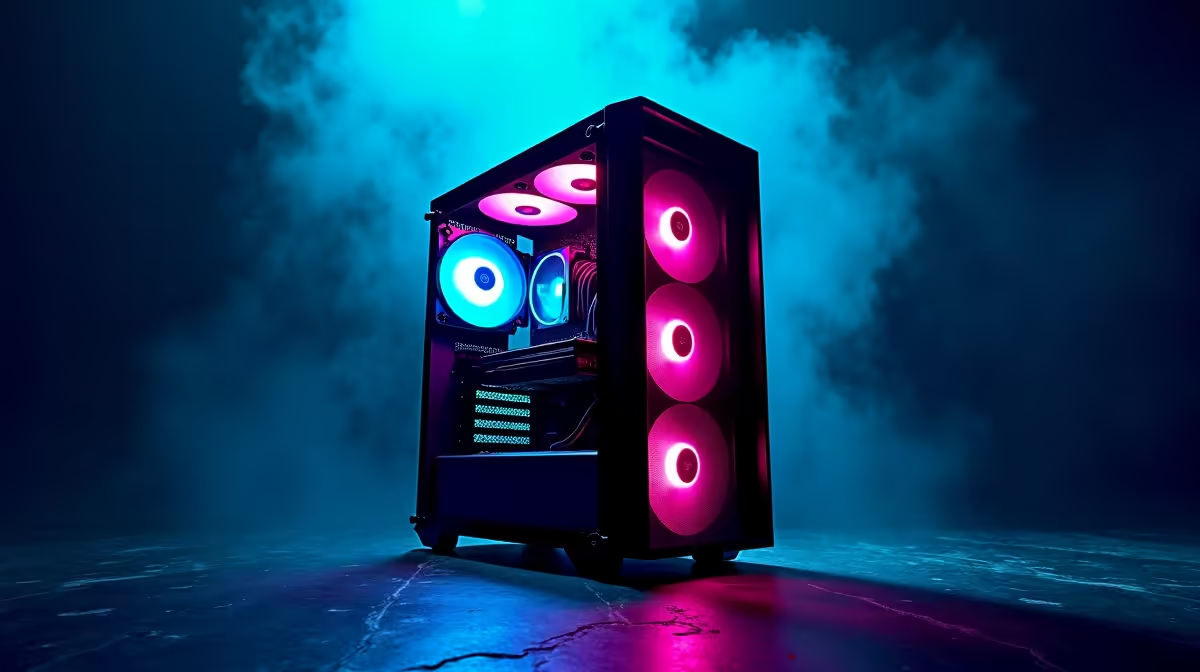
Lift the PC off carpet onto a hard surface: this improves PSU bottom-intake airflow measurably. Move the case away from walls so rear exhaust air does not recirculate. For CPU cooling, a 240mm or 360mm AIO handles Ryzen 9 9950X and Core Ultra 9 285K loads far better than a mid-range tower cooler in hot ambients, keeping temperatures below 85 degrees when room temperature climbs. Budget R1,800 to R4,500 for a reputable AIO, available at Evetech. For the GPU, set a custom fan curve that starts spinning at 40 degrees rather than the default 60: a few extra dBA of fan noise recovers 5 to 8 degrees of thermal headroom. Clean dust filters every two to three months. Highveld wind deposits fine dust that passes through standard filters and coats heatsink fins, reducing airflow by 20 to 40 percent over a season. A can of compressed air takes ten minutes and can drop GPU temperatures by 8 to 12 degrees in a neglected system.
Steepen Your BIOS Fan Curve Before October ⚡
Each year before October, open your BIOS and adjust the fan curve so all case fans reach 80 percent speed at 65 degrees CPU temperature rather than 75 degrees. This gives cooling a head start before ambient temperatures climb. Most modern UEFI interfaces have a graphical fan curve editor that takes under five minutes to configure.
FAQ
Does thermal throttling permanently damage a GPU?
Throttling is a protection mechanism and causes no immediate damage. Repeated long sessions at 90 degrees or above over months and years do accelerate capacitor ageing and solder joint fatigue. Keeping sustained GPU load temperatures below 83 degrees Celsius preserves long-term reliability.
Is liquid cooling worth the premium specifically for SA conditions?
Yes, more so than in cooler climates. The advantage of AIO over tower cooling grows with ambient temperature. The gap is often 10 to 15 degrees larger in a hot SA room than the 5 to 8 degrees seen in international reviews.
How do I confirm my PC is already heat-throttling during games?
Monitor GPU core clock while gaming. If the clock drops below the card's boost specification during sustained load despite the GPU not being VRAM-limited, thermal throttling is the cause. Cross-reference with temperature readings to confirm.
Keep your build cool through every South African summer.
Evetech stocks AIO coolers, case fans, and thermal paste from trusted brands. Visit the cooling section to find the right solution for your case size and CPU platform.