Quick Answer
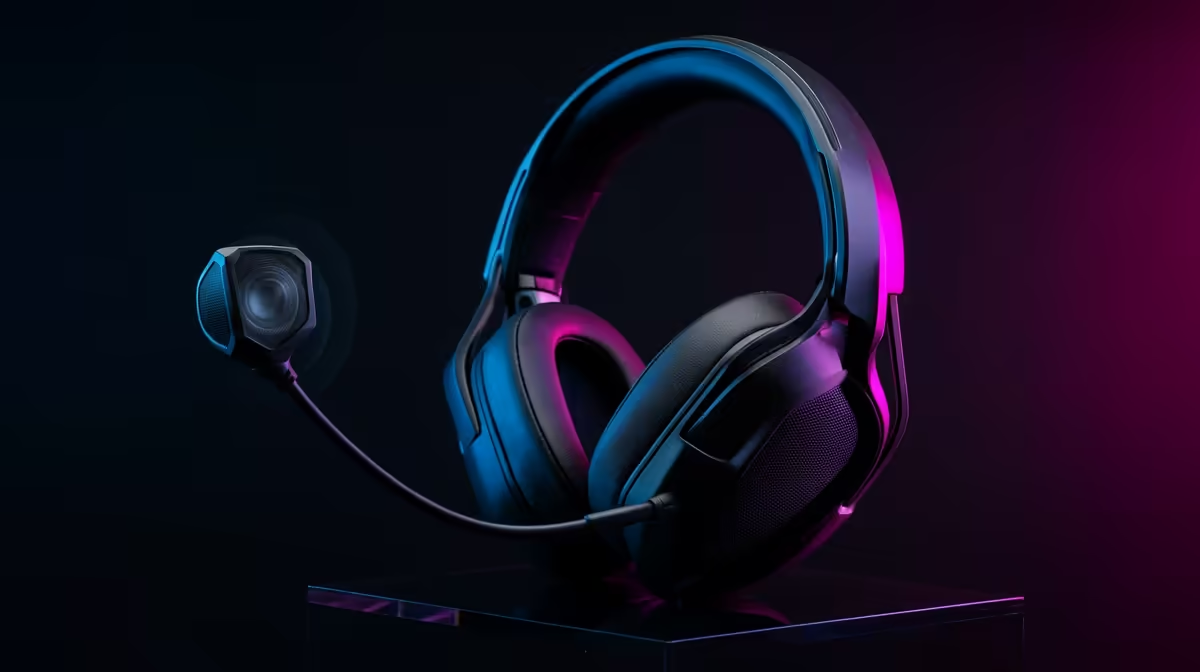
Hidden beamforming microphones use two or more capsules embedded in the earcup to reject noise from all directions except your voice. They are a practical choice for players who dislike boom mics or use their headset for mobile calls, but for dedicated gaming voice chat in noisy rooms a correctly positioned boom mic remains more reliable. Budget R2,000 to R3,500 for a beamforming array worth using seriously.
How Beamforming Arrays Differ From Single Capsule Mics 🎙️
A single-capsule microphone captures sound from a broad hemisphere around the capsule. Without physical proximity to the mouth, it picks up keyboard clicks, fan noise, and room echo alongside your voice. A beamforming array analyses the phase difference between incoming sound at each capsule and cancels any source that does not match the expected direction of your voice, rejecting off-axis sounds by up to 20 dB. Razer's Barracuda Pro implementation stacks AI-trained noise filtering on top of hardware phase cancellation for an additional layer of rejection.
What to Look for When Buying a Beamforming Headset 🔍
Check how many capsules the array uses: two provide basic directional rejection; three allow tighter beam patterns. Check whether noise cancellation is hardware-only or DSP-assisted; AI-powered suppression handles non-stationary noise better than fixed-pattern hardware suppression. Verify that beamforming functions over both 2.4GHz and Bluetooth HFP; some implementations only activate noise processing on 2.4GHz and revert to unprocessed mono on Bluetooth calls. In South Africa, headsets with genuinely effective beamforming start at around R2,000 to R2,500 at Evetech.
Beamforming Performance in Typical SA Home Environments 🏠
South African homes in Johannesburg and Cape Town commonly have ceramic tile floors and plaster walls with minimal acoustic treatment, all of which increase room reverb. Beamforming arrays with static phase patterns can sound hollow in these high-reflection environments because early reflections arrive from angles close to your voice direction. AI-suppressed mics handle this better because they model noise statistically. For students in campus res or open-plan digs, a headset with active AI suppression makes a meaningful difference on team calls.
Position Your Head for Best Beamforming Capture ⚡
Beamforming mics work best when your head faces forward toward your monitor. If you habitually game with your head turned 45 degrees, the directional beam shifts off-axis and background noise rejection drops. Adjusting your seating position to face the screen directly improves beamforming mic quality without any settings change.
FAQ
Can a beamforming headset mic pass for a content creator setup?
For casual streaming or voice-over-video content, a quality beamforming headset delivers acceptable voice quality. For professional content creation where voice clarity is central to the brand, a dedicated large-diaphragm condenser microphone at R1,500 to R2,500 provides noticeably better fidelity than any headset beamforming array.
Does beamforming mic quality degrade over the headset's lifetime?
The microphone capsules are durable and do not degrade with normal use. The foam cover over the mic opening can accumulate debris that muffles input. Clean it periodically with a dry brush and replace if damaged; Razer and other brands sell replacement covers through their South African distributor networks.
How does a beamforming mic compare to Discord's Krisp noise suppression?
Krisp applies AI noise suppression in software after the signal is received. A hardware beamforming array suppresses noise before it reaches the digital signal path. Running both provides double-layer rejection but can cause a slightly processed sound. Test with one active at a time and use both only in extremely noisy environments.
Shopping for a wireless headset with a mic that handles noise without a boom?
Evetech stocks wireless gaming headsets with beamforming mic technology, with local warranty and availability across South Africa.