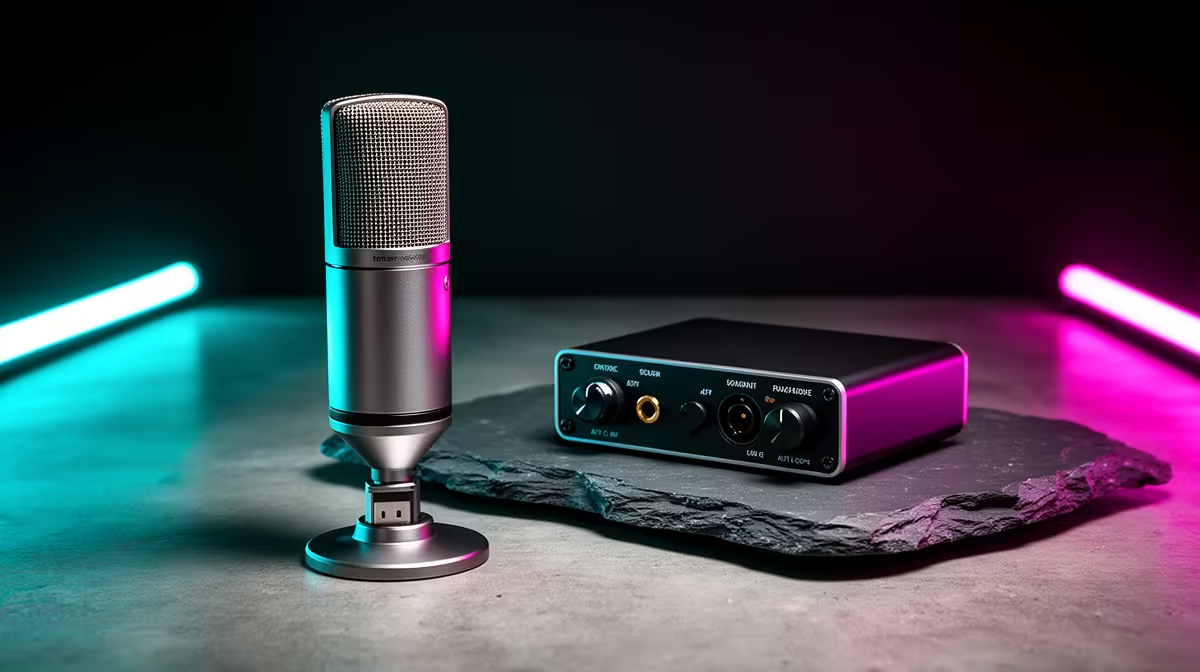
The cable coming out of your microphone tells you a great deal about how the rest of your audio chain will work. A USB plug means everything the mic needs is inside the housing: capsule, preamp and analogue-to-digital converter in one unit. An XLR plug means you are connecting to a separate interface where the conversion and amplification live. For South African creators weighing USB condenser microphones vs analog audio interfaces, the choice hinges on what simplicity costs you and what complexity actually buys.
Quick Answer
A USB condenser combines capsule, preamp and converter into one plug-and-play unit. An audio interface pairs with an XLR mic and provides a cleaner preamp plus multiple inputs. For a solo creator a quality USB mic near R1,500 is enough. A two-channel interface near R2,000 suits multi-mic or XLR-only situations.
🔌 What a USB Condenser Actually Contains
The USB condenser's defining quality is what is packed inside the housing. Behind the grille sits the capsule, the thin diaphragm that converts acoustic energy into an electrical signal. Behind that is a preamp circuit that amplifies that delicate signal before it becomes too weak to carry usefully. And behind that is an analogue-to-digital converter (ADC) that translates the amplified analogue signal into the digital stream that travels down the USB cable to your PC.
Three components, one housing, one cable. The simplicity is genuine. Plug in the mic, open your streaming or recording software, and the device appears as an audio input with no drivers, no configuration and no additional hardware. For a solo creator in a Joburg flat who wants to start recording this afternoon, the USB condenser is the fastest path from box to usable audio.
The engineering trade-off is that all three components must be designed to a single price point. At R1,500 the ADC and preamp inside the mic are not the same quality as what you find in a dedicated interface. The preamp in particular tends to add slightly more of its own noise, which is why USB condensers typically show a higher self-noise figure than equivalent-cost XLR mics measured through a quality interface.
Built-In Monitoring
Most USB condensers include a headphone jack wired directly to the mic's output, providing zero-latency monitoring without routing through the PC. This is a genuine functional advantage over an XLR-only mic, which requires the interface to provide a headphone output. On a budget, a USB mic with a headphone jack saves buying a separate audio interface just to get direct monitoring.
🧠 What an Audio Interface Adds to the Chain
An audio interface is the piece of hardware that separates the components the USB condenser keeps together. The interface contains its own preamp, usually a significantly cleaner one than is possible at the same cost point inside a USB mic housing, and its own ADC. XLR mics, which carry only the raw capsule signal, rely entirely on the interface's preamp for amplification quality.
A mid-tier two-channel interface in the South African market sits between R1,800 and R2,500 for a unit from a reputable manufacturer. That price buys you a preamp that adds measurably less noise than most USB mic preamps, an ADC at 24-bit 96kHz or above, and two XLR inputs that can accommodate two mics simultaneously. Phantom power on the XLR inputs means condenser mics that require external power draw what they need from the interface.
The interface also provides physical control: gain knobs per channel, a headphone output with its own level control, and in most cases a direct monitoring mix that lets you blend input signal with PC playback. These hardware controls are absent from a USB mic unless that specific model includes them.
Pro Tip ⚡
Before committing to an interface, check whether the XLR mic you want to pair it with requires phantom power. Nearly all condenser XLR mics do. Almost all current interfaces provide it. But verify, because dynamic XLR mics such as the SM7B do not require phantom power and are sometimes paired with interfaces by creators who did not realise they could skip phantom power as a purchase criterion.
⚡ Sound Quality: Where the Difference Is Real and Where It Is Not
The marketed narrative around audio interfaces is that they deliver dramatically better sound than USB mics. The honest comparison is more nuanced.
At the entry level, a quality USB condenser at R1,500 and a quality XLR mic through a R2,000 interface deliver comparable noise floor performance for most use cases. The interface chain is measurably quieter on instruments and in high-gain recording scenarios, but on voice at normal gain settings the difference is often inaudible without careful A/B comparison. Streamers, podcasters and commentary creators who run modest gain will not hear a transformation.
The quality difference becomes more meaningful at medium and higher price points. A R3,000 XLR mic through a R2,500 interface outperforms a R3,000 USB mic on low-frequency accuracy, stereo imaging for instruments and maximum gain before audible noise. For music recording, acoustic instruments and professional podcast production, the interface chain earns its cost.
For voice-over-game, commentary and streaming, the USB condenser at a sensible price point is not a compromise. It is the appropriate tool.
🚀 Expandability: Where the Interface Wins Clearly
The clearest advantage of the interface path is not sound quality but scalability. A USB mic occupies one input. A two-channel interface accommodates two XLR mics. Adding a third or fourth presenter means either a larger interface or a second one, but the infrastructure scales where a USB setup essentially cannot.
USB mics do not chain together cleanly. Getting two USB mics to record on separate tracks simultaneously requires operating-system-level aggregation that varies in reliability across Windows versions and adds latency and configuration overhead. Two XLR mics into a two-channel interface is a solved, stable, routine configuration.
For a growing South African podcast with multiple hosts, a gaming channel moving toward multi-person commentary, or any setup where a second voice will eventually need to share the recording chain, the interface is the correct infrastructure choice. Build the chain with the interface early and adding the second mic later is a matter of buying one cable and one mic.
For solo creators, the USB path has no meaningful expandability limitation because the use case does not require it.
🎯 Choosing Based on Your Current Setup
The decision simplifies when framed honestly. A USB condenser is the right choice if you record solo, want plug-and-play reliability, value direct monitoring from the mic body, and do not plan to expand to multiple presenters in the near term. A R1,500 USB condenser used consistently and positioned correctly will produce professional-quality solo voice recording.
An audio interface is the right choice if you already own or plan to buy an XLR mic, if a second presenter is in the plan, if you record instruments, or if maximum gain-before-noise is important for your recording style. The interface adds hardware to manage and a modest setup time investment, but it returns genuine infrastructure that grows with your needs.
Frequently Asked Questions
What does a USB condenser combine in one unit?
It houses the capsule, preamp and analogue-to-digital converter together. The USB cable carries both the digital audio signal and the power the mic needs to operate, so the entire recording chain requires only one cable into one port. This self-contained design is the source of the USB condenser's main practical advantage: genuine plug-and-play operation with no additional hardware.
Why choose an audio interface rather than a USB mic?
An interface provides a cleaner preamp than most USB mic circuits at a comparable price, accommodates multiple XLR inputs simultaneously, and offers hardware controls that a USB mic does not include. The main reason to choose an interface is infrastructure: if you need more than one input, plan to record instruments, or want the ceiling to upgrade your XLR mic independently, the interface path makes more sense.
Does an interface actually sound better than a USB mic?
Marginally at entry level, substantially at higher price points. For voice recording at normal gain settings, the noise floor difference between a quality USB condenser and a quality XLR mic through a mid-tier interface is small enough to be inaudible on most streams and podcasts. The gap widens on instruments and at high gain settings where the interface preamp's lower noise becomes meaningful.
How much does a starter interface cost in SA?
Around R1,800 to R2,500 for a two-channel unit from a respected manufacturer. That figure is in addition to the XLR mic and cable. The total entry cost for an interface chain runs approximately R3,500 to R5,500 compared with roughly R1,500 for a standalone USB condenser. The extra spend is justified when the infrastructure you gain matches your actual needs.
Which path suits a solo streamer best?
A USB condenser handles solo streaming well at a lower cost and with simpler setup. One quality cardioid USB mic positioned correctly delivers broadcast-quality voice without the overhead of an interface chain. The interface becomes the better choice when a second presenter, an instrument input or a specific XLR mic enters the picture.
Ready to choose between USB simplicity and interface flexibility?
Browse the USB microphone and audio interface range for South African streamers and find the setup that matches your actual recording situation, not just the aspirational one.