Quick Answer
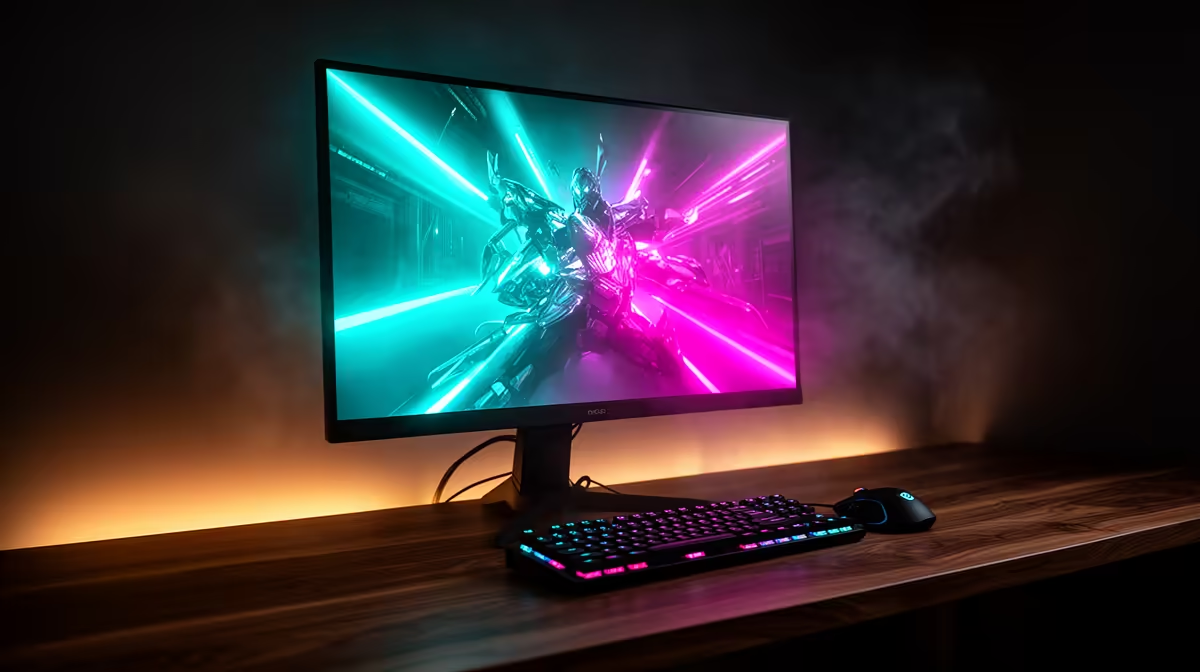
Eye strain on large gaming monitors is primarily caused by excessive screen brightness relative to room lighting, incorrect viewing distance, blue light emission in the 415nm to 455nm range, and high-frequency PWM flickering used for backlight dimming. Addressing these four factors through positioning, OSD settings and ambient lighting eliminates most strain without replacing the monitor.
Brightness Mismatch and Room Lighting 🔧
The most common cause of strain on 27-inch-plus monitors is running them at full brightness in a darker room. Your eyes constantly adjust between the bright screen and the dim room, fatiguing the muscles that control pupil dilation. The target is matching screen luminance to room ambient brightness. In a well-lit South African study or home office during daylight, 150 to 200 nits is appropriate. In a dark evening gaming environment, 80 to 120 nits is more comfortable. Most monitors ship at 100% brightness, corresponding to 250 to 400 nits on modern panels. Reducing to 40% to 60% of maximum is the fastest fix for most users.
Viewing Distance and Screen Size 👁️
At 27 inches, recommended viewing distance is 60 to 80cm. At 32 inches, extend this to 75 to 90cm. Many South African gaming setups have monitors within 50cm of the viewer, which is fine at 24 inches but causes uncomfortable eye movement on a 32-inch panel. Moving the monitor back by 15cm can meaningfully reduce extraocular muscle fatigue over long sessions. If desk depth prevents this, a monitor arm that extends the panel forward or allows a slight backward tilt compensates effectively.
Flicker, Blue Light and Software Options 💡
PWM backlight dimming flickers at 200Hz to 1,000Hz to simulate lower brightness levels. Some users are sensitive to this even without consciously perceiving it. Look for monitors with DC dimming or flicker-free certification. Blue light filtering through the monitor's OSD Low Blue Light mode or Windows 11's built-in Night Light feature reduces the 415nm to 455nm emission that disrupts circadian rhythms during evening gaming. OLED monitors handle backlight dimming differently as each pixel controls its own light, but blue light emission is still present and filtering still helps for evening use.
Try the 20-20-20 Rule During Long Sessions ⚡
Every 20 minutes of screen time, look at something roughly 20 metres away for 20 seconds. This actively relaxes the ciliary muscles that hold focus on a near screen. Set a phone reminder during three-to-four hour gaming sessions where you are unlikely to remember naturally.
FAQ
Does monitor refresh rate affect eye strain?
Higher refresh rates reduce perceived flicker and produce smoother motion, reducing strain from tracking fast-moving content. The move from 60Hz to 144Hz typically reduces fatigue for fast-paced games. Moving from 144Hz to 240Hz provides a smaller but still noticeable improvement for competitive players in long sessions.
Are OLED monitors better or worse for eye strain than IPS screens?
For most users in a dim environment, OLED is better due to flicker-free DC dimming and lower blue light output at low brightness. However, at high brightness settings (800 to 1,300 nits peak), OLED can be intense up close. At moderate 100 to 150 nit settings in a dim room, OLED is generally easier on the eyes than equivalent IPS panels.
Can blue-light-filtering glasses help with gaming eye strain?
Blue-light-filtering gaming glasses with AR coating reduce some strain, particularly for evening gaming. They do not address brightness mismatch or viewing distance, which are often the primary causes. If you wear corrective lenses, an up-to-date prescription matters more than any filter for sustained comfort.
Experiencing eye strain on your current gaming monitor?
Evetech stocks monitors with certified flicker-free backlights, Low Blue Light modes and height-adjustable stands. Visit the monitors section at Evetech to find models built with extended gaming comfort in mind.