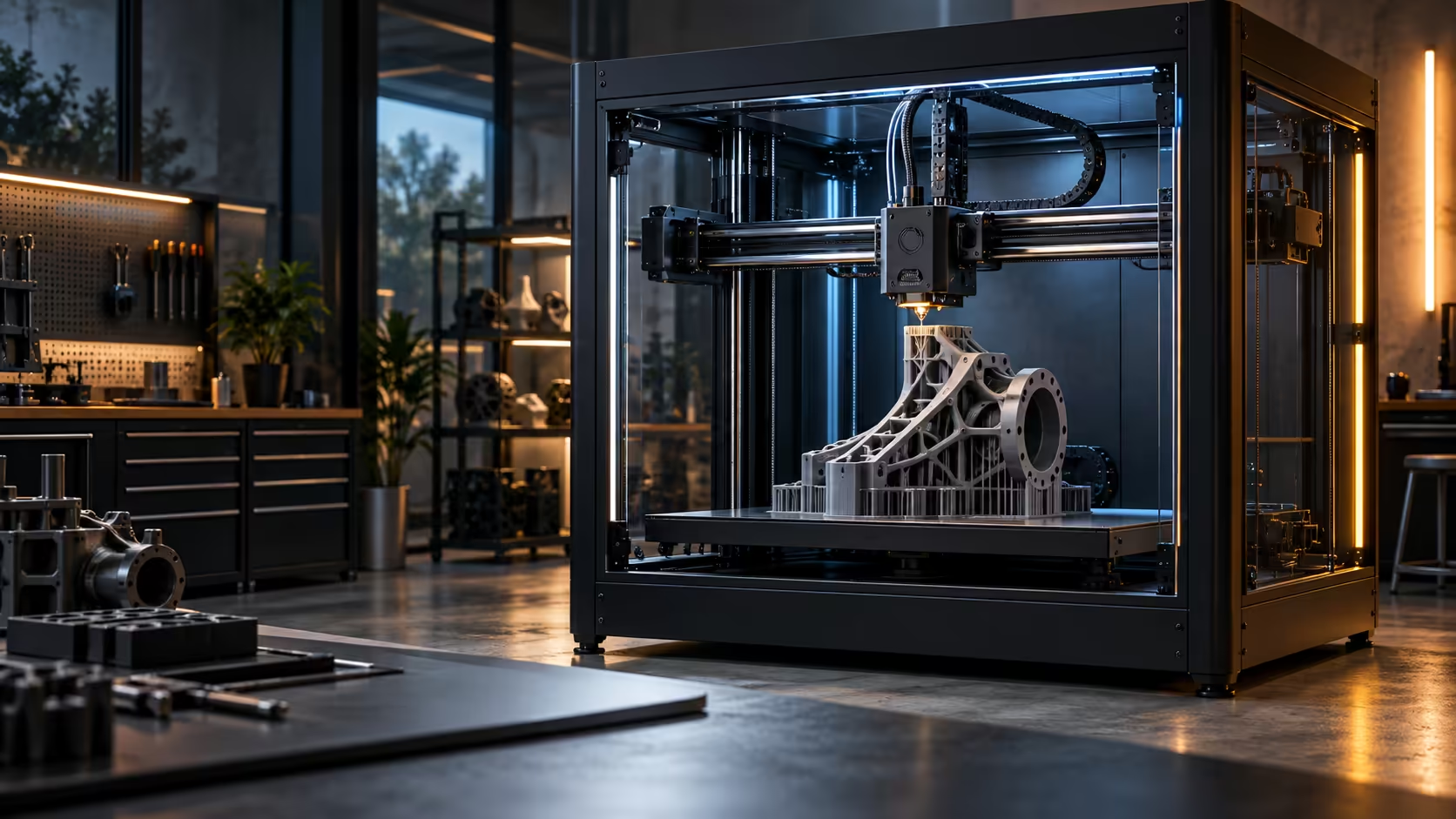
A big plate is the easiest number to advertise loudly and the least useful one to actually shop by on its own. A 300 x 300 x 300mm 3D printer that cannot melt plastic fast enough, hold heat steady or catch its own mistakes wastes that extra space on failed prints rather than bigger ones.
Quick Answer
Check nozzle temperature, flow rate, motion type and what actually watches the print before comparing plate sizes; build volume by itself tells you very little about whether a machine can use it well. A 300C hardened steel nozzle paired with 32mm3/s of flow, as on the Creality K1 Max, is what turns a large frame into a machine that can actually finish engineering-grade parts rather than just fit them. That combination costs R13,999.
🌡️ Nozzle temperature sets the material list
A large plate that only reaches 260C is still a PLA and PETG machine, regardless of how big the parts are. Materials worth printing at this size, nylon, polycarbonate blends and carbon-fibre composites, generally need 280C or higher just to flow properly, so temperature ceiling is the first filter, not an afterthought.
The K1 Max's 300C hardened steel nozzle clears that bar and survives the abrasive fillers that come with fibre-reinforced blends, which matters more on large parts since they use far more filament per print and give a weak nozzle far more chances to wear.
💧 Flow rate decides whether size becomes speed
A big plate filled slowly is just a long print with extra travel moves. Flow rate, measured in cubic millimetres of plastic per second, is what determines whether wide lines on a large part actually finish faster than the same volume printed thin. 32mm3/s sustains roughly 210mm/s at a 0.6mm line width, which is the setting that makes a 300mm part something you print overnight rather than across two days.
🎥 What watches the print matters as much as what prints it
A large part represents a bigger loss when it fails partway through, both in filament and in time, which makes monitoring more important as plate size grows rather than less. AI LiDAR checking the first layer within the first 5 minutes and an AI camera watching the remaining hours cover the two failure points that matter most: a bad start and a mid-print collapse.
🧭 Reading the spec sheet in the right order
Rank the four factors before comparing machines: nozzle capability first, since it decides what you can print at all; flow rate second, since it decides how long a large part actually takes; monitoring third, since it decides how much a failure costs you; and build volume last, since it only matters up to the size of the parts you are actually making. A resin-based alternative is worth a look for small, highly detailed parts, where accuracy rather than plate size is the priority, and Elegoo's resin range covers that end of the market.
🖨️ What the print head itself needs to keep up
A hotend rated to 300C is only half the story once flow rate enters the picture; the heater cartridge and thermistor around it need to hold that temperature steady within a degree or two, checked every second or so by the firmware, while 32mm3/s of plastic is passing through, not just reach it once during a warm-up cycle. A hotend that drifts by 5C or more under sustained flow across a full 300mm-tall print shows up as inconsistent extrusion on a job that looked fine in the first few layers and noticeably worse by the last few, hours later.
This is why two printers quoting the same peak nozzle temperature can behave very differently on a genuinely large, hours-long print running past 10 or 12 hours: one holds that number steady under load, the other only reaches it briefly before falling back. Check for a stated temperature stability figure, or at minimum a PID-tuned heater control mentioned in the specifications, before assuming peak temperature alone tells the whole story.
🔍 Checking these claims before you buy, not after
Ask specifically for the flow rate figure in mm3/s rather than accepting a vague "high-flow" claim, since that single number tells you more about real-world large-format performance than build volume ever will on its own. Compare it against the 3D printer range here, where the K1 Max states 32mm3/s explicitly rather than leaving it to a marketing adjective, and treat any listing that skips both the flow figure and a stated nozzle temperature ceiling as one to ask a direct question about before buying rather than one to assume the best of.
Frequently Asked Questions
Is build volume the most important spec on a large printer?
No, it is the last thing to compare; nozzle temperature, flow rate and monitoring decide whether the machine can actually use that volume well.
Why does flow rate matter more on a large printer than a small one?
Large parts use far more filament, so a low flow rate turns a size advantage into a time penalty instead of a benefit.
Does a hotter nozzle always mean better prints?
No, it simply means access to a wider material list overall; PLA and PETG print perfectly fine at lower temperatures regardless of where the ceiling sits.
Should monitoring be a dealbreaker on a large machine?
It should carry real weight, since a failed large print wastes more filament and time than a failed small one.
How much does temperature stability actually matter in practice?
A great deal on parts running many hours, since a hotend that drifts even slightly under sustained flow produces visibly inconsistent wall thickness between the early and late layers of the very same print.
Is a stated flow rate figure trustworthy on its own?
Treat a specific mm3/s number as far more trustworthy than a vague "high-flow" claim, since a real figure is measurable and comparable across machines in a way marketing language is not.
What should I ask a retailer if flow rate is not listed anywhere?
Ask directly for the figure in mm3/s, in writing if possible, and treat silence or a vague, evasive answer as a real sign to look elsewhere on the shortlist entirely.
Shopping by plate size alone?
Check the nozzle, the flow rate and the monitoring before you compare volumes.