Spend your lighting budget in the wrong order and you end up with three cheap lamps that still leave you looking flat and grey on camera. Professional lighting for video is not about owning the most fixtures. It is about putting your rands into the one light that does most of the work first, then building outward. For South African creators buying a kit, knowing that order is the difference between a setup that looks broadcast-grade and one that looks like a hobby.
Quick Answer
Invest first in a strong key light with adjustable colour temperature, since it shapes most of what the camera sees. Then add a fill light to soften shadows, and a back or hair light to separate you from the background. Buy quality over quantity, and prioritise control over raw brightness.
🔆 The Key Light Is Where Your Money Goes First
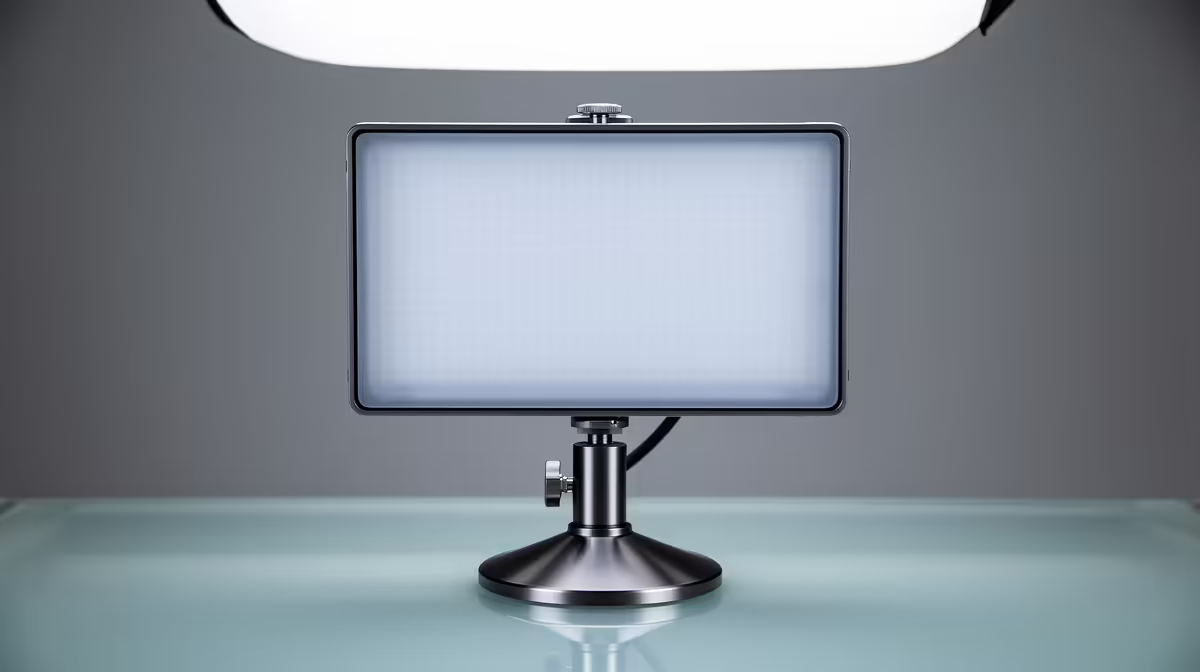
If you buy only one light, make it a good key light. This is the main source that lights your face, and it determines the mood, the sharpness and the overall look of your shot more than any other fixture. A strong, controllable key on its own already looks professional. Three weak lights without a proper key do not.
What makes a key light worth its price is control, not just output. Adjustable brightness lets you balance against the daylight coming through your window, which matters in sunny South African rooms where natural light swings through the day. Adjustable colour temperature, measured in kelvin, lets you match the warmth of your room so your skin tone looks natural rather than blue or orange.
Look for a high colour rendering quality too. A light that renders colour accurately makes your skin, your clothes and your products look true to life. A cheap light with poor colour rendering casts a sickly tint that no amount of editing fully repairs. This single fixture is the one place where paying more genuinely pays off.
🌗 The Fill Light Softens What the Key Creates
A strong key light alone leaves hard shadows on one side of your face. The fill light is the second investment, and its job is to lift those shadows so you do not look harshly lit. It sits opposite the key, at lower power, gently filling in the dark side.
The key principle is that the fill should be softer and dimmer than the key. If both lights are equally bright, you flatten your face and lose the natural depth that makes video look three-dimensional. The fill is a supporting act, not a co-star.
You do not always need a second dedicated fixture for this. A large softbox, a reflector bouncing your key light back, or even a bright wall can act as fill on a tighter budget. This is where buying smart beats buying more. Understanding what fill does lets you achieve it cheaply before committing to a second full-price light.
✨ The Back Light Separates You From the Background
The third investment is the back or hair light, and it is what quietly signals a polished setup. Placed behind and above you, pointing at the back of your head and shoulders, it creates a subtle rim of light that lifts you off the background. Without it, you can blend into a dark wall and look flat.
This light has the smallest budget claim of the three because it does the least heavy lifting on exposure. A modest fixture, sometimes even a small RGB light adding a touch of colour behind you, does the job. The effect is out of proportion to the cost. A cheap back light delivers a premium, layered look that viewers feel even if they cannot name why.
The order of these three, key then fill then back, is also the order of spending priority. Each one earns its place only once the previous one is sorted. Buying a back light before a proper key is putting the polish on before the foundation exists.
Pro Tip ⚡
Before adding any second or third light, master the position of your key. Move it closer for softer, more flattering light and further for more contrast, and raise it slightly above eye level angled down. Nailing the key's placement often removes the need for as much fill as you thought you needed.
💰 Spending Wisely in the South African Market
Local creators face import-driven pricing, so every rand has to count. The smartest approach is to buy one genuinely good key light rather than a three-light kit of weak, poorly-rendering fixtures for the same money. One strong, controllable light will outperform a bundle of dim ones every time.
Prioritise features that give you control: adjustable brightness, adjustable colour temperature and accurate colour rendering. Skip gimmicks. Raw wattage on a spec sheet means little if the light cannot match your room or render skin tones properly.
Consider how and where you shoot, too. A creator in a bright, sun-filled room needs a key powerful enough to overpower window light, while someone in a smaller controlled space can do more with less. Coastal humidity is worth a thought as well, so keep gear stored dry between shoots.
Build the kit in stages. Start with the key, learn to place it, add fill once you understand what your shadows need, and finish with a back light when the budget allows. A staged, quality-first approach gets you a professional look sooner and cheaper than rushing to buy everything at once.
Frequently Asked Questions
Which light should I buy first for video?
The key light, always. It is your main source and shapes most of what the camera captures, so a single strong, controllable key already looks professional. Prioritise one good key with adjustable brightness, adjustable colour temperature and accurate colour rendering over a bundle of weak lights. The fill and back lights are worthwhile additions, but only after the key is sorted.
What does colour temperature adjustment actually do?
Colour temperature, measured in kelvin, sets how warm or cool your light appears. Adjustable temperature lets you match the light to your room and the daylight in it, so your skin looks natural rather than tinted blue or orange. In South African rooms where sunlight shifts through the day, this control keeps your shot consistent without constant editing afterwards.
Do I really need three separate lights?
Not necessarily. A strong key light alone already looks professional, and you can create fill cheaply with a reflector, a softbox or a bright wall before buying a second fixture. The back light adds polish but is the lowest priority. Build the kit in stages, starting with the key, rather than buying a full three-light set straight away.
Is a brighter light always better?
No. Control matters more than raw brightness. A very bright light with poor colour rendering casts an unflattering tint that editing cannot fully fix, while a moderate light with accurate colour and adjustable temperature looks far better. You need enough output to overpower your room's ambient light, but beyond that, quality of light beats sheer wattage every time.
How should South African creators budget a lighting kit?
Buy quality over quantity. One genuinely good key light beats a cheap three-light bundle for the same rands, because weak, poorly-rendering fixtures look amateur no matter how many you stack. Prioritise adjustable brightness, colour temperature and colour rendering, then expand to fill and back lights in stages as your budget and skills grow.
Ready to look broadcast-grade on camera?
Explore the studio lighting range for South African creators and start with a strong, controllable key light that makes every shot look professional.