




IPS vs VA for Strategy and Sim Games in SA
IPS vs VA for strategy and sim games should be judged by fit, not a single winner. Compare compatibility, latency, capacity, upgrade path, cost planning, and South African setup needs.
Read moreWireless mouse charging dock vs cable charging: compare convenience, battery life, desk clutter, and efficiency ⚡🖱️ Find the best setup for gaming, work, and daily use.
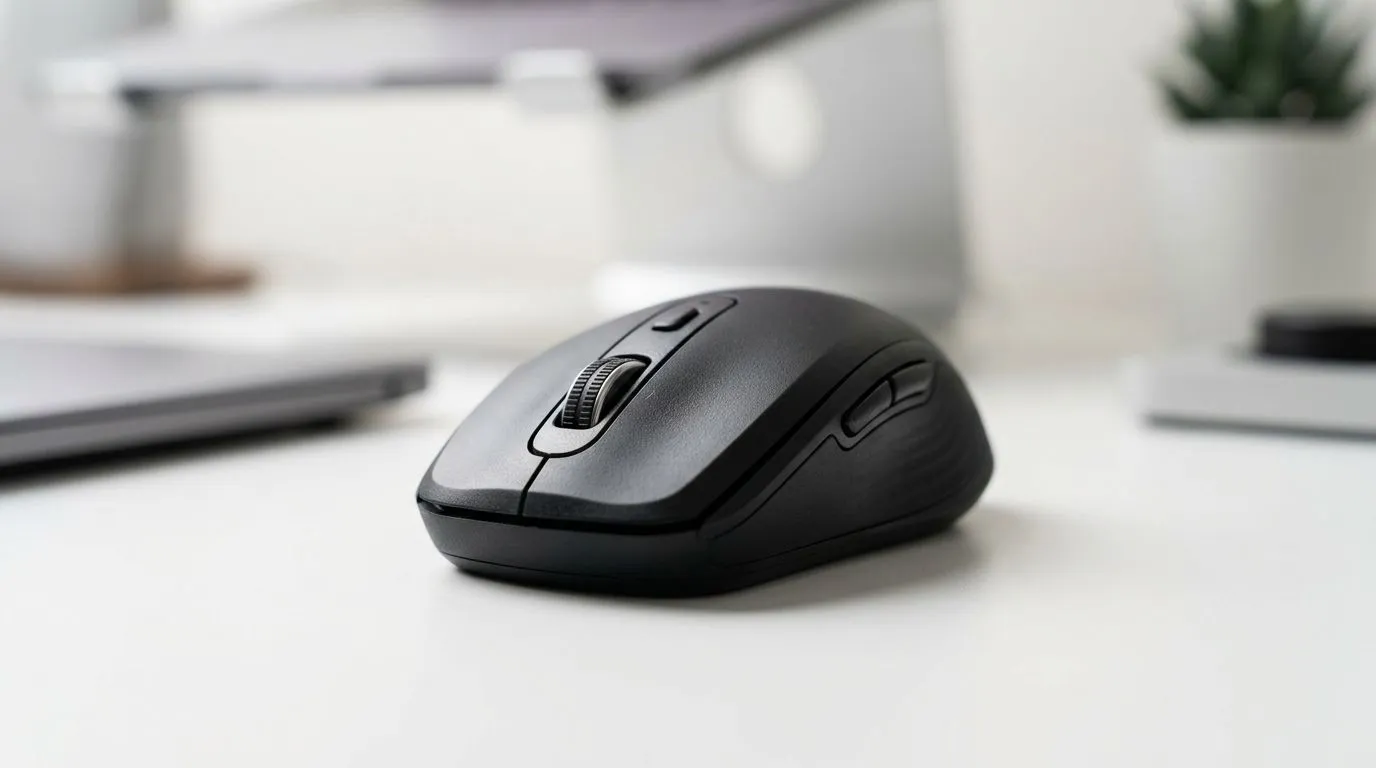
If you game on a tight schedule, battery anxiety is real… and so is the hassle of cables on your desk. Whether you’re maining Valorant aim drills, grinding ranked in CS2, or finishing one more story run, the last thing you want is a mouse that dies mid-match.
So let’s break it down properly. Wireless Mouse Charging Dock vs Cable Charging: Which Is Better? is not just about convenience. It’s also about charging habits, desk clutter, and long-term reliability in a South African home where power interruptions and power interruptions happen.
Both methods aim for the same outcome: keep your wireless mouse ready. The difference is how you reach that state.
A dock typically sits on your desk and “takes over” the charging routine. You place the mouse on it when you’re done. Many docks also help with alignment and reduce wear on the charging port because you’re not constantly plugging and unplugging.
Where docks win:
With cable charging, you plug the mouse into USB directly. That can be more affordable up front, and it’s also straightforward if you already have spare cables around.
Where cables win:
On Windows, keep a daily “top-up reminder” in your task scheduler. Even if you use a dock, a quick battery check after dinner prevents surprises during late gaming sessions. Consistency beats intensity when it comes to avoiding low-battery drama.
Battery wear depends mostly on charging behavior, not the dock vs cable category. Lithium batteries generally do best with moderate charging habits, not repeated deep cycles.
A dock can indirectly help because many gamers charge “when done”, not “when empty”. Cable charging can do the same, if you build the habit of plugging in before the battery gets critical.
Cable charging means repeated plug/unplug events. Dock charging reduces those events and can lower wear on the mouse charging port. That said, docks rely on stable placement. If the dock is wobbly on your desk, you may get inconsistent contact.
If you want the cleanest desk look and consistent charging, a charging dock setup is the obvious comfort choice. If you prefer flexibility, travel-friendly charging, or you just want a lower cost path, cable charging can be a better fit.
Start your decision by checking what mouse category you actually use most:
And if you’re shopping around deals (because we all are), use the current bargains to test your preference without overspending: best gaming mouse deals 🚀
Ask yourself these five questions:
In the end, the “better” option is the one you’ll actually use consistently. Convenience reduces mistakes. Consistency protects your battery.
Ready to Find Your Perfect Match? The Mac vs Windows debate is complex, but for maximum power, choice, and value in South Africa, Windows is hard to beat. Explore our massive range of laptop specials and find the perfect machine to conquer your world.
A charging dock is often more convenient, while cable charging can be more efficient if you want a simple, direct power connection.
No, cable charging does not usually harm battery life when the mouse uses modern lithium batteries and proper charging controls.
Charging docks work well for gaming mice if you want quick top-ups and a cleaner desk, but cable charging is still reliable for nonstop use.
A wireless mouse charging dock usually wins for desk cable management because it reduces loose cables and keeps the workspace tidy.
Yes, many wireless mice support cable charging and wired use at the same time, which is useful for long sessions.
For work, a charging dock is often the best wireless mouse charging setup because it is easy, tidy, and always ready.
IPS vs VA for strategy and sim games should be judged by fit, not a single winner. Compare compatibility, latency, capacity, upgrade path, cost planning, and South African setup needs.
Read more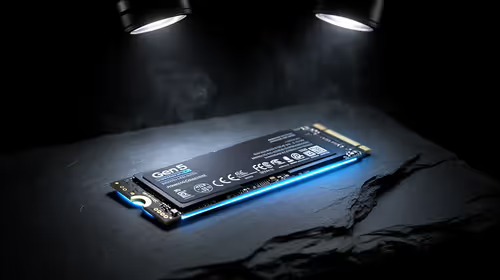
Gen 5 NVMe SSD guide for Bloemfontein gamers should be shortlisted around the job it must do. South African buyers should compare capacity, speed, thermals, and motherboard support, warranty path, and upgrade room before treating any pick as best.
Read more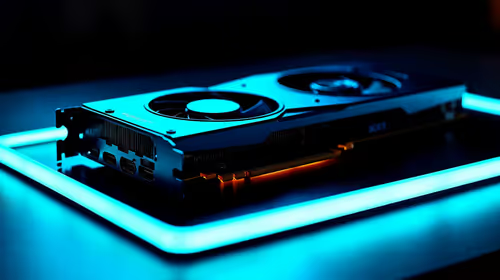
Skip the RTX 5070 if your first-time builder budget needs better balance. Better SA picks can free room for the right CPU, PSU, case, monitor, storage, and cooling while still giving a strong first gaming PC experience this year in South Africa.
Read more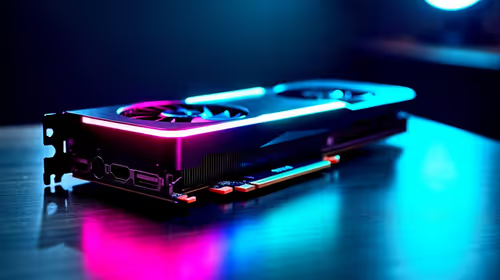
RTX 5080: weighing the pros and cons for SA should be shortlisted around the job it must do. South African buyers should compare GPU tier, VRAM, cooling, and PSU headroom, warranty path, and upgrade room before treating any pick as best.
Read more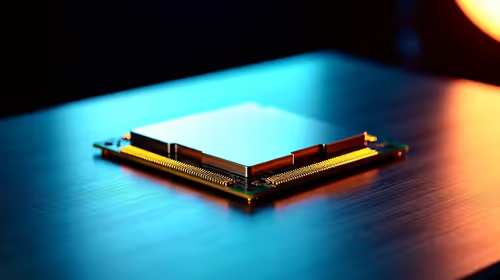
Core i5-13400F gives South African PC builders a capable mid-range CPU choice with clear limits. Check its gaming fit, discrete GPU requirement, LGA1700 platform costs, and upgrade path before locking in your parts list.
Read more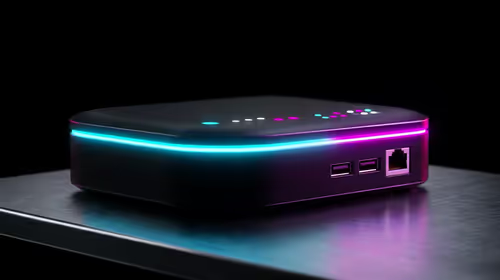
Pros and cons of the Wi-Fi 7 routers for SA should be shortlisted around the job it must do. South African buyers should compare WiFi standard, coverage, latency, and device support, warranty path, and upgrade room before treating any pick as best.
Read more
Steam content servers unreachable needs a download-path check, not an immediate reinstall of every game. Restart the client, inspect download settings and compare another connection when practical. Clearing the download cache is separate from deleting installed games.
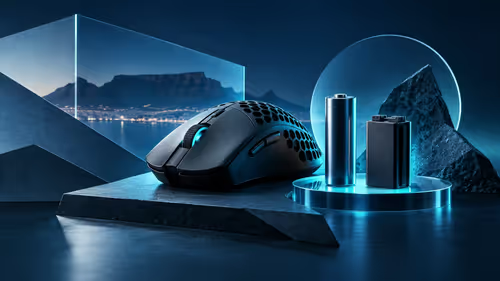
Keychron G6 HE has built-in and swappable battery versions with different weights. The product brief lists 42g and 46g respectively, each with a 3g tolerance. Choose by grip and battery preference before treating one headline weight as universal.

Corsair HS80 v2 MAX supports 2.4GHz wireless and Bluetooth. Its maximum battery figures use RGB-off conditions and differ by connection. Check microphone routing, comfort and the exact device support before assuming every wireless mode behaves alike.

Windows taskbar notification badges can be shown or hidden in Taskbar behaviours. This changes the small app indicators, not the underlying messages. Choose a calmer desktop while keeping a deliberate routine for checking important conversations and app updates.
Windows taskbar notification badges can be shown or hidden in Taskbar behaviours. This changes the small app indicators, not the underlying messages. Choose a calmer desktop while keeping a deliberate routine for checking important conversations and app updates.
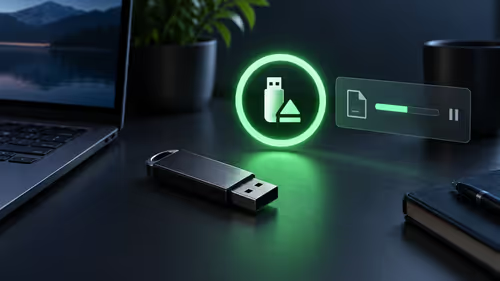
Windows USB device in use can mean a program still has the drive open. Finish transfers and close files before retrying ejection. Better performance caching requires safe removal; a replacement drive is not the first fix for an open-file warning.

Windows Nearby Sharing not working starts with feature, Bluetooth and visibility checks on both PCs. My devices only depends on matching Microsoft accounts. Test a small harmless file before buying networking hardware or changing your home router.
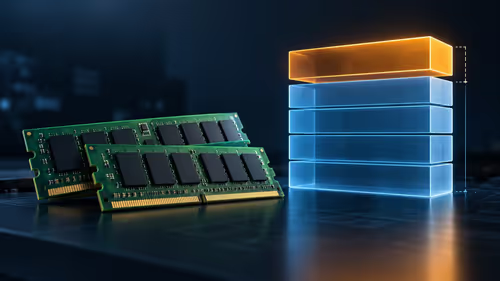
Windows hardware reserved RAM is different from memory used by applications. Compare installed memory with firmware detection and the usable amount before buying modules. Reservations and reporting limits vary by system; no universal setting restores every byte.

Windows title bar window shake can minimise other open windows when you shake the active window by its title bar. Inspect the Multitasking setting and switch it off if that gesture interrupts your work. The preference costs R0 and does not require new hardware.

Windows Print Screen opens Snipping Tool when its keyboard preference is enabled. Change the option under Accessibility, Keyboard to choose another workflow. Test whether you need a clipboard image or a saved file.

Windows desktop icons missing may be a visibility setting. Right-click the desktop, choose View and inspect Show desktop icons. If only system icons are absent, use Desktop icon settings. Check the Desktop folder before assuming files were deleted.

Windows set time zone automatically greyed out calls for a location and device-policy check. Automatic time-zone selection relies on location services. A manual time-zone choice is separate from synchronising the clock; check both before replacing hardware.