Quick Answer
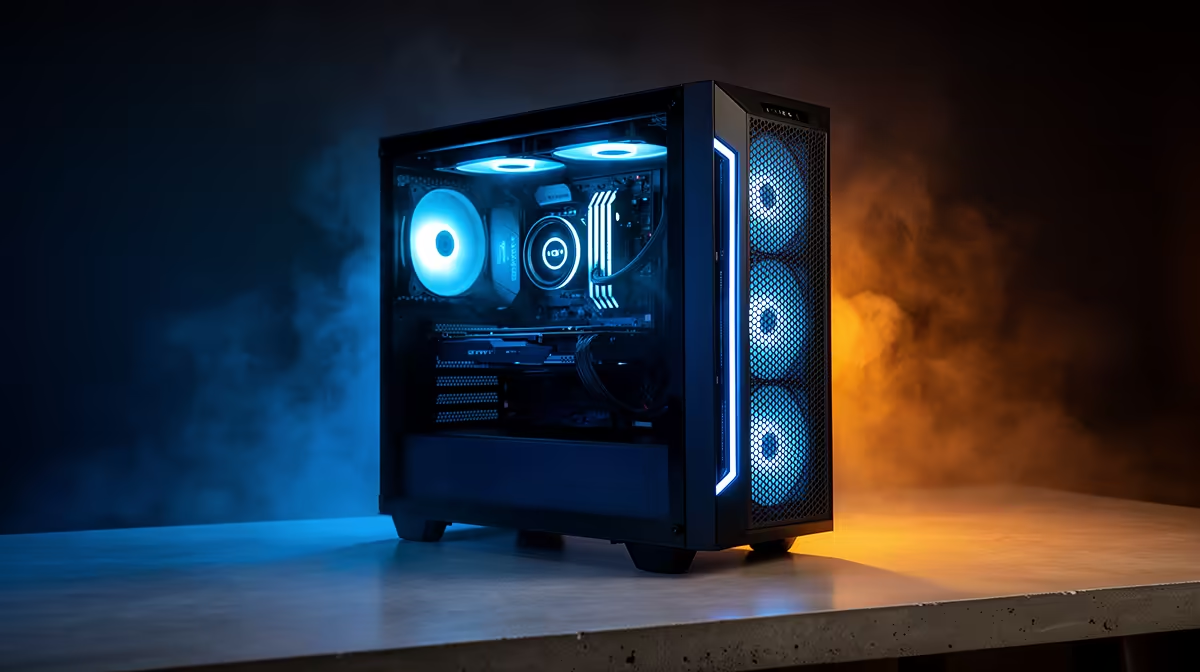
For South Africans using one PC for both remote work and gaming, cooler noise and thermals are daily quality-of-life issues. Loud fans during video calls undermine professionalism, and poor thermal management shortens the life of a machine that earns its keep. A quality 360mm AIO with tuned fan curves addresses both concerns in one upgrade.
The Dual-Use Reality for South African Remote Workers 🖥️
Working from home on a gaming PC is increasingly common across South Africa's major cities. The same machine that renders a spreadsheet at 09:00 is running Black Myth: Wukong at 21:00. This dual-use pattern creates two distinct thermal profiles: sustained medium CPU load during work hours, and spike-heavy gaming loads in the evening. A mid-range tower air cooler handles one of these profiles adequately but not both, particularly in homes without air conditioning where room temps vary across a 12-degree Celsius range between morning and afternoon. A 360mm AIO handles both profiles, keeping the CPU quiet and cool during calls and controlled during gaming.
Fan Noise During Video Calls: A Real Professional Problem 🎙️
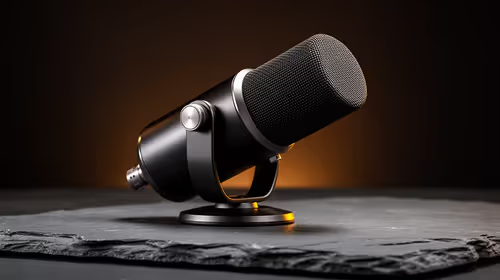
Microphone pickup of fan noise is a significant issue for remote workers. A gaming PC's cooling system running at 1,800 to 2,200 RPM is clearly audible on a standard condenser microphone, and many South African remote workers use affordable USB microphones without noise cancellation. During Teams or Zoom calls with clients or management, the background whir of stressed cooling fans reads as unprofessional. A 360mm AIO running a tuned fan curve during work hours rarely needs to exceed 800 to 1,000 RPM while handling email, browser, and Office workloads. This is essentially silent on any microphone setup, removing fan noise as a professional concern entirely.
Thermal Longevity for a Machine That Cannot Take a Day Off 🔧
For SA remote workers, PC downtime has direct income consequences. A machine running hot daily accumulates thermal stress on the CPU, VRMs, and motherboard components faster than one operating within safe temperature margins. Keeping CPU temps consistently below 75 degrees Celsius under work loads and below 85 degrees during gaming significantly extends component life expectancy. In a market where GPU prices range from R7,000 to R30,000 and CPU replacements start at R3,000 to R4,000, extending the life of existing hardware through proper cooling is a tangible financial benefit for the SA work-from-home professional.
Schedule Heavy Tasks for Cooler Parts of the Day ⚡
SA homes without air conditioning, room temperature drops significantly between 06:00 and 09:00. Scheduling CPU-heavy tasks like video exports or large file processing during these cooler morning hours gives your AIO more thermal headroom and keeps noise lower during the rest of your workday.
FAQ
What fan speed setting should I use on my AIO during work hours?
Set a custom fan curve in your BIOS that caps fan speed at 900 to 1,000 RPM below 60 degrees Celsius coolant temperature. This covers all typical office workloads silently. The curve should then ramp to gaming speeds automatically when you switch to heavier tasks.
Can my gaming PC AIO handle eight or more hours of video call use daily?
Yes. Video calls are a low-to-medium CPU load. A quality 360mm AIO maintains comfortable thermals across a full workday with minimal fan noise, as long as case airflow is healthy and the thermal paste is in good condition.
Is there a meaningful difference between a quality AIO and a budget one for work-from-home use?
Yes, mainly in noise. Budget AIOs often use lower-quality fans with inconsistent bearing quality, which produces subtle rattling or grinding sounds even at low RPMs. These sounds are picked up by microphones. A quality AIO with fluid dynamic bearing fans remains acoustically clean across its entire RPM range.
Running a dual-use work and gaming PC in SA?
Browse quiet, capable AIO coolers at Evetech to keep your setup professional and thermally sound.