Quick Answer
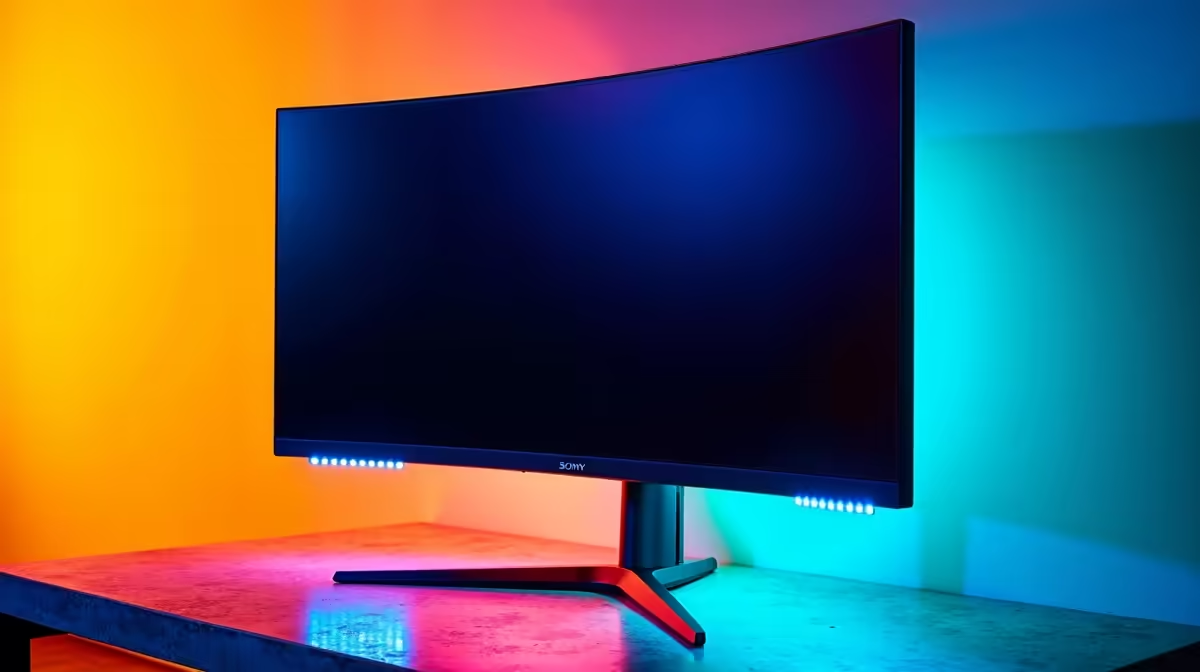
A 5K 180Hz DisplayHDR 600 monitor in South Africa costs between R16,000 and R22,000. The 5K resolution adds approximately R5,000 to R7,000 over a comparable 4K panel, 180Hz over 144Hz adds roughly R1,500 to R3,000, and HDR 600 certification over HDR 400 adds R1,000 to R2,500. Together these premiums represent a meaningful but justifiable investment for hybrid creator-gamers.
Breaking Down the 5K Premium in ZAR 💰
The pixel count jump from 4K to 5K increases manufacturing yield difficulty because more pixels must pass quality control on the same panel size. That cost passes to the consumer. A 27-inch 4K IPS at 144Hz currently starts around R8,000 to R10,000 at Evetech. A 27-inch 5K IPS at 144Hz, when available, starts around R13,000 to R15,000. The extra R5,000 buys you 77% more pixels and 218 PPI versus 163 PPI. For a graphic designer or video editor that spends eight hours a day looking at fine text and detailed imagery, R5,000 over the monitor's three to five year life is less than R3 per working day.
The 180Hz vs 144Hz Premium: Is It Worth It? 🎮
Jumping from 144Hz to 180Hz on a 5K panel adds R1,500 to R3,000 in most retail configurations. At 180Hz, the frame window is 5.56ms, compared to 6.94ms at 144Hz. That 1.38ms difference improves motion clarity in gaming, though the improvement is smaller than the step from 60Hz to 144Hz or from 144Hz to 240Hz. For pure creation work, 144Hz and 180Hz are indistinguishable. The 180Hz premium is justified for users who game in immersive single-player titles and want smoother camera panning in open-world games like Red Dead Redemption or Cyberpunk 2077, but it is not a competitive necessity.
DisplayHDR 600 vs DisplayHDR 400: The Brightness Uplift 💡
DisplayHDR 600 certification costs the monitor manufacturer more because it requires stronger backlighting systems, better local dimming zone counts, or OLED panel integration. The R1,000 to R2,500 price premium over a DisplayHDR 400 panel buys peak brightness of 600 nits versus 400 nits on LCD, which translates to more convincing sun glare effects, brighter UI highlights, and more vivid specular reflections in HDR game content. In the bright ambient-light conditions common in SA homes without blackout curtains, higher peak brightness also improves HDR legibility, because the HDR highlights need to compete with the room light to remain perceptible.
Calculate Your Per-Feature Premium Before Deciding ⚡
Before committing to a 5K 180Hz HDR 600 panel, price a 4K 144Hz HDR 400 monitor and calculate the difference. If the premium is under R5,000 for all three upgrades combined, the combined package represents strong value. If the gap is R8,000 or more, consider whether 4K 144Hz would satisfy your needs for the next three years and redirect the saving toward a GPU upgrade.
FAQ
Does 180Hz actually feel different from 144Hz on a 5K panel?
Yes, but subtly. The motion clarity improvement from 144Hz to 180Hz is noticeable when panning a camera in a fast-moving scene but is not as dramatic as the jump from 60Hz to 144Hz. Gamers who already game at 144Hz should not feel disappointed by 180Hz as a step up.
Is DisplayHDR 600 enough for professional colour grading?
For most professional workflows, yes. DisplayHDR 600 with 97% DCI-P3 is the combination used by many post-production professionals. DisplayHDR 1000 adds more brightness range but the extra nits matter more for consumer viewing than for colour-grading accuracy.
How long before 5K monitors drop significantly in ZAR price?
Based on how 4K prices fell in SA over five years, expect 5K entry prices to drop from around R13,000 to R14,000 toward R9,000 to R11,000 over two to three years as production scales. Early adopters pay the technology premium; waiting 18 to 24 months typically saves R3,000 to R5,000 on premium panels.
Want to compare 5K and 4K monitor pricing right now?
Check Evetech's current monitor range for up-to-date ZAR pricing on high-resolution panels stocked in South Africa with local warranty.