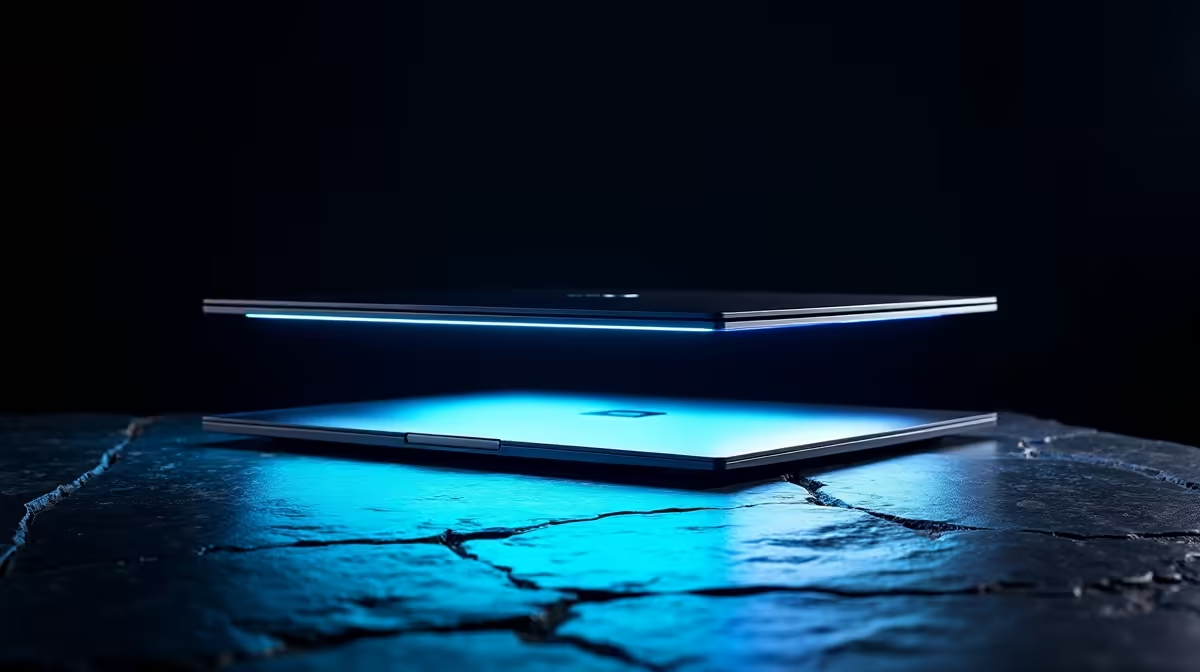
Staring at a stuttering timeline while your deadline looms? We've all been there. Editing 8K Red Raw footage on a laptop in South Africa feels like an extreme sport... but it doesn't have to. Forget choppy playback and endless render times. The secret isn't just power, it's the right power. Let's dive into finding the best laptop for 8K video editing that won't let you down when it matters most. 🚀
Why 8K Red Raw Editing is a Different Beast
Before we talk hardware, let's be clear: editing 8K Red Raw is not the same as cutting a 4K YouTube video. RED's .R3D files are packed with immense amounts of data, offering incredible flexibility in post-production with colour and exposure. But this flexibility comes at a cost... performance.
Your laptop has to decode these massive, uncompressed files in real-time. This process hammers your CPU and GPU simultaneously. A standard high-performance laptop might manage 4K, but it will quickly buckle under the sustained pressure of an 8K workflow, leading to dropped frames and frustrating lag. Finding a true 8K video editing laptop means investing in a machine built for sustained, high-throughput tasks.
Core Components for the Best 8K Video Editing Laptop
Forget marketing fluff. When you're looking for a machine to handle professional workloads, only three components truly define its performance ceiling. Get these right, and you're golden.
The CPU: Your Timeline's Engine 🔧
The Central Processing Unit (CPU) is the heart of your editing rig. It handles decoding the footage, running the software itself, and processing complex logic. For smooth 8K playback, you need a CPU with a high core count and a high clock speed.
- Intel's Core i7 and i9 processors are legendary for their raw single-core performance, which is crucial for a responsive user interface. You can browse our current Intel laptops on special to see the latest powerhouse options.
- AMD's Ryzen 7 and Ryzen 9 series often dominate in multi-core performance, which is a massive advantage for final rendering and exporting. Check out the latest Ryzen laptop deals for incredible multi-threaded value.
Ultimately, you can't go wrong with a flagship chip from either camp. Look for at least 8 high-performance cores as your starting point.
The GPU: The Rendering Powerhouse ⚡
While the CPU runs the show, the Graphics Processing Unit (GPU) does the heavy lifting. It accelerates effects, powers real-time playback in programs like DaVinci Resolve and Premiere Pro, and drastically cuts down export times.
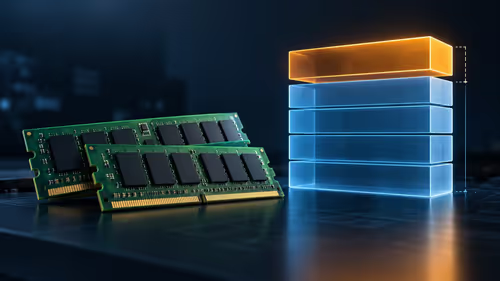
The key spec here is VRAM (video memory). For 8K, 12GB of VRAM is the minimum, with 16GB being the sweet spot. This gives the GPU enough memory to hold high-resolution frames without constantly swapping data with your system RAM. NVIDIA's RTX series is the industry standard here, thanks to its powerful CUDA cores. Exploring our range of GeForce RTX gaming laptops on special is often the best way to find a machine with the graphical muscle needed for video editing.
Storage Optimisation Tip ✨
Your storage setup is critical. Use at least two separate NVMe SSDs. Keep your OS and software on one drive, and use a second, even faster drive for your active project files, media cache, and scratch disk. This prevents bottlenecks and ensures your CPU and GPU are never waiting for data.
RAM & Storage: The Unsung Heroes
- RAM: For 8K, 32GB is the absolute minimum. If you're working with complex timelines or running other apps like After Effects, 64GB is highly recommended to prevent system slowdowns.
- Storage: Speed is non-negotiable. You need a fast NVMe SSD with read/write speeds over 3,000MB/s. A 1TB drive is a good start, but 2TB or more is ideal for holding large project files.
Top Laptop Picks for 8K Workflows in South Africa [2025]
So, what machine brings all this together? Interestingly, the specifications for the best laptop for 8K video editing almost perfectly mirror those of a high-end gaming laptop.
The All-Out Powerhouse
For professionals who need uncompromising performance, you should be looking at the top tier of mobile workstations and gaming laptops. Brands like MSI, ASUS ROG, and Razer pack flagship Intel i9 or Ryzen 9 CPUs, NVIDIA RTX 4080 or 4090 GPUs, and stunningly colour-accurate displays into their top models. These machines are designed for maximum thermal performance, ensuring you get consistent speed during long rendering sessions. You'll find many of these beasts in our collection of the best gaming laptop deals.
The Budget-Conscious Contender
What if your budget doesn't stretch to R50k+? It's still possible to build an 8K workflow, but you'll need to be smart about it. This involves using proxies—lower-resolution stand-in files for editing, which you switch back to the original 8K files for the final colour grade and export. This workflow is less demanding, meaning a more modest machine can cope. While you won't get a seamless native 8K experience, you can find some surprisingly capable gaming laptops under R20k that make for a fantastic starting point.
Ready to Find Your Perfect Editing Rig?
The search for the perfect creative tool is personal, but for maximum power, choice, and value in South Africa, a high-performance Windows laptop is hard to beat. Explore our massive range of laptop specials and find the perfect machine to conquer your next 8K project.