Sitting in your res room after a long day of lectures, you fire up your favourite title. But can a student laptop handle 4K gaming at 60 FPS? For most South African varsity students, the harsh reality is a stuttering slideshow rather than smooth gameplay. Let's unpack why 4K is so demanding and how you can actually achieve that buttery-smooth performance.
The Anatomy of a Varsity Machine
Most affordable notebooks are built for battery life and taking notes... not pushing 8.2 million pixels per frame. When you browse standard student laptops, you usually find integrated graphics and low-wattage processors. A standard varsity machine might cost around R8,000 to R12,000. At this price point, manufacturers prioritise SSD speed for fast boot times and battery efficiency over gaming prowess.
These chips are fantastic for typing essays, researching assignments, or watching Netflix during stage four load shedding. However, they lack the raw graphical horsepower and dedicated video memory required to render modern AAA games at ultra-high resolutions. Trying to force a budget notebook to output 4K is a one-way ticket to overheating and severe thermal throttling.
The True Cost of 4K Gaming
To hit that magical 60 frames per second at 4K, you need serious hardware. Games today feature massive texture packs that chew through VRAM. The thermal limits of a thin chassis simply can't handle the heat generated by top-tier silicon working at maximum capacity.
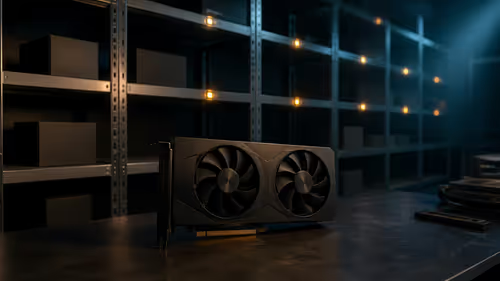
If you want uncompromising 4K performance, you need to look at dedicated standalone graphics cards housed in a proper desktop rig with excellent airflow. 🚀 A true 4K-capable GPU alone can easily cost upwards of R15,000... far beyond the budget of a typical varsity machine.
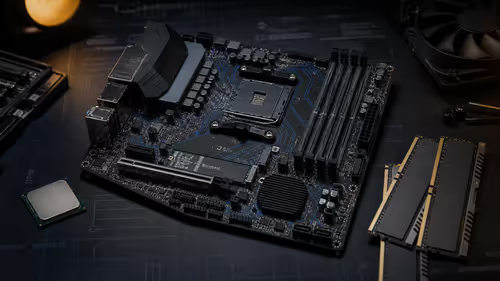
This is exactly why many serious players prefer desktop setups for heavy lifting. You can easily find incredible custom gaming PC deals that offer the exact specifications needed for flawless high-resolution output without melting your desk.
Performance Pro Tip ⚡
If you are stuck with a lower-end machine, dive into your game settings and enable AMD FSR or Intel XeSS. These smart upscaling technologies render the game at a lower resolution and upscale it, giving you a massive frame rate boost without spending a single extra Rand.
Smart Alternatives for South African Gamers
So, your varsity notebook can't handle 4K gaming at 60 FPS natively. What now? You have a few smart options to keep your gaming dreams alive. First, you could optimise your current setup for a very respectable 1080p experience. 1080p requires exactly one-quarter of the processing power of 4K. It's the sweet spot for budget-conscious students who want high frame rates for competitive shooters.
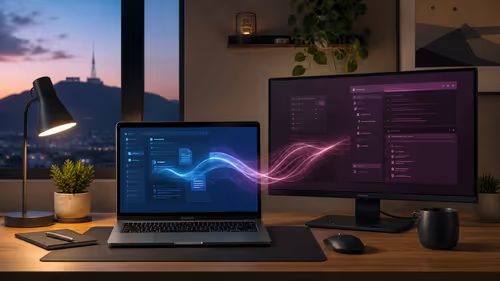
Alternatively, you can keep your notebook strictly for classes and invest in a solid pre-built PC for your res room. ✨ Building a dual-system lifestyle is surprisingly affordable if you shop smart.
By keeping an eye out for local tech specials, you can stretch your ZAR much further. You get the lightweight portability you need for campus life and the brute force required for weekend gaming marathons. 🔧
Ready to Upgrade Your Gaming Setup?
Pushing 4K pixels requires serious hardware, and your standard varsity notebook might need some backup. Explore our massive range of gaming deals and find the perfect machine to conquer your virtual world.