Chipset names on AMD's current lineup blur together quickly, and X870E is the one that actually promises something specific rather than a marginal step up from the tier below it. Knowing what X870E guarantees, and what it does not, is the fastest way to compare boards without reading four separate spec sheets side by side.
Quick Answer
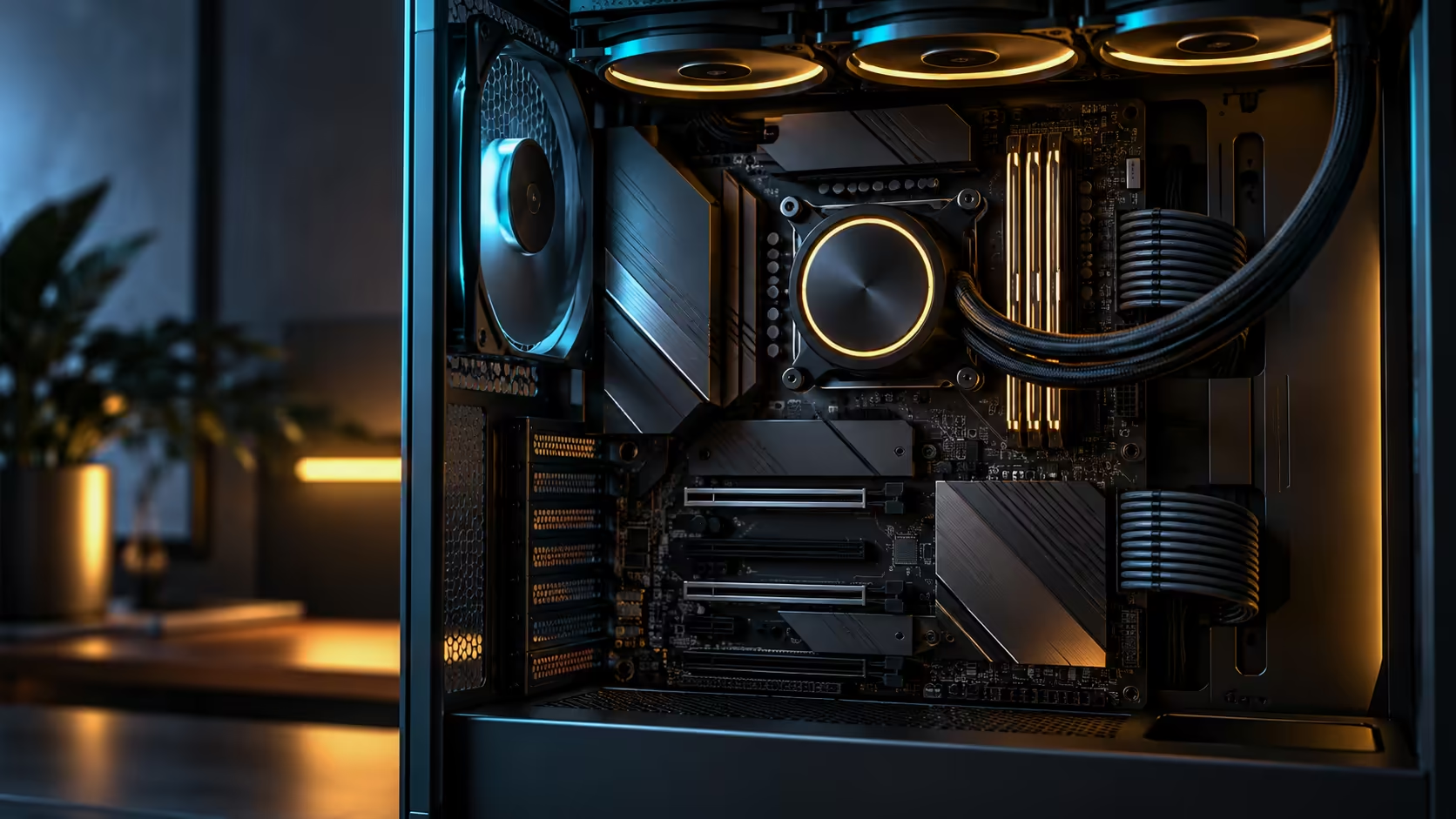
X870E is AMD's top current AM5 chipset, and it guarantees USB4, PCIe 5.0 for the primary graphics slot, and DDR5 support across every board carrying the name. On the ROG Crosshair X870E Edition 20, that baseline becomes two PCIe 5.0 x16 slots, five onboard M.2 sockets, two USB4 ports and dual 10Gb Ethernet, all for R54,999.
🏷️ What the chipset name actually guarantees
A chipset name sets a floor, not a ceiling, and X870E's floor sits meaningfully higher than the tiers below it. Every board carrying this name includes USB4 support and PCIe 5.0 on the primary graphics slot as a baseline, features that lower-tier AM5 chipsets either omit or offer only optionally depending on the specific board.
That guarantee is useful precisely because it lets you compare across brands with some confidence: an X870E board from any maker in the AMD motherboard selection starts from that same feature floor, even though individual boards then differentiate heavily above it through power delivery, port count and extras like bundled cooling.
🚀 Where PCIe 5.0 actually shows up
The chipset guarantees PCIe 5.0 on the primary graphics slot, but board makers decide how far beyond that baseline to extend it. The Crosshair X870E Edition 20 carries two full PCIe 5.0 x16 slots rather than one full-speed slot and a second stepped-down slot, which is a real differentiator over boards that meet only the chipset's minimum requirement.
Storage benefits from the same chipset-level guarantee too, though the exact number of PCIe 5.0-capable M.2 slots is again a per-board decision rather than something the chipset name fixes on its own.
💾 DDR5 and what varies board to board
Every X870E board runs DDR5 memory exclusively, matching the wider AM5 platform, but the specific speed rating and validated capacity ceiling differ between models. This particular board publishes an 8600+MT/s rating, near the top of what current AM5 boards claim, alongside five onboard M.2 sockets, which sits well above what many boards in the same chipset tier offer as standard.
🔌 Ports are where board makers spend the chipset's headroom differently
USB4 support is guaranteed, but count and placement vary. This board gives you two of them, which is enough to run a dock and a separate external drive at the same time with no hub in between. Dual 10Gb Ethernet is a board-level addition on top of the chipset baseline rather than something X870E itself requires, and it is one of the clearer signs a specific board is aimed at a creator or networking-heavy buyer rather than a pure gaming audience.
Frequently Asked Questions
What does the X870E chipset name guarantee on any board?
USB4 support, PCIe 5.0 on the primary graphics slot, and DDR5 memory support as a baseline across every board carrying the name.
Does every X870E board have two full-speed PCIe 5.0 x16 slots?
No, that is a per-board decision above the chipset's minimum requirement, and this specific board is one that includes both at full speed.
Is dual 10Gb Ethernet part of the X870E chipset specification?
No, it is an addition individual board makers choose to include, not a requirement of the chipset itself.
Does DDR5 speed rating vary between X870E boards?
Yes. The chipset guarantees DDR5 support, but the specific rated speed and validated capacity are set by each board maker individually.
Where can I compare current X870E boards side by side?
Browsing the X870 motherboard lineup is the quickest way to see how differently makers spend the same chipset baseline.
How should I compare two X870E boards from different makers?
Start from the shared chipset baseline, then compare what each board adds above it: PCIe slot count, M.2 sockets, networking and bundled extras.
Ready to compare boards by what the chipset actually promises?
Check the shared X870E baseline first, then weigh what each specific board adds on top of it.