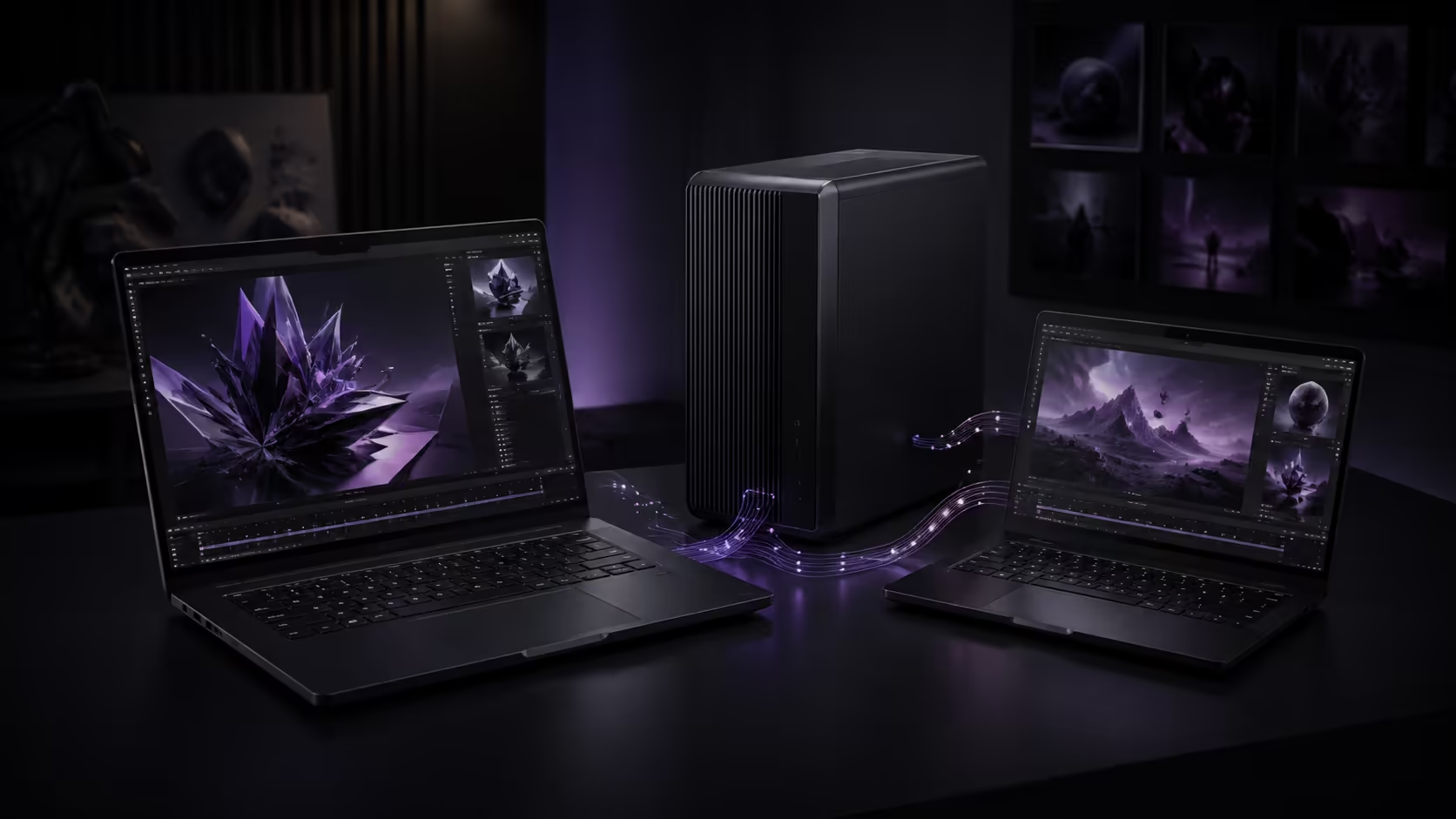
ASUS is bringing NVIDIA's RTX Spark platform to three ProArt systems: P16 and P14 laptops plus the compact GR1X desktop. The launch language centres on running large AI models and demanding creator projects locally. That makes memory capacity, software support and sustained cooling more important than a single AI performance number.
Quick Answer
An ASUS ProArt RTX Spark PC combines the new NVIDIA N1X platform with a creator-focused chassis. ASUS says the P16, P14 and GR1X can work with AI models reaching 120 billion parameters and handle complex scenes or 4K AI video tasks. Those are workload claims, not universal speed guarantees. No confirmed South African configurations or prices were present in the launch information, so buyers should first decide whether local AI execution is worth the likely premium.
🧠 Local AI changes the hardware question
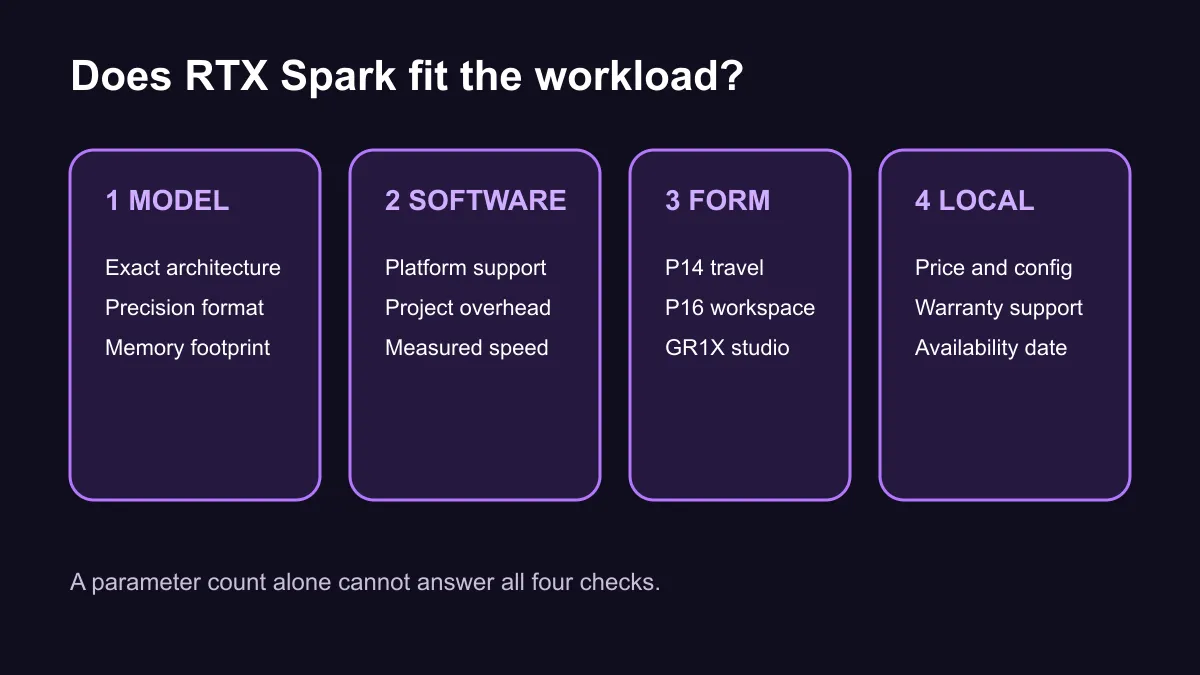
A normal notebook comparison often starts with processor speed, graphics performance and battery life. A local AI machine adds model size, memory bandwidth, precision format and application compatibility. A model that fits can run privately without sending every prompt or source asset to a remote service, but fitting it is only the first step. Generation speed and software stability determine whether the workflow is practical.
ASUS's claim of support for models up to 120 billion parameters needs that context. Different quantisation levels change memory demand, and an application may reserve capacity for the operating system and active project. A 3D artist also needs room for scene data and textures, while a video workflow can consume storage quickly. The headline upper bound should not replace a test with the exact model and application.
The ASUS laptop collection is the live place to compare current local notebook configurations while the new ProArt models remain unpriced.
💻 P16, P14 or GR1X depends on movement
The two laptop formats suit people who need the same AI and creator environment away from one desk. P16 should allow a larger screen and more thermal volume, while P14 favours portability. Exact weight, battery behaviour and sustained power limits will decide how wide that gap becomes.
GR1X removes the battery constraint and can make more sense for a permanent studio. A compact desktop is easier to leave connected to fast storage, a calibrated monitor and a wired network. It is not automatically upgradeable, however. Buyers still need to confirm memory architecture, storage access and external expansion.
Mobility is therefore a cost, not a free extra. If the system spends almost all its time docked, a desktop may deliver a cleaner thermal and connectivity setup. If client work, location shoots or demonstrations matter, a notebook can justify compromises that would otherwise seem unnecessary.
💰 Use current ASUS prices as a floor, not a forecast
The exact read-only catalogue query found active ASUS notebooks from R6,999 for a Chromebook and R8,499 for a Vivobook Go 15. Mainstream Windows configurations in the captured set reached R11,999. These are not RTX Spark equivalents. They establish only that the incoming ProArt systems sit above a broad existing ASUS range with very different memory and graphics goals.
The laptop best-sellers page helps reveal what buyers can obtain now. For a fixed workspace, compare the mini PC collection as well. Neither page predicts ProArt pricing, and an overseas launch price should never be converted into a South African promise without taxes, distribution and the exact local specification.
Before waiting, list the models, project sizes and applications that must run locally. If ordinary office work, light photo editing and web tools cover the need, a conventional notebook may offer better value. If large private models or complex creator workloads are routine, RTX Spark becomes a meaningful platform to test.
Frequently Asked Questions
Which ASUS ProArt RTX Spark systems were announced?
ASUS named the ProArt P16 and P14 laptops and the compact ProArt GR1X desktop.
What does the 120-billion-parameter claim mean?
It is an upper model-size statement under supported conditions. Format, memory use and software can change practical results.
Is RTX Spark only for AI developers?
No. Creators working with AI video, images or complex 3D scenes may benefit, provided their software supports the platform.
Are South African prices available?
The launch sources did not confirm local configurations, timing or prices. Current ASUS listings are comparisons, not forecasts.
Which form factor is best?
Choose P14 for easier travel, P16 for a larger mobile workspace, or GR1X when the system can remain on a desk.
Assessing a local AI computer?
Start with the exact model and application, then compare memory fit, sustained performance, mobility and local support.