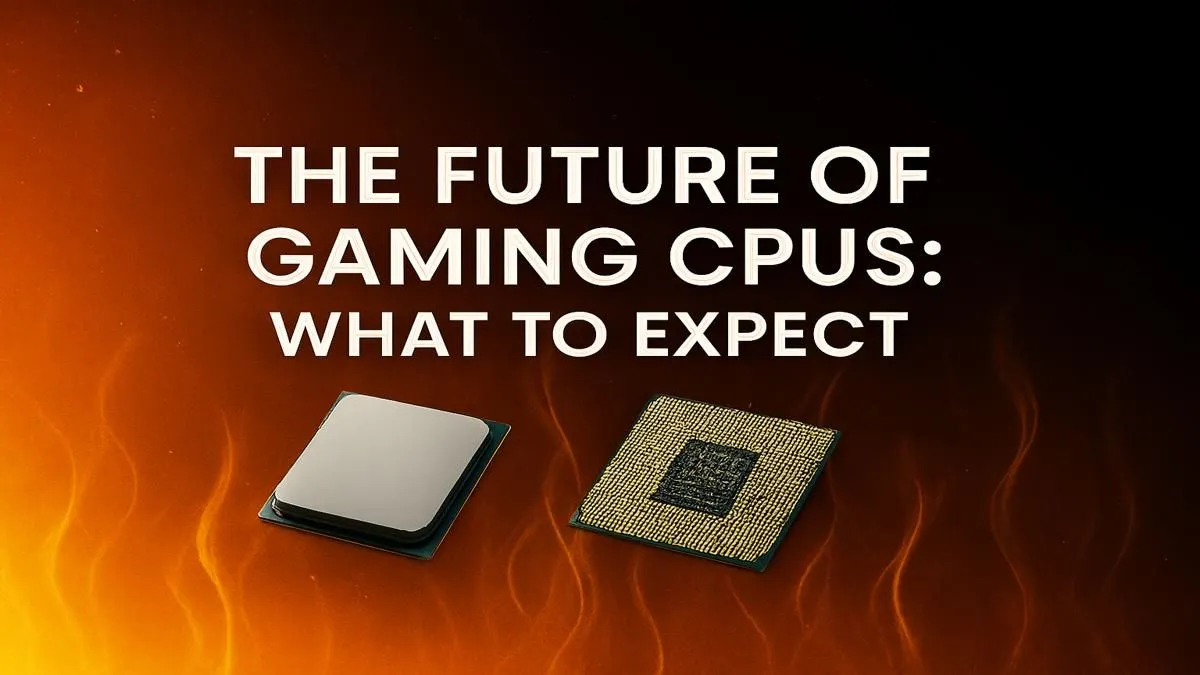
Is your trusty CPU starting to feel a bit... slow? You're not alone. The days of just chasing higher clock speeds are fading. The future of gaming CPUs is no longer about brute force; it's about brains. We're talking about processors with dedicated AI engines and clever hybrid cores that will fundamentally change how your games run. Forget what you knew—the next generation of performance is here, and it's smarter than ever. ✨
Beyond Clock Speeds: The New CPU Battleground
For years, the processor race was simple: more cores and higher gigahertz meant more power. But we're hitting a physical limit. The new frontier in the future of gaming CPUs is efficiency and specialisation. This is where hybrid architecture comes in.
Think of it like having two types of workers on a team. You have Performance-cores (P-cores) for the heavy lifting—running your game at max settings—and Efficiency-cores (E-cores) for background tasks like Discord, streaming software, or system processes. By intelligently assigning jobs, the CPU ensures your game gets maximum power without stuttering. This design, seen in many of Intel's latest Core processors, delivers a smoother, more responsive experience, especially when you're multitasking.
How AI is Shaping the Future of Gaming CPUs 🧠
The next major leap is Artificial Intelligence baked directly into the silicon. We're seeing the rise of the NPU, or Neural Processing Unit—a dedicated part of the CPU designed specifically for AI and machine learning tasks.
So, what does this actually mean for your frame rates?
- Smarter NPCs: Imagine enemies that learn from your tactics or allies that coordinate with genuine intelligence.
- Enhanced Physics: More realistic destruction, fluid dynamics, and environmental interactions without crippling your main cores.
- System Optimisation: The CPU can learn your usage patterns and predictively allocate resources for faster load times and smoother gameplay.
This isn't science fiction; it's happening now. Technologies like AMD's Ryzen AI are already paving the way for what's next for gaming CPUs, promising a future where performance is intelligent, not just raw.
Check Your Cores in Real-Time ⚡
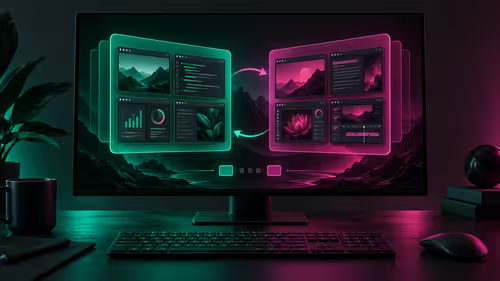
On Windows 11, you can see your hybrid cores at work! Open Task Manager (Ctrl+Shift+Esc), go to the 'Performance' tab, and click on 'CPU'. You'll see separate graphs for your P-cores and E-cores. It's a great way to visualise how your system is managing workloads while you game or work.
What This Means for Your Next Rig 🚀
When planning your next PC build, looking beyond simple core counts is more important than ever. The future of gaming CPUs is a blend of raw power, hybrid efficiency, and AI acceleration. A processor with a powerful NPU might offer better long-term value than one with slightly higher clock speeds, as more games and applications begin to leverage AI.
Ultimately, balancing your budget with these new technologies is key. Understanding the difference between a CPU designed for pure multi-threaded grunt and one built for smart, efficient gaming will be crucial. When you're choosing the right CPU processor, consider how you use your PC. If you stream, create content, and game, a hybrid model is a fantastic choice. If you want to be on the cutting edge, an AI-enabled chip is your ticket to the future.
Ready for a Future-Proof Upgrade?
The future of gaming CPUs is evolving fast. Whether you need the raw multi-core power of AMD or the hybrid efficiency of Intel, the right processor is waiting. Explore our massive range of PC Components and find the perfect brain for your next gaming rig.