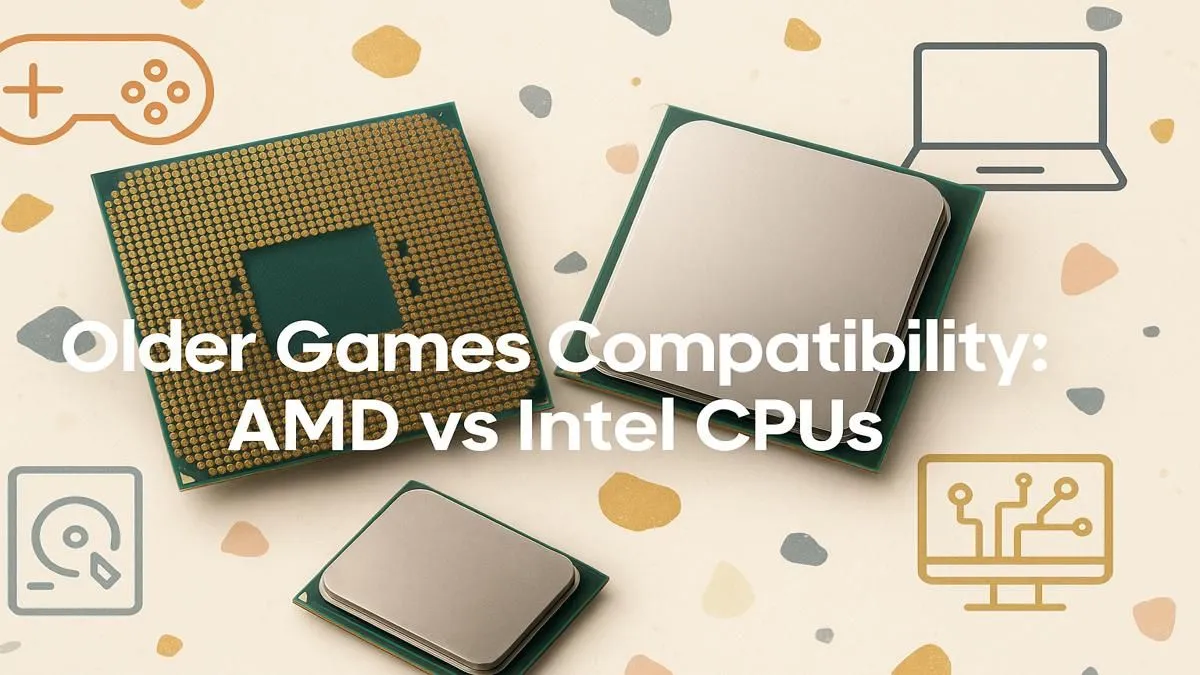
Thinking of diving back into classics like Half-Life, Age of Empires II, or even some PlayStation 2 emulation? You might assume any modern CPU can crush these old titles, but it's not that simple. The battle of AMD vs Intel for older games isn't about raw core count; it's about a different kind of performance. Let's unpack which brand gives you the best experience for your retro gaming adventures in South Africa. 🕹️
Why Older Games Think Differently
Before we compare teams red and blue, we need to understand how retro games are built. Most titles from the 90s and early 2000s were designed for single-core or dual-core processors. They simply don't know what to do with the 16+ cores found in today's beastly CPUs.
This means two things are critically important for retro gaming performance:
- Single-Thread Performance: How fast can one individual core get a job done?
- Clock Speed (GHz): Higher clock speeds often translate directly to better performance in these older, less complex game engines.
A modern 12-core CPU might be incredible for video editing, but for StarCraft: Brood War, only one or two of those cores will do the heavy lifting. This makes the CPU choice for retro gaming a surprisingly nuanced decision.
The Case for Intel: Clock Speed Kings
Historically, Intel has often held the crown for the highest single-core clock speeds right out of the box. Processors like their Core i5 and i7 series frequently boost to impressive frequencies, which can give them a slight edge in games that rely purely on that raw, single-threaded muscle.
For emulation, which often involves translating instructions from an old console to your PC in real-time, this high-frequency performance can be a massive advantage. It can help smooth out frame rates and reduce input lag in demanding emulators like PCSX2 (for PlayStation 2) or RPCS3 (for PlayStation 3). If your goal is pure, unadulterated performance for a specific classic title, a chip from the lineup of modern Intel CPUs is a fantastic contender. ⚡
Emulation Pro Tip 💡
Many emulators are more demanding on your CPU than the original console was. For platforms like the PS2 and PS3, a CPU with strong single-thread performance is far more important than a high-end graphics card. Don't overspend on a GPU if your main goal is smooth emulation!
The Case for AMD: The All-in-One Powerhouse
So, is Intel the clear winner? Not so fast. The AMD vs Intel debate for older games gets interesting when we talk about value and integrated graphics. AMD's Ryzen processors with "G" in their name (like the Ryzen 5 5600G or Ryzen 7 8700G) are APUs, or Accelerated Processing Units.
This means they have a powerful CPU and a capable graphics chip on the same piece of silicon. For a dedicated retro gaming PC, this is huge. You can build an entire small form-factor system without needing a separate, expensive graphics card. The integrated Vega or RDNA graphics in these latest AMD processors are more than powerful enough to handle almost any game from the pre-HD era at high resolutions and frame rates. This makes them the undisputed champions for budget-friendly and compact retro builds.
The Verdict: Which CPU Wins for Retro Gaming?
So, who takes the trophy? 🏆 It truly depends on your goal.
- For the Purist: If you're building a machine dedicated to squeezing every last frame out of demanding emulators or specific classic PC games, Intel's high clock speeds and strong single-thread performance often give it a slight edge.
- For the Smart Builder: If you want to build a compact, affordable, and highly capable retro machine that can handle a massive library of classics without needing a dedicated GPU, an AMD Ryzen "G" series APU is unbeatable value.
Ultimately, both brands offer fantastic options. The key is understanding that for retro gaming, you're shopping for high clock speeds and strong single-core grunt, not just the highest core count. When you're browsing, choosing the right CPU processor is about matching its strengths to the unique demands of these timeless games.
Ready to Build Your Nostalgia Machine?
Whether you're Team Red or Team Blue, the perfect processor for your retro rig is waiting. Explore our massive range of CPUs and find the perfect heart for your journey back in time.