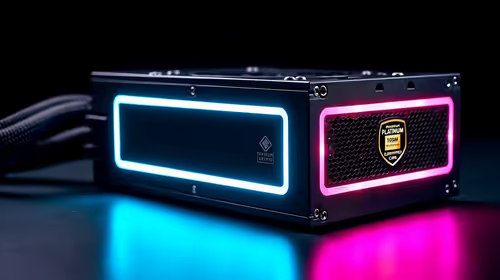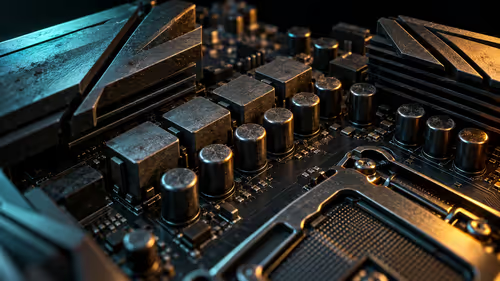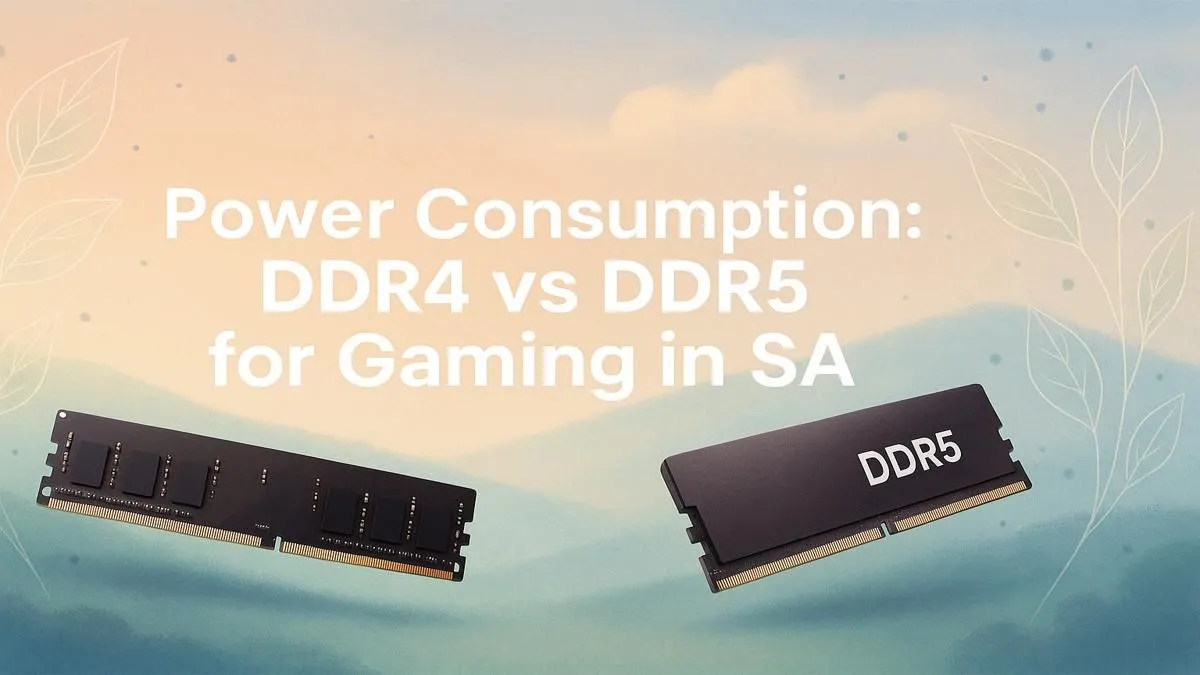
Building a new gaming rig in South Africa? You’re probably weighing up CPU cores and GPU VRAM. But what about your RAM's power consumption? With electricity costs always on our minds, the DDR4 vs DDR5 power consumption debate is more relevant than ever. It might seem like a small detail, but it can affect your system's heat, stability, and even your monthly bill. Let's break down what it really means for your gaming setup. 🚀
The Core Difference in Power Draw
At its heart, the conversation about DDR5 vs DDR4 power usage comes down to voltage. Standard DDR4 memory operates at 1.2 volts, while DDR5 drops that to 1.1 volts. While a 0.1V difference sounds tiny, it represents a significant step in efficiency.
This isn't just a numbers game. A key architectural change with DDR5 is moving the Power Management Integrated Circuit (PMIC) directly onto the RAM module itself. This allows for finer, more localised voltage regulation, reducing power loss and improving signal integrity. This smarter power delivery is a core reason why the latest DDR5 RAM can push to much higher speeds while maintaining stability.
Does Lower Voltage Mean Lower Bills? 💡
Here’s the reality check for South African gamers: will you see a massive drop in your monthly Eskom bill by choosing DDR5 over DDR4? Probably not. For a single gaming PC, the direct power saving from the RAM alone might only amount to a few Rands over an entire year.
However, the real benefit of lower RAM power consumption isn't just about the direct cost. It's about heat.
Less power drawn means less heat generated. In a tightly packed PC case, every watt of heat removed matters. Lower RAM temperatures can contribute to overall system stability, especially during intense, multi-hour gaming sessions in the middle of a South African summer. This means your CPU and GPU coolers have a slightly easier job, potentially allowing your fans to run a little quieter. For builders focused on creating a cool and stable rig, this is a genuine advantage that goes beyond the specs sheet. A quality DDR4 memory kit is still a fantastic choice for value, but the thermal efficiency of DDR5 is a clear step forward.
Check Your Rig's Real Power Draw ⚡
Curious about your PC's total power consumption? A simple wall plug power meter can give you a real-time reading. This helps you understand your actual electricity usage during gaming vs. idle, giving you a much clearer picture than just looking at individual component specs. It's a great tool for any serious PC enthusiast!
A Quick Look Back at Older RAM
To truly appreciate the efficiency gains, it helps to see how far we've come. Many veteran PC builders will remember rigs running on older DDR3 gaming RAM modules, which typically operated at a much thirstier 1.5V or even 1.65V. The generational leap from DDR3 to DDR4, and now to DDR5, highlights a consistent trend: pushing for more performance while demanding less power. Each step makes our machines faster and smarter.
The Verdict: Is Power Consumption the Deciding Factor?
So, when comparing DDR4 vs DDR5 power consumption for your next SA gaming rig, don't get fixated on the electricity bill alone. The direct saving is minimal.
Instead, view DDR5's lower power draw as part of a bigger package. It contributes to a cooler, more stable, and more modern platform that's built for the future of gaming. While DDR4 offers undeniable value-for-money, the efficiency and architectural improvements of DDR5 are a significant part of its next-gen appeal. Your choice depends on your budget and whether those secondary benefits—cooler operation and better power management—are a priority for your build.
Ready to Optimise Your Rig's Performance? Choosing the right RAM is about balancing speed, cost, and efficiency. Whether you're building a budget beast or a top-tier powerhouse, we've got the components to bring your vision to life. Explore our full range of PC components and build a smarter, faster rig today.