Does NVIDIA Reflex Racing Improve Your Steering Response?
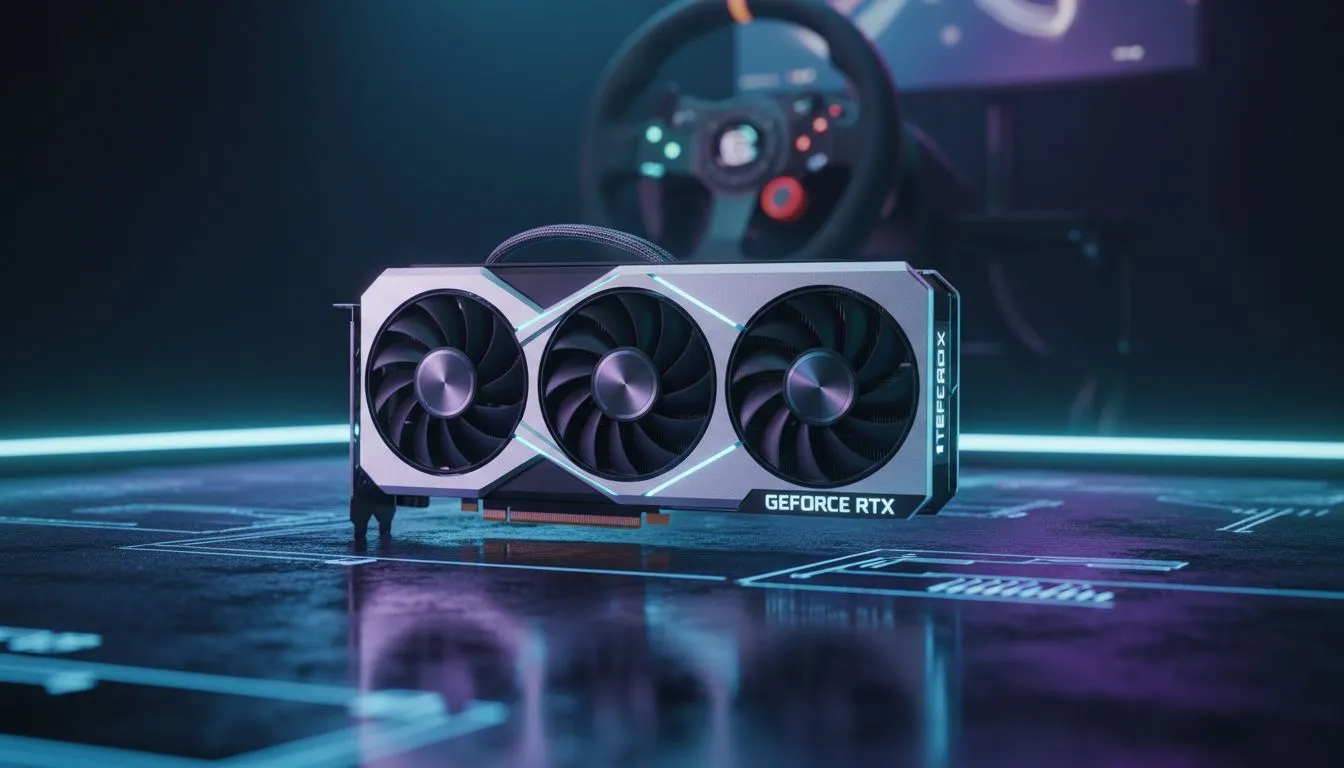
Ever missed the perfect apex at Kyalami because your car felt just a fraction behind your inputs? In the world of sim racing, milliseconds are the difference between a podium finish and a trip into the tyre wall. You might have seen the setting in your menus, but does NVIDIA Reflex racing: better steering response actually deliver on its promise? The short answer is yes... but understanding why helps you shave seconds off your lap times.
System latency is the invisible enemy of every South African sim racer. It is the delay between clicking a button or turning your wheel and seeing that action happen on screen. When you are pushing a GT3 car to the limit, any delay makes the car feel floaty or disconnected. By integrating the latest NVIDIA graphics cards into your rig, you allow the GPU to communicate directly with the game engine, bypassing the traditional render queue. ⚡
Reducing Latency for Precision Apex Hunting
When you enable NVIDIA Reflex in titles like Assetto Corsa Competizione or iRacing, the game engine synchronises with the GPU. This ensures that the frames are processed exactly when the engine needs them. This reduction in "input-to-pixel" lag means your steering feels more immediate. You can feel the weight of the car shifting through your force feedback wheel with more clarity.
If you are building a dedicated sim rig, choosing MSI’s custom-cooled variants can help maintain those high clock speeds required for low-latency gaming. Consistency is key in racing... if your frame rates dip, your latency spikes, and your muscle memory fails.
Sim Racing Pro Tip ⚡
Always enable 'Boost' mode within the NVIDIA Reflex settings if your power supply can handle it. This keeps the GPU clock speeds high even when the engine isn't fully stressed, ensuring that the very next frame is delivered as fast as possible for the most responsive steering feel.
Comparing the Competition in the Local Market
While NVIDIA leads the charge with Reflex, the market for high-performance components in South Africa is broader than ever. Some racers might explore Intel Arc graphics cards for budget-friendly entry into 1440p racing. While they offer great value, they currently lack a direct 1:1 equivalent to the Reflex ecosystem for ultra-low latency.
For those who use their rigs for more than just track days, such as 3D rendering or CAD work, high-end workstation graphics cards provide the stability needed for professional tasks... though they usually lack the specific "Reflex" gaming optimisations found in the GeForce line. 🔧
Finding the Right Balance for Your Rig
If you prefer the "Team Red" approach, AMD Radeon graphics cards offer Anti-Lag technology which targets similar latency issues. However, NVIDIA Reflex remains the gold standard for sim racing because it is integrated directly into the game's code. This deep integration allows for a level of steering precision that simply feels more "connected" to the asphalt. 🚀
When you are fighting for position at the end of a long straight, you need to trust that your car will react the moment you turn the wheel. Optimising your system for the lowest possible latency isn't just about high frame rates... it is about how those frames feel in your hands. ✨
Ready to Find Your Perfect Match?
The NVIDIA Reflex vs AMD Anti-Lag debate is complex, but for the ultimate steering response and low-latency performance in South Africa, NVIDIA is hard to beat. Explore our massive range of graphics card specials and find the perfect GPU to conquer the track.