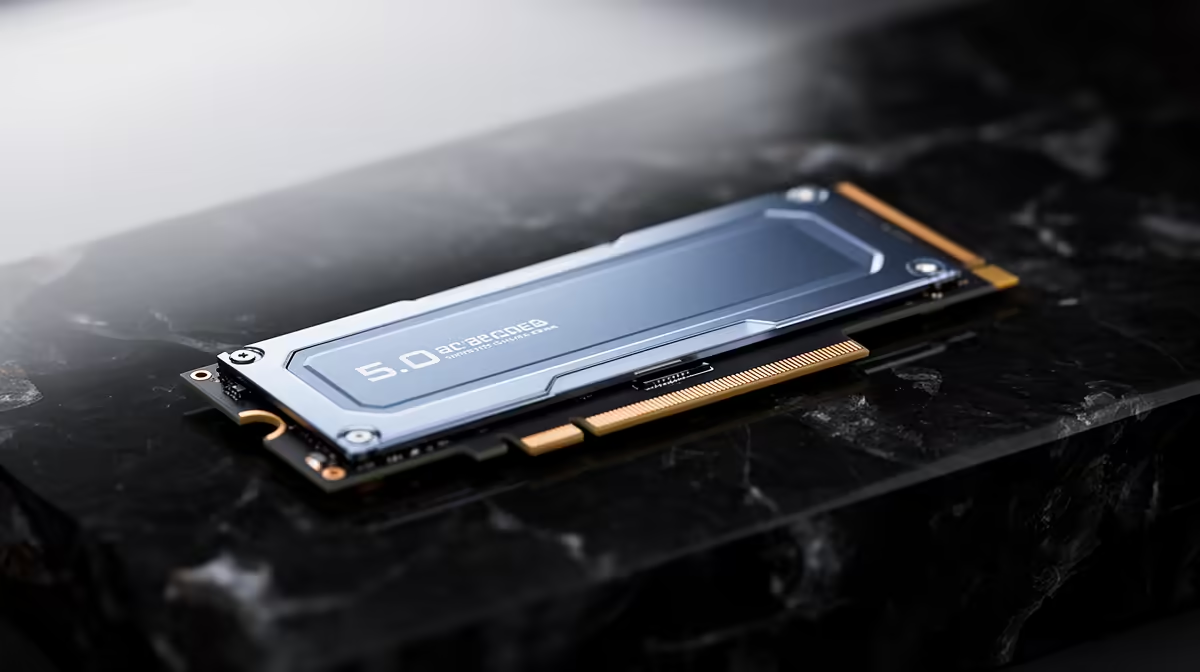
Staring at that compile progress bar again? For South African game developers, every minute spent waiting on assets to load or shaders to compile is a minute not spent creating. The bottleneck is often your storage. While fast SSDs are standard, the leap to a PCIe 5.0 SSD for game development is more than just an incremental upgrade... it’s a total workflow revolution. Let's dig into why this new tech is essential for SA devs. 🚀
Why PCIe 5.0 is a Big Deal for Game Development
So, what’s all the fuss about? A PCIe 5.0 SSD essentially doubles the bandwidth of its PCIe 4.0 predecessor, pushing theoretical speeds past 12,000MB/s. But for a developer, this isn't just about loading into a game faster. It’s about radically cutting down the time you spend on core development tasks.
Think about it:
- Compiling Code: Large-scale projects in engines like Unreal or Unity involve massive codebases. Faster read/write speeds mean your compiler can process files and build your project significantly faster.
- Handling Huge Assets: Working with uncompressed 4K or 8K textures, complex 3D models, and high-fidelity audio? A Gen 5 drive lets you open, edit, and save these enormous files without the frustrating lag.
- Level Loading & Testing: Instantly loading into complex levels to test new mechanics saves invaluable time. This is especially true when leveraging technologies like Microsoft's DirectStorage API, which next-gen games will rely on. The speed of a PCIe 5.0 SSD for game development makes your test environment truly reflect a high-end player experience.
Exploring the raw power of these drives is the first step. You can see the latest Gen 5 NVMe SSDs to get a feel for the current market leaders.
The Real-World Workflow Boost ⚡
Let's move from theory to the daily grind. Imagine your workflow with a PCIe 5.0 drive. You kick off a full project build, and instead of going to make coffee... and then checking your phone... it’s done in a fraction of the time. You can iterate on ideas faster, test changes more frequently, and stay in that creative flow state for longer.
This isn't just about convenience; it's a competitive advantage. When you can build, test, and debug faster than the competition, you can deliver a more polished product on schedule. Upgrading your storage is one of the most direct ways to boost your personal productivity and your studio's output. For anyone serious about development, exploring our full range of NVMe SSDs is a smart move.
Engine Optimisation Tip ✨
If you're using Unreal Engine 5, make sure your project's Derived Data Cache (DDC) is located on your fastest drive. This cache stores compiled shaders and other processed assets. Moving it to a PCIe 5.0 SSD can dramatically reduce stuttering and initial load times within the editor, making your level design and testing process much smoother.
Is It Time to Upgrade? PCIe 5.0 vs PCIe 4.0
Okay, let's be real. PCIe 5.0 drives carry a premium price tag. Is the investment worth it right now for every developer in South Africa? Maybe not.
For indie devs or those working on less asset-heavy projects, today's top-tier Gen 4 NVMe SSDs offer absolutely phenomenal performance for their price. They represent a massive leap over older SATA SSDs and are more than capable for most professional workloads. A good Gen 4 drive can still slash your compile times and make your whole system feel incredibly responsive.
However, if you're a professional working on AAA-scale environments, cinematic sequences, or data-intensive simulations, the argument for a PCIe 5.0 SSD for game development becomes much stronger. The time saved over the lifespan of a single large project could easily justify the initial cost. It's about future-proofing your rig and removing every possible bottleneck to your creativity. 🔧
Finding the Right Drive for Your Rig
When you’re ready to pull the trigger, don’t just look at the headline speed. Consider the drive's endurance (measured in Terabytes Written or TBW), the quality of its controller, and its cooling solution. Gen 5 drives run hot, so a robust heatsink (either included or from your motherboard) is non-negotiable to prevent thermal throttling and maintain peak performance.
Whether you're aiming for the absolute cutting edge or seeking the best performance-per-Rand, there's a drive that fits your needs. Keep an eye on the best SSD deals to find exceptional value across all generations.
Ready to Supercharge Your Workflow? Stop waiting and start creating. A faster SSD is the most impactful upgrade a game developer can make. Explore our range of high-speed Gen 5 NVMe SSDs and give your development rig the power it deserves.