You're building a beast of a PC, ready to crush the latest titles. You've seen the insane speeds of PCIe 5.0 SSDs—we're talking 12,000MB/s and beyond! 🚀 But whispers in online forums mention a catch: power draw and heat. Is the blistering performance worth it, or will your new drive run hotter than a summer's day in the Karoo? Let's break down what the PCIe 5.0 SSD power consumption really means for your gaming rig.
Why Does PCIe 5.0 Use More Power?
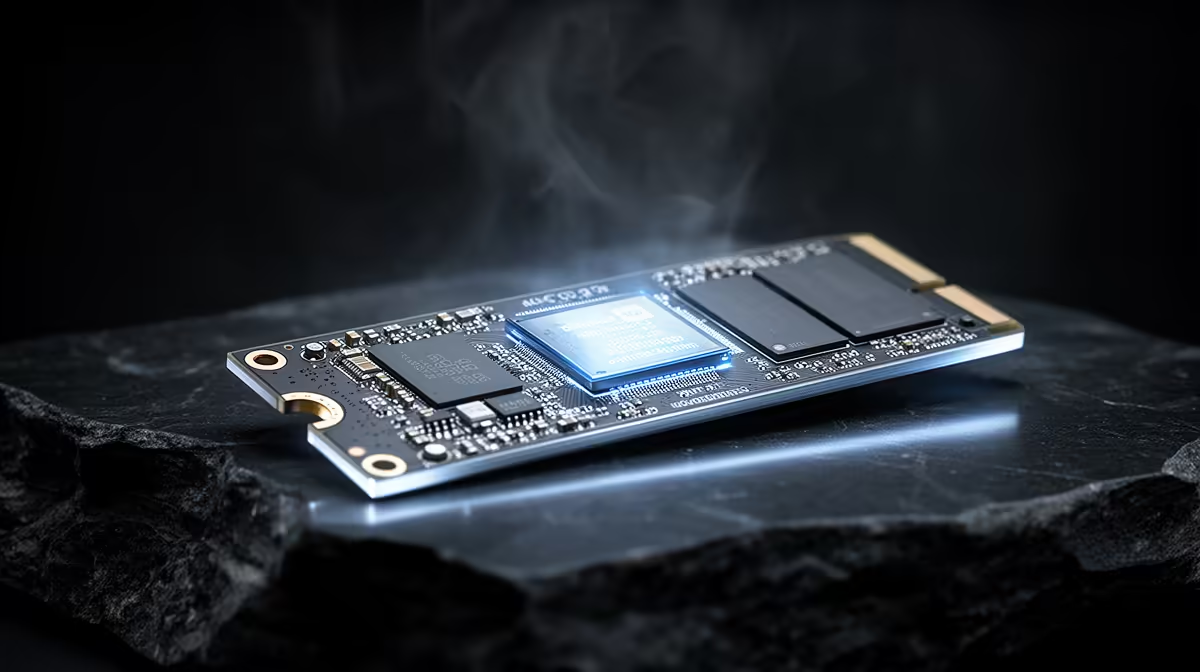
It boils down to simple physics. To achieve those mind-bending speeds, the controller and NAND flash chips inside a Gen 5 SSD have to work significantly harder and faster than their predecessors. Think of it like a car engine: more speed requires more fuel. This increased workload translates directly into higher energy use. While a typical Gen 4 drive might peak at around 5-8 watts, some Gen 5 models can pull over 10 watts under heavy load. This evolution is a natural part of pushing the boundaries of all modern NVMe SSDs.
Is This Power Draw a Real Concern for Your Gaming Rig?
Here's the good news: for pure gaming, probably not. Your SSD isn't running at maximum throttle 24/7. It hits peak speeds during loading screens or when installing a massive game, but then idles for most of your actual gameplay. The slight increase in PCIe 5.0 SSD power consumption will barely make a dent in your total system power draw compared to a high-end graphics card or CPU. For many gamers in South Africa, a top-tier Gen 4 NVMe SSD still offers a phenomenal sweet spot of speed, efficiency, and value. The real issue isn't the power itself, but its byproduct: heat. 🔥
Taming the Heat: Cooling Your Gen 5 Drive
Higher power consumption inevitably leads to more heat. If an SSD gets too hot, it will "thermally throttle"—intentionally slowing itself down to prevent damage. This completely defeats the purpose of buying a super-fast drive in the first place! This is why robust cooling is non-negotiable for Gen 5. Most new motherboards come with built-in M.2 heatsinks, and many of the latest Gen 5 NVMe SSDs ship with their own chunky, high-performance heatsinks, some even featuring tiny fans for active cooling.
Check Your Clearance! 🔧
Before buying a Gen 5 SSD with a large pre-installed heatsink, double-check the clearance around your motherboard's M.2 slot. A bulky GPU or other components can sometimes get in the way. Always consult your motherboard manual to ensure a perfect fit!
So, Is a PCIe 5.0 SSD Worth It Right Now?
Let's cut to the chase. Is the PCIe 5.0 SSD power consumption a deal-breaker? No, as long as you have adequate cooling. The bigger question is whether you need that speed today. For professional video editors, 3D artists, and performance enthusiasts who want the absolute fastest hardware available, the answer is a resounding yes. For most gamers, the difference in loading times between a high-end Gen 4 and a Gen 5 drive is still minimal. You can often find incredible performance for your money by checking out the best SSD deals in South Africa, where mature Gen 4 technology offers fantastic value. The choice is yours, but now you can make it with your eyes wide open. ✨
Ready to Find Your Perfect Drive? The PCIe 5.0 vs 4.0 debate is heating up, but for maximum performance, choice, and value in South Africa, the right SSD is waiting for you. Explore our massive range of NVMe SSDs and find the perfect drive to conquer your load screens.