You’ve seen the hype: PCIe 5.0 SSDs promising mind-blowing speeds that leave older drives in the dust. For South African gamers building a new rig or planning an upgrade, the question is simple: is this new tech worth the extra cash? When comparing PCIe 5.0 vs 4.0 SSDs, the numbers on the box are impressive, but do they actually translate to a better experience when you’re dropping into Apex Legends or exploring Night City?
The Raw Speed: What’s the Real Difference?
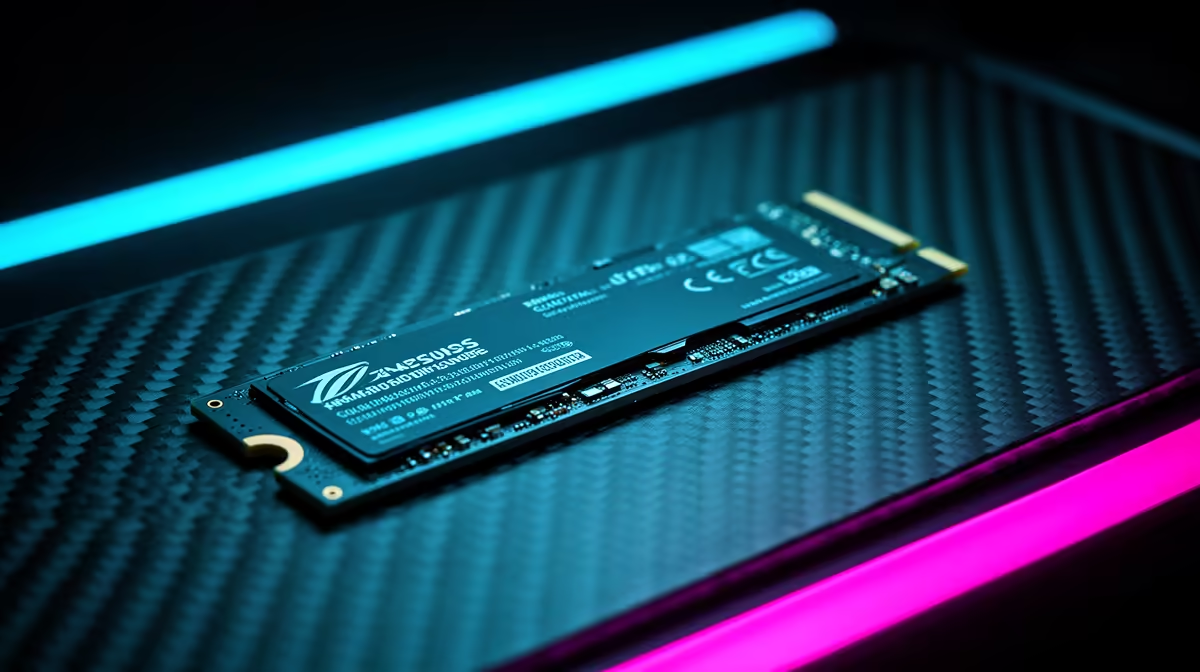
At its core, the leap from PCIe 4.0 to 5.0 is about doubling the bandwidth. Think of it like upgrading from a two-lane highway to a four-lane superhighway. Data can move twice as fast. A top-tier Gen 4 drive might hit speeds around 7,000MB/s, which is already incredibly quick. A new Gen 5 drive? It can push past 12,000MB/s or even higher. This raw power is a massive leap forward for all modern NVMe SSDs.
But for gaming, your PC isn't just one big file transfer. It's a complex dance of loading textures, assets, and game logic, and that's where the comparison gets more nuanced.
PCIe 5.0 vs 4.0 SSD in Real-World Gaming 🎮
Here’s the hard truth: for most games available today, the difference in loading times between a fast Gen 4 and a new Gen 5 SSD is… minimal. We’re often talking about a second or two at most. Your current games were designed with older storage tech in mind, so they can't fully take advantage of the new superhighway. This makes one of our high-quality Gen 4 NVMe SSDs the performance king for pure value right now.
The technology that could change this is Microsoft's DirectStorage API. It’s designed to let your graphics card pull game assets directly from the SSD, bypassing the CPU to reduce bottlenecks. While a few games support it, widespread adoption is still on the horizon. This is where the PCIe 5.0 vs 4.0 SSD debate gets interesting for future-proofing.
Cooling is Key! ❄️
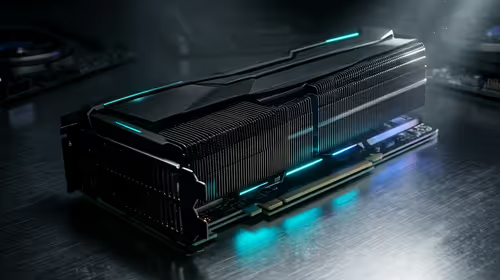
PCIe 5.0 SSDs run hotter than their Gen 4 counterparts due to their incredible speeds. Many come with beefy heatsinks for a reason! Before you buy, make sure your motherboard has enough clearance around the M.2 slot, especially if you have a large graphics card. Proper case airflow is also essential to prevent thermal throttling and keep performance consistent.
So, Who Actually Needs a PCIe 5.0 SSD Right Now?
While the immediate gaming benefit is small, there are clear cases where the speed boost of a Gen 5 drive is the right choice.
The Future-Proofing Enthusiast 🚀
If you're building a top-of-the-line rig with the latest CPU and motherboard, a Gen 5 drive makes sense. You’re investing in a platform that will be ready to harness the full potential of next-generation games and applications. You're not just buying for today; you're building for tomorrow with one of these cutting-edge Gen 5 NVMe SSDs.
The Content Creator & Professional
Are you editing 8K video, working with massive datasets, or compiling huge code projects? This is where Gen 5 shines. The ability to read and write enormous files in seconds can save you minutes… even hours… over the course of a project. For professionals, time is money, and this performance offers a tangible return on investment.
The Price Factor: What About the Rands and Cents? 💰
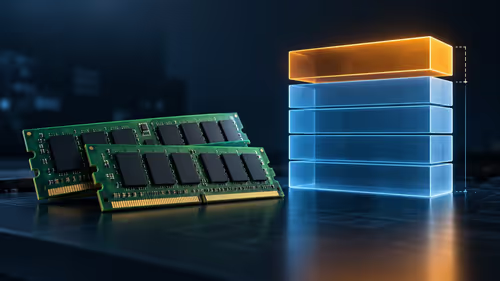
Let's be honest, budget is a huge factor for most builders in South Africa. PCIe 5.0 SSDs carry a premium price tag. For the same amount of money, you can often get a Gen 4 SSD with double the storage capacity.
When you're weighing up PCIe 5.0 vs 4.0 SSDs, ask yourself: would you rather have a 1TB Gen 5 drive or a 2TB Gen 4 drive for a similar price? For most gamers, having more space for your growing library is a much bigger quality-of-life improvement than shaving a second off a loading screen. It's always a good idea to check out the latest SSD deals to see where the best value currently lies.
The Verdict: Is the Speed Boost Worth It?
For the vast majority of South African gamers in 2024, a high-quality PCIe 4.0 SSD is the smarter buy. It delivers blistering performance that's more than enough for current titles, and it offers far better value for your hard-earned Rands.
However, if you're a hardcore enthusiast who demands the absolute best, a professional who needs maximum throughput, or someone building a PC to last for the next five years, then a PCIe 5.0 SSD is a powerful investment in the future of performance. The choice ultimately depends on your specific needs and budget.
Ready to Supercharge Your Rig?
Whether you're chasing bleeding-edge performance or seeking unbeatable value, the right SSD will transform your PC experience. The PCIe 5.0 vs 4.0 SSD choice is yours, and we've got the perfect drive waiting. Explore our massive range of SSDs and find the perfect match for your build today.