The Ultrawide Challenge: RTX 5070 vs RX 9070
Tearing through the sunset at Kyalami in a GT3 car requires more than just a steady hand. On an ultrawide monitor, every pixel counts for immersion. Choosing between the RTX 5070 and RX 9070 isn't just about brand loyalty... it’s about hitting those 144Hz targets without stuttering. In South Africa, where gear costs a premium, making the right choice first time is essential.
When you are pushing a 3440 x 1440 resolution, your GPU is working overtime. You need a card that handles high-fidelity textures while maintaining the frame pacing necessary for precise steering inputs. Our comprehensive range of graphics cards offers various options, but for sim racers, the mid-to-high-end battleground is where the real value lies.
NVIDIA RTX 5070: The Efficiency Expert ⚡
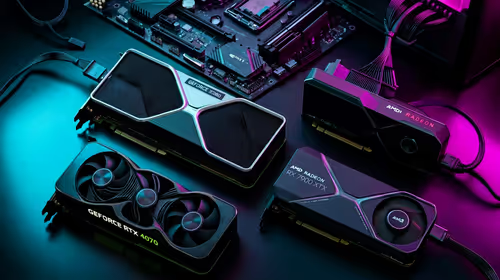
The RTX 5070 brings the latest architectural refinements to the table. For sim racing titles like iRacing or Assetto Corsa Competizione, NVIDIA’s strength often lies in its software suite. If you are looking for the most stable experience with features like DLSS 4 and Ray Reconstruction, premium MSI graphics cards powered by NVIDIA chips are a top-tier choice.
The RTX 5070 excels in power efficiency. This is a massive plus for South African gamers looking to keep heat levels down in a tight sim rig cockpit during a hot summer. Its ability to maintain high frame rates using AI upscaling means you can run your "Epic" settings without seeing your FPS dip when the grid gets crowded at the first corner.
Sim Racing Pro Tip 🔧
When setting up your ultrawide monitor, ensure your Field of View (FOV) is calculated correctly for your seating distance. A GPU like the RTX 5070 or RX 9070 provides the power, but a correct FOV ensures your brain perceives speed and distance accurately, which is vital for hitting your braking markers every single lap.
AMD RX 9070: The Rasterization Powerhouse 🚀
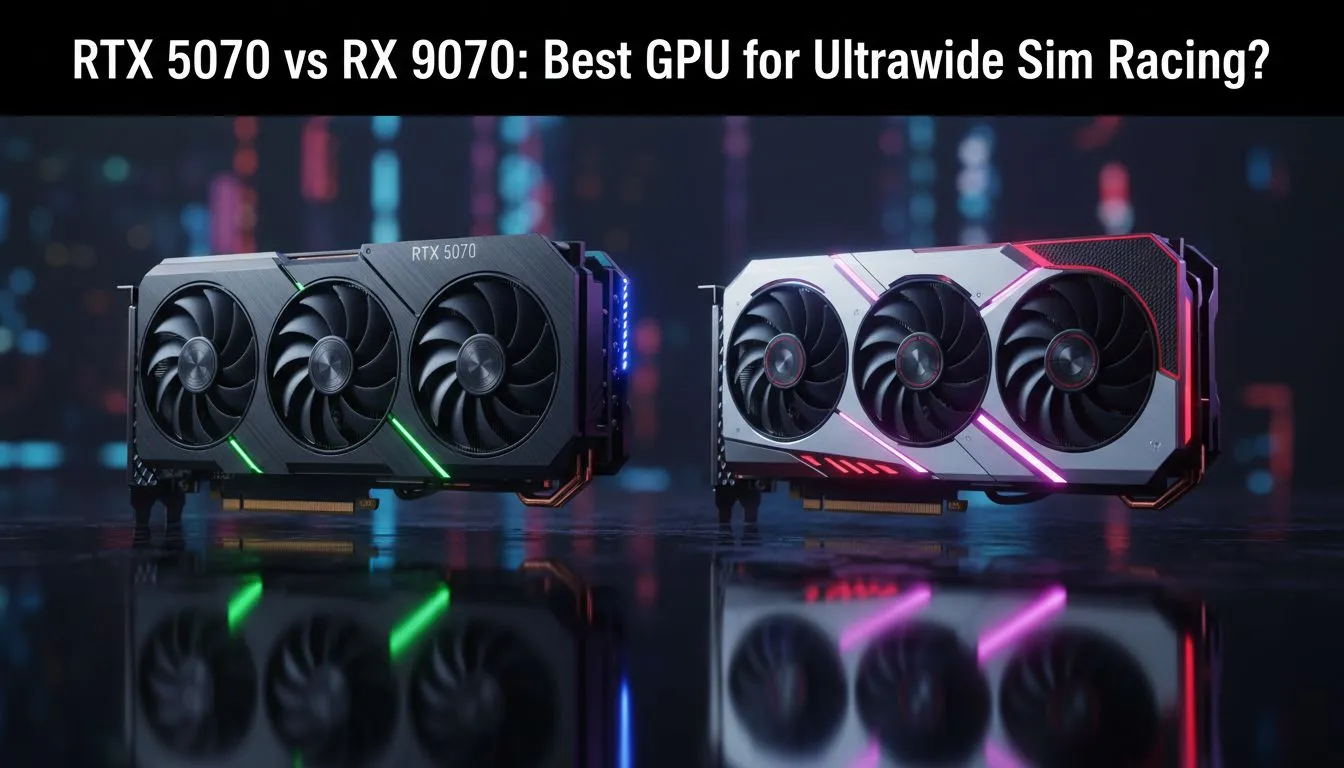
AMD has traditionally focused on raw performance and generous VRAM buffers. The RX 9070 continues this trend, offering incredible value for those who prefer native resolution over upscaling. When comparing the RTX 5070 vs RX 9070: Best GPU for Ultrawide Sim Racing? debate, the RX 9070 often wins on pure frames per Rand.
Many sim racers prefer the latest AMD Radeon graphics cards because of the "Infinity Cache" and large memory bus. This hardware helps manage the heavy data loads of high-resolution textures found in modern racing sims. If you aren't interested in heavy Ray Tracing and just want the smootest raw performance, AMD makes a very compelling case.
Exploring Every Corner of the Market
While the 5070 and 9070 are the main contenders, the market is wider than you might think. Some niche sim builds, particularly those used for professional broadcast or data analysis, might even look toward workstation graphics cards for their extreme stability.
Additionally, we are seeing interesting developments from the blue team. While not yet the primary choice for high-end ultrawide racing, the growth of Intel Arc graphics cards has introduced more competition into the mid-range sector, which is always good for the consumer's wallet in ZAR.
Final Verdict for the Sim Rig
If you value cutting-edge AI features and power efficiency, the RTX 5070 is your best bet for a cool, quiet, and feature-rich experience. However, if you want the most VRAM and raw rasterization power for your money, the RX 9070 is a beast that won't let you down on the back straight. Both cards will easily handle an ultrawide setup... it just depends on which technology stack you prefer to drive with.
Ready to Find Your Perfect Match? The battle between NVIDIA and AMD is legendary, but the best GPU is the one that fits your budget and your racing goals. Explore our massive range of graphics card specials and find the perfect hardware to shave seconds off your lap times today.