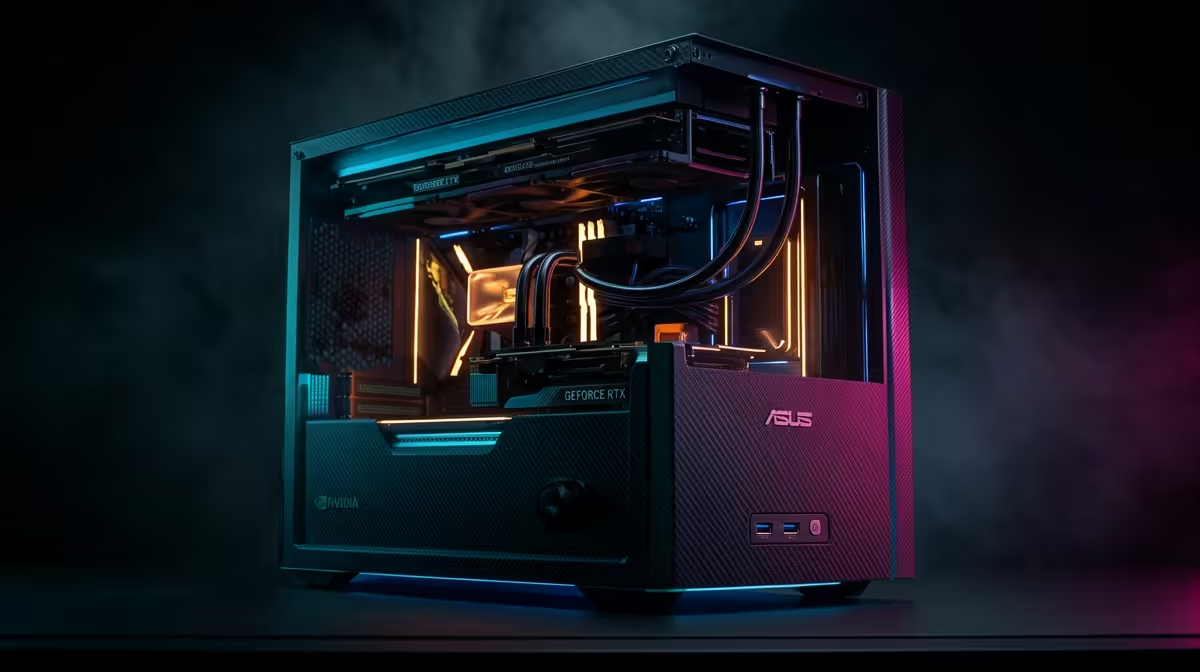
You're in the final circle, the tension is thick, and then it happens... a massive stutter. Your frames drop to a crawl, and you're staring at the defeat screen. Is it just the game, or is your PC trying to tell you something? Knowing how to listen is key. Using the right gaming PC diagnostic tools can turn you from a frustrated player into a master of your machine, ensuring you get every drop of performance you paid for. 🔧
Why Bother with Gaming PC Diagnostic Tools?
It’s a common misconception that you only need diagnostic software when your PC is crashing. The truth is, these tools are essential for proactive performance management. For South African gamers, where every component is a considered investment, getting the most out of your hardware is crucial.
Proper gaming PC diagnostic tools help you:
- Monitor Temperatures: Prevent your CPU or GPU from thermal throttling (slowing down to avoid overheating) during intense sessions.
- Identify Bottlenecks: Find out if your CPU is holding back your GPU, or if slow RAM is causing stutters.
- Ensure Stability: Test your components after overclocking or before a major tournament to prevent unexpected crashes.
- Track Performance: See real-time stats like FPS (frames per second) to fine-tune your game settings for that perfect balance of visual quality and smooth gameplay.
The Top 5 Free Diagnostic Tools Every SA Gamer Should Have
You don't need to spend a fortune to get a clear picture of your PC's health. These five free utilities are powerful, trusted by enthusiasts worldwide, and should be part of every gamer's toolkit.
1. HWiNFO64 (Hardware Info)
Think of HWiNFO64 as a complete medical file for your PC. It provides an incredibly detailed, real-time look at every single component, from CPU core clocks and temperatures to GPU memory usage and fan speeds. It's the ultimate tool for seeing exactly how your hardware behaves under load, especially when pushing your system to its limits in a game like Cyberpunk 2077.
2. MSI Afterburner & RivaTuner Statistics Server
This is the gold standard for on-screen displays (OSD). While its name suggests it's only for MSI cards, Afterburner works with virtually any graphics card. It lets you see vital stats like FPS, GPU temp, and CPU usage directly on your screen while you play. This is non-negotiable for competitive gamers who need stable frame rates in titles like Overwatch 2. 📈
Pro Tip: Clean On-Screen Display ⚡
setting up MSI Afterburner's overlay, you don't need to display everything. Start with the essentials: GPU Temperature, GPU Usage, CPU Temperature, CPU Usage, and Framerate. This gives you a complete performance picture without cluttering your screen and distracting you from the action. You can customise the colours and size in the RivaTuner settings.
3. CrystalDiskInfo
Your storage drive's health is often overlooked until it's too late. CrystalDiskInfo is a simple, lightweight utility that reads your SSD or HDD's S.M.A.R.T. (Self-Monitoring, Analysis and Reporting Technology) data. It gives you a straightforward "Good," "Caution," or "Bad" health status. A drive in "Caution" could be the source of mysterious game stutters or long loading times in massive open worlds like GTA V.
4. MemTest86
Random blue screens and games that crash to the desktop for no reason are often symptoms of faulty RAM. MemTest86 is a bootable tool (you run it from a USB drive before Windows loads) that performs an exhaustive check on your memory modules. If you're experiencing weird instability, especially after installing new RAM or in a heavily modded game like Minecraft, this is the definitive diagnostic software to use.
5. Cinebench
While many tools test your whole system, Cinebench focuses purely on your CPU's performance. It runs a rendering benchmark and gives you a score you can compare against other systems online. This is a fantastic way to check if your CPU is performing as expected, especially after a BIOS update or if you suspect it's overheating. It's particularly useful for seeing how your rig handles CPU-intensive simulations like Microsoft Flight Simulator.
A Quick Health Check Routine for Your Gaming Rig 💻
You don't need to run these tools daily. A simple monthly routine can catch problems early and keep your PC optimised. ✨
- Once a Month: Run CrystalDiskInfo for a 10-second storage health check.
- During Gameplay: Keep MSI Afterburner's overlay running when you play a new, demanding game. Watch your temps. If your GPU hits 85°C or higher, it might be time for a dust-out or a look at your case airflow. This is crucial for battle royales like PUBG or fast-paced shooters like Fortnite.
- After an Update: If you update drivers or your OS and notice issues, it's a good time to run a benchmark. This helps confirm that your performance is where it should be for competitive titles like Counter-Strike 2.
- Troubleshooting: If you're facing constant crashes in a game like Call of Duty: Warzone 2.0, MemTest86 should be your first port of call after ensuring your drivers are up to date.
Using these PC diagnostic tools empowers you to understand your machine, solve problems faster, and ultimately, spend more time enjoying flawless gameplay.
Feeling Overwhelmed or Ready for an Upgrade? Diagnosing a problem is the first step. If your hardware is showing its age, sometimes the best fix is a fresh start. Evetech's experts can help you build the perfect rig, optimised for stability and peak performance from day one. Explore our range of custom-built gaming PCs and leave the guesswork to the pros.