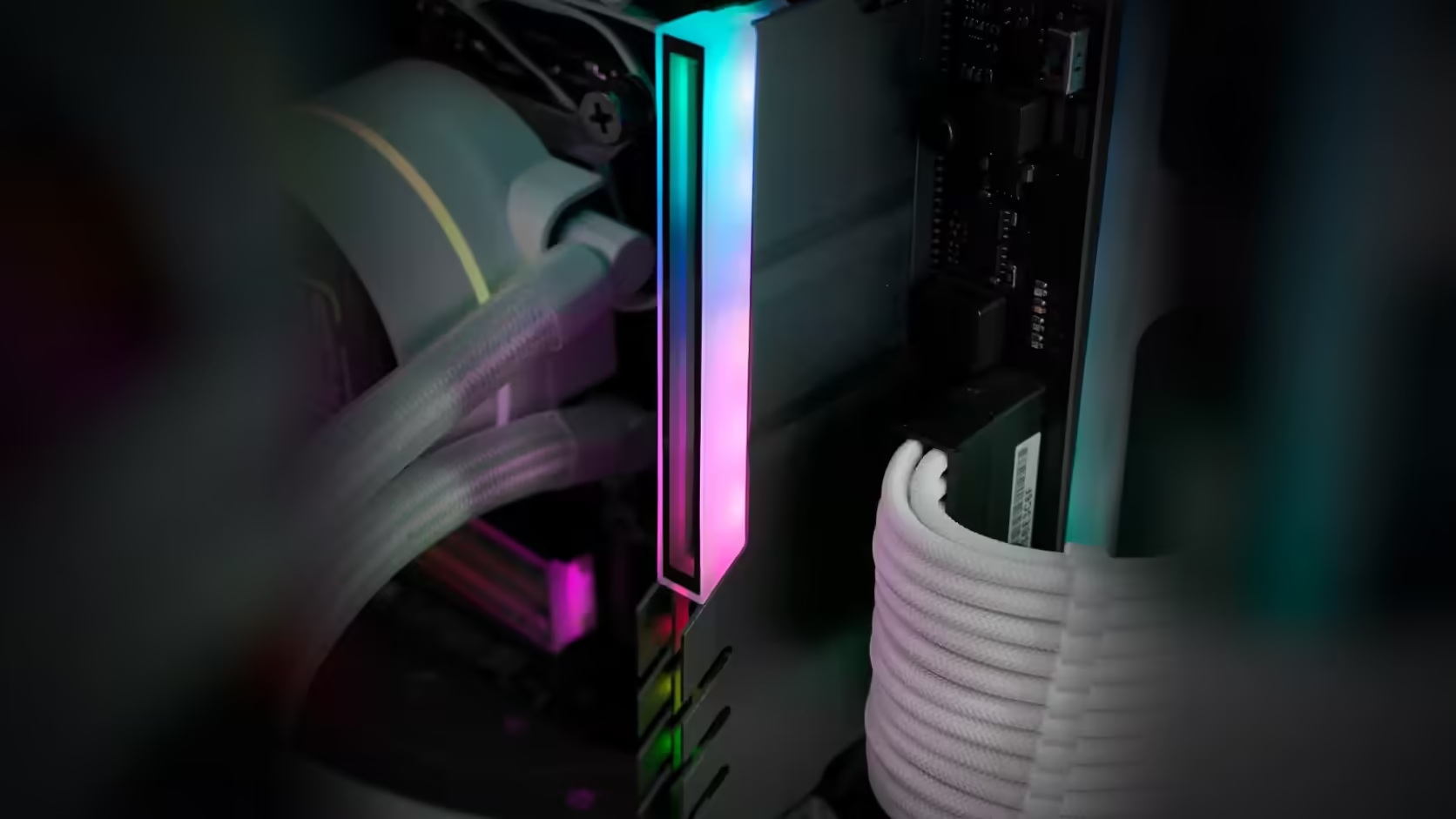
A memory cover meeting the base of a tower cooler is a clearance problem, not a strength contest, and forcing the two together is exactly the wrong response. A DIMM cover collision needs more physical room between the two parts, never more pressure applied to close a gap that genuinely is not there.
Quick Answer
If the AsiaHorse RAM cover, priced at R249, meets the cooler on installation, the answer is creating more clearance rather than pressing the two together harder. Forcing it risks damage to both the memory module underneath and the cooler itself, since neither component is designed to absorb sideways pressure from an accessory sitting on top of it. Raising the cooler's front fan, changing which memory slots are actually populated, or simply leaving the cover off that particular slot are the genuine options here.
⚠️ Why forcing it is a real risk, not just an inconvenience
Both the memory module and the cooler are engineered for the loads and connections they were designed to handle - vertical pressure from a properly mounted cooler, and a snug fit in a DIMM slot. Neither was designed to also absorb sideways pressure introduced by an accessory that does not quite have room to sit where it is meant to. Forcing a collision closed risks flexing the module in its slot or putting uneven stress on the cooler's own mounting, neither of which is a trade worth making for a cosmetic cover.
The first fix worth trying
Raising the cooler's front-facing fan, where the specific tower cooler model allows it, is the standard way builders gain memory clearance generally, and it is worth trying before anything more involved, since many tower coolers include adjustable fan clips specifically for this kind of situation.
🔀 Changing which slots get populated
Leaving the DIMM slot nearest the cooler empty removes the tightest clearance point entirely, though motherboard manuals usually specify a particular population order for dual-channel memory to work correctly, so this option needs checking against your board's manual rather than assumed to be freely available.
Would a lower-profile memory module help
A genuinely low-profile module does sit lower in its slot, though the cover itself adds its own height on top regardless of what memory sits underneath it, so a lower module reduces but does not necessarily eliminate the clash entirely.
💧 Is switching to a liquid cooler worth considering
A liquid cooler removes the overhang above the memory slots entirely, which resolves this specific clash completely - though it is a considerably larger change to the build than the original clearance problem usually warrants, and worth treating as a last resort rather than a first response.
Is leaving the cover off that one slot acceptable
On the affected slot specifically, that is a legitimate and simple outcome, even though it does break the otherwise unified finish across the row of memory covers - a fair trade-off for avoiding pressure on either the module or the cooler. Covers and mounts for a tidier memory area are stocked in the case accessories category, and any cable-side tidying nearby can draw on the cable solutions range.
Why is no dimension published for this cover
No shell dimension appears for the RAM cover, which is exactly why this clash is often discovered by physically fitting the part rather than predicted in advance from a spec sheet - worth planning around before assuming clearance will simply work out.
Frequently Asked Questions
What is the actual risk of forcing a cover into a cooler collision?
Pressure on both the memory module and the cooler, neither of which is designed to absorb sideways loading from an accessory sitting on top of it.
What is the first fix worth trying?
Raising the cooler's front fan, which many tower coolers allow and which is the standard way to gain memory clearance in general.
Would changing which DIMM slots are populated help?
It can, since leaving the slot nearest the cooler empty removes the tightest clearance, though board manuals often specify a required population order.
Would a lower-profile memory module resolve the clash?
It helps, since a low-profile module sits lower, though the cover adds its own height on top regardless of the module underneath.
Is a liquid cooler a reasonable answer to this problem?
It removes the overhang entirely, resolving the clash completely, though it is a considerably bigger change than the original clearance issue usually justifies.
Is it acceptable to simply leave the cover off one slot?
Yes, on the affected slot specifically - it is a legitimate outcome, even though it breaks the unified finish across the row.
Why does no published dimension exist for this cover?
None is published, which is exactly why the clash is often discovered by fitting rather than predicted beforehand from a spec sheet.
Fitting memory covers around a tower cooler?
Check the case accessories range and cable solutions category for the extras that help clear the space properly.