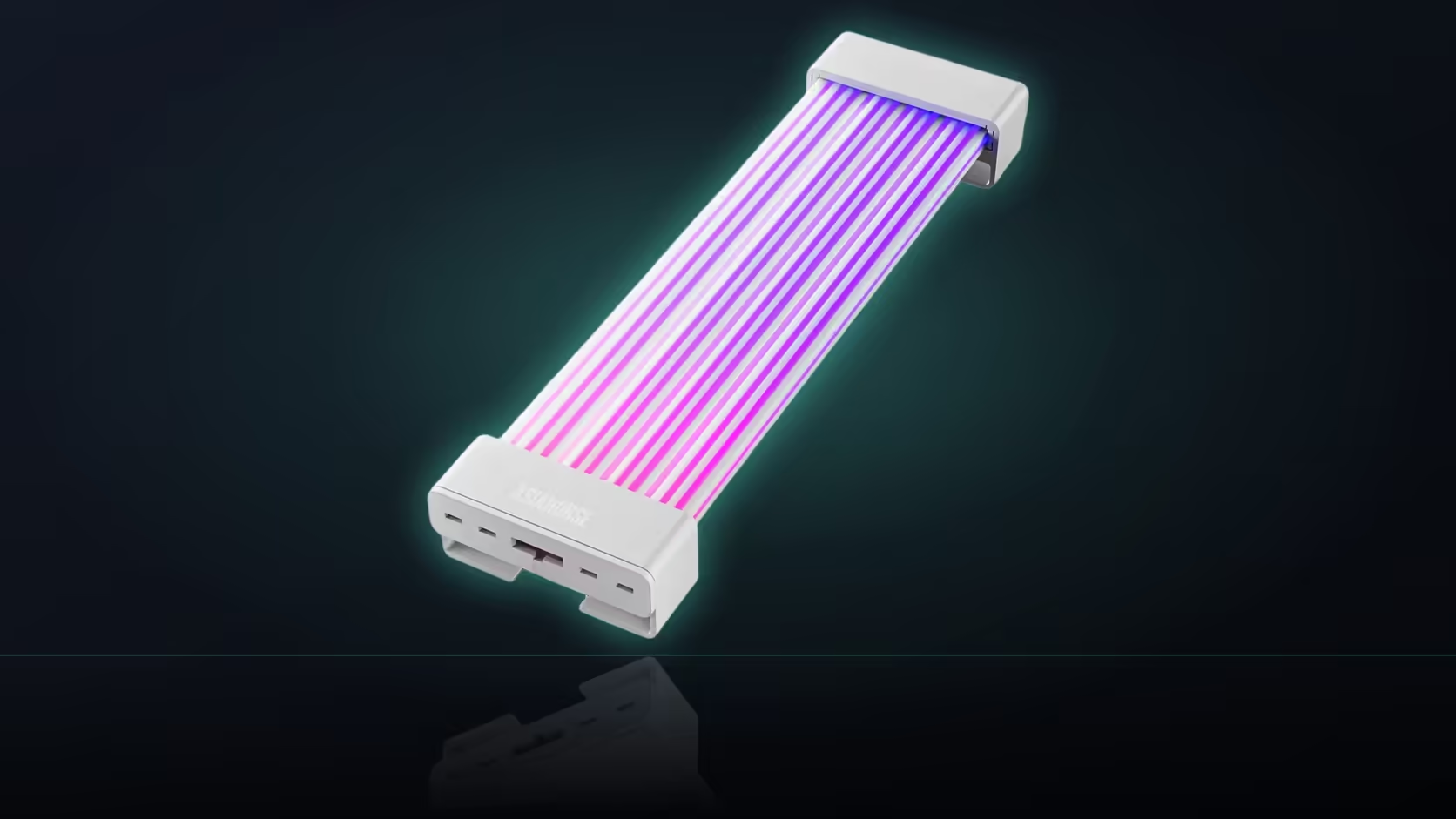
A lit accessory that only ever runs its own separate pattern tends to look bolted-on rather than built-in, no matter how neatly it's fitted. AsiaHorse's Aurora ARGB cover kit avoids that entirely, because its LEDs are genuinely addressable and sync through the same 5V 3-pin header that drives whatever else the motherboard is already lighting.
Quick Answer
The Aurora kit's LEDs are addressable and sync over a shared 5V 3-pin motherboard header, so the covers follow whatever lighting scheme the board is already running rather than forming a separate, disconnected lighting island of their own. That syncing is exactly what lets two lit cable spans read as part of the build's overall look rather than as an unrelated add-on.
🎛️ What "addressable" actually means for this kit
Each LED in the shells - 81 on the 24-pin cover, 80 on the graphics cover - can be controlled individually rather than as a single fixed block. That's what allows patterns to move along the shell, colours to shift in sequence, or a wave effect to travel end to end, instead of the whole span simply switching between static colours all at once.
🔗 How the sync connection actually works
Both shells draw their lighting signal over the same 5V 3-pin header a range of other addressable components use - fans, strips, AIO pump heads - which means the covers plug straight into whatever ecosystem the board already supports rather than needing their own separate protocol.
💻 Do the covers need their own dedicated software?
No. They follow whatever lighting control the motherboard provides, so there's nothing extra to download, install, or configure specifically for the Aurora kit. Whatever app already manages the board's lighting handles the covers the same way it handles everything else plugged into an addressable header.
🌊 Can lighting effects travel between different components?
Where the board's own software supports cross-device effects, yes - the covers become part of the same coordinated scheme as any fans or strips already running on the system, rather than sitting outside it as an isolated pair.
Do both shells display the same effect at the same time?
Yes - since they share a single header connection, both follow the identical scheme rather than running independently of each other. Whatever pattern is set plays out across both the board cover and the graphics cover together.
🎚️ What if independent control between the two shells is wanted?
That would need separate connections entirely, which isn't how this kit is built - it's specifically designed to draw from one shared header rather than offering two independently controllable zones.
✨ Does the strand styling change how these effects actually look?
It does - because the LEDs read as separated points of light rather than one continuous bar, patterns appear to move as distinct points travelling along the run, rather than a solid band shifting colour uniformly from end to end. It's a different visual character even running the exact same underlying effect.
Evetech's case lighting selection shows a range of other products integrating with the same board-driven lighting, and cable management accessories cover tidying the header lead itself once it's connected.
Frequently Asked Questions
What does "addressable" mean for this specific kit?
That each LED can be controlled individually, which is what lets patterns travel along the shell rather than the whole span changing at once.
How does the syncing connection actually work?
Over the shared 5V 3-pin header, the same connection other addressable components in the build use to follow the board's own software.
Do the covers need any separate software of their own?
No - they follow whatever lighting control the board already provides, so nothing extra needs installing or configuring specifically for them.
Can effects genuinely travel between different lit components?
Where the board software supports it, yes - the covers join the same coordinated scheme as fans or strips running on the same system.
Do both shells show the identical effect at the same time?
Yes - sharing one header connection means both follow the same scheme together rather than displaying independently of each other.
Is independent control between the two shells possible?
No - that would need separate connections, which the kit isn't built for since it draws from a single shared header by design.
Does the strand styling change how synced effects actually look?
Yes - patterns appear as points moving along the run rather than a solid band shifting colour, since the LEDs read as separated strands.
Want lighting that actually joins your board's scheme?
Browse Evetech's motherboards and case lighting range to see how it all syncs together.