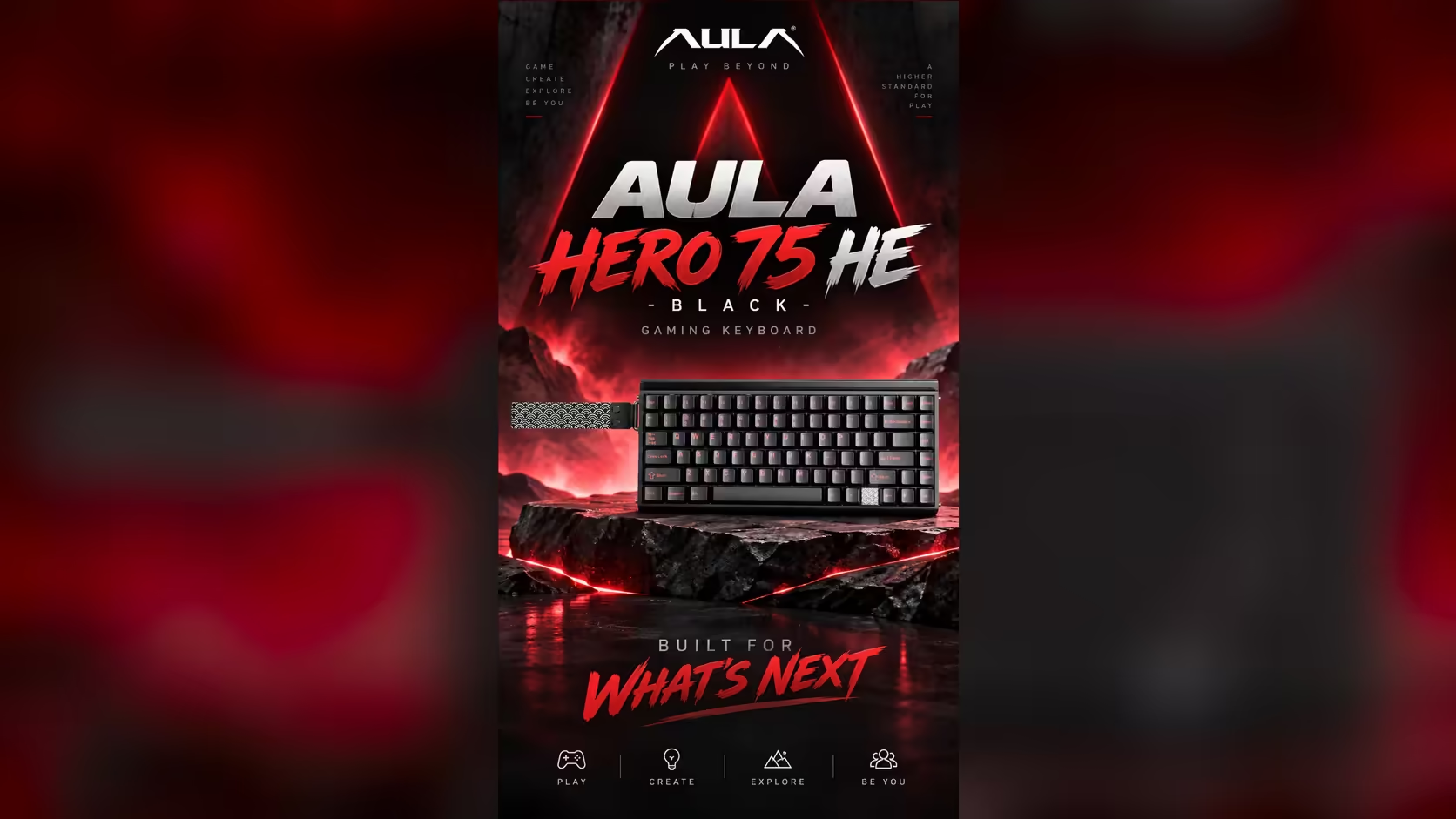
Pull a keycap off the AULA HERO 75 HE and you see the switch. What you do not see is the stack below it, and that stack does a lot to decide how the board sounds and feels. AULA lists an aluminium plate and five dampening layers under the HERO's keycaps, each with its own job. Here is what each part does, in the order you would meet them working downwards.
Quick Answer
Under the AULA HERO 75 HE's keycaps sit an aluminium alloy plate and five dampening layers: PO foam, a fibre switch pad, PET, bottom cotton and silicone. Together they aim for a cleaner, less hollow sound. The whole assembly sits in what AULA calls a boat-style chassis, and the board, R899 at Evetech, weighs about 980g without its cable.
🔩 The aluminium alloy plate
The plate is the sheet the switches clip into. It holds every switch in position so keys do not wobble, and it sets much of the board's feel. Material matters:
- Stiffness. An aluminium alloy plate flexes less than a plastic one, so presses feel firm and consistent across the board.
- Sound. A stiff metal plate tends to give a crisper, more defined note than a soft plastic plate.
- Stability for hot-swap. Switches that are pressed in rather than soldered rely on the plate to hold them snugly.
On a hot-swappable magnetic board like the HERO, where mixed switch setups are supported, a solid plate keeps every socket consistent whichever switch you fit.
🧱 The five layers, one by one
AULA lists five dampening materials. The page names them without detailing their exact positions, so the descriptions below explain what each material typically does in a keyboard stack.
PO foam
Polyolefin foam is a light, springy layer often used to fill space and absorb vibration. It takes the edge off the sharp sounds each keystroke sends into the board.
Fibre switch pad
A pad that typically sits close to the switches, under the plate. Its job is to soften the moment a key bottoms out and to reduce the ping or rattle that switches can make against the plate.
PET
PET is a thin, firm film. In keyboards it is often used as a sound-shaping sheet, changing the character of the typing sound rather than simply muffling it.
Bottom cotton
A soft layer at the base of the case. The bottom of a keyboard is usually its largest empty space and the main source of hollow echo, so filling it has a big effect.
Silicone
A dense, heavy material that damps low-frequency resonance. Silicone layers add weight and help the board sound fuller and less tinny.
⛵ The boat-style chassis and the keycaps on top
AULA describes the HERO's structure as a boat-style chassis. The product page does not go into its construction, so the useful takeaway is simply that the plate and layers sit inside this chassis, and that is the structure AULA specifies.
On top of all this sit PBT double-shot keycaps. PBT is a hard-wearing plastic that resists the shiny wear some keycaps develop, and double-shot means the legends are moulded in rather than printed, so they will not rub off. The caps are hot-swappable too.
⚖️ What all that adds up to on the desk
The result is a board of about 980g without the cable, heavy enough to stay put during quick movements. It measures 313 x 139 x 43mm, or 322mm wide with its side panel fitted, and packs 84 keys in a 75% layout. Inside, the magnetic switches adjust from 0.1mm to 3.4mm, and the HERO polls at 8000Hz on both its cable and 2.4GHz receiver, with Bluetooth for three devices.
Evetech backs the HERO 75 HE with a 2 Years Local Warranty. Browse it in the gaming keyboards category, and compare it with the keyboards Evetech shoppers buy most.
Frequently Asked Questions
What difference does an aluminium plate make?
It is stiffer than plastic, so keys feel firmer and more consistent, and it tends to give a crisper sound.
Why include silicone in the stack?
Silicone is dense and damps low-frequency resonance, helping the board sound fuller and less tinny.
Where does the fibre switch pad sit?
Pads like this usually sit close to the switches under the plate, softening bottom-outs and reducing rattle.
What is a boat-style chassis?
It is AULA's name for the HERO's structure. The product page does not describe it in more detail.
What keycaps does the HERO use?
PBT double-shot keycaps, with legends moulded in so they do not wear off.
Is the board heavy?
About 980g without the cable, which keeps it steady on the desk.
Care about what is under the keycaps?
Explore well-built boards like the HERO 75 HE in Evetech's gaming keyboard range and pick one that sounds as good as it feels.