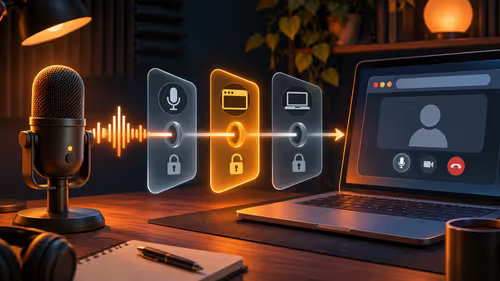
A short, ordered chain is how you choose the best filters for your Streamlabs mic: noise suppression first, a noise gate second, a gentle compressor third and a limiter last. Add them one at a time, listen after each, and stop when your voice sounds like you on a good day rather than a processed copy.
Quick Answer
In Streamlabs, right-click your microphone source, open Filters and add Noise Suppression, Noise Gate, Compressor and Limiter in that order. Use a compressor ratio near 3 to 1 and a limiter ceiling of about minus 1 dB. Fix gain and mic position before you touch any filter.
🎙️ Get the Signal Right First
Filters polish a clean recording; they cannot rescue a bad one. Before opening the filter list:
- Set the mic gain in Windows or on the device so your normal speech peaks in the yellow part of the meter, never red.
- Sit a fist's width from the mic, slightly off-axis, so breath does not pop.
- Switch off fans and anything humming within reach.
A dynamic microphone is forgiving in untreated rooms such as a Joburg flat with hard floors. Browse streaming essentials if your current mic picks up the whole room.
🔧 The Filter Chain, Step by Step
Noise suppression
Choose the RNNoise method for voice. It removes steady hiss and keyboard wash without eating your consonants. Skip the strongest level unless the room is truly noisy.
Noise gate
Stay silent and watch the meter. Set the close threshold a few dB above that resting level, then the open threshold slightly higher. Speak and check that the first syllable is never clipped.
Compressor
Ratio 3:1, threshold around minus 18 dB, attack 6 ms and release 60 ms is a fair start. Your quiet and loud lines should sit closer together, with no pumping between words.
Limiter
Set the threshold to minus 1 dB. It only exists to catch a shout or laugh, so you should rarely see it move.
⚖️ Less Is More
Stacking an equaliser, a de-esser and a second compressor on top usually adds tone problems. Record thirty seconds, play it back on earbuds and on your phone speaker, then change one control at a time. If something still sounds odd, remove the last filter you added.
Viewers judge audio before picture, so pair clean sound with a decent webcam and your channel feels finished.
Frequently Asked Questions
Which filter should I add first in Streamlabs?
Noise suppression, because it cleans the signal before the gate, compressor and limiter shape it. Reversing the order makes those later filters react to noise.
How do I set the noise gate threshold?
Stay quiet and read the meter, then set the close level just above that floor. Talk normally and confirm the gate opens before each word begins.
Can filters fix a poor microphone?
They improve a decent capture but cannot rebuild a thin, tinny one. Position and room treatment do more than any plug-in.
What does a compressor actually do to my voice?
It narrows the difference between loud and soft speech so viewers do not keep adjusting volume. A ratio of about 3:1 is a light touch.
Why can I still hear my fan or aircon?
Suppression reduces steady hum but cannot erase it. In a hot South African summer, point the fan away from the mic and consider a dynamic model.
Should I set gain before adding filters?
Yes. A clipped signal stays distorted however many filters sit on top, so set gain so peaks stay in the yellow.
Ready to give your stream a cleaner voice?
Visit the Evetech streaming category to compare microphones and accessories, then dial in your Streamlabs filter chain with a source that gives it something good to work with.