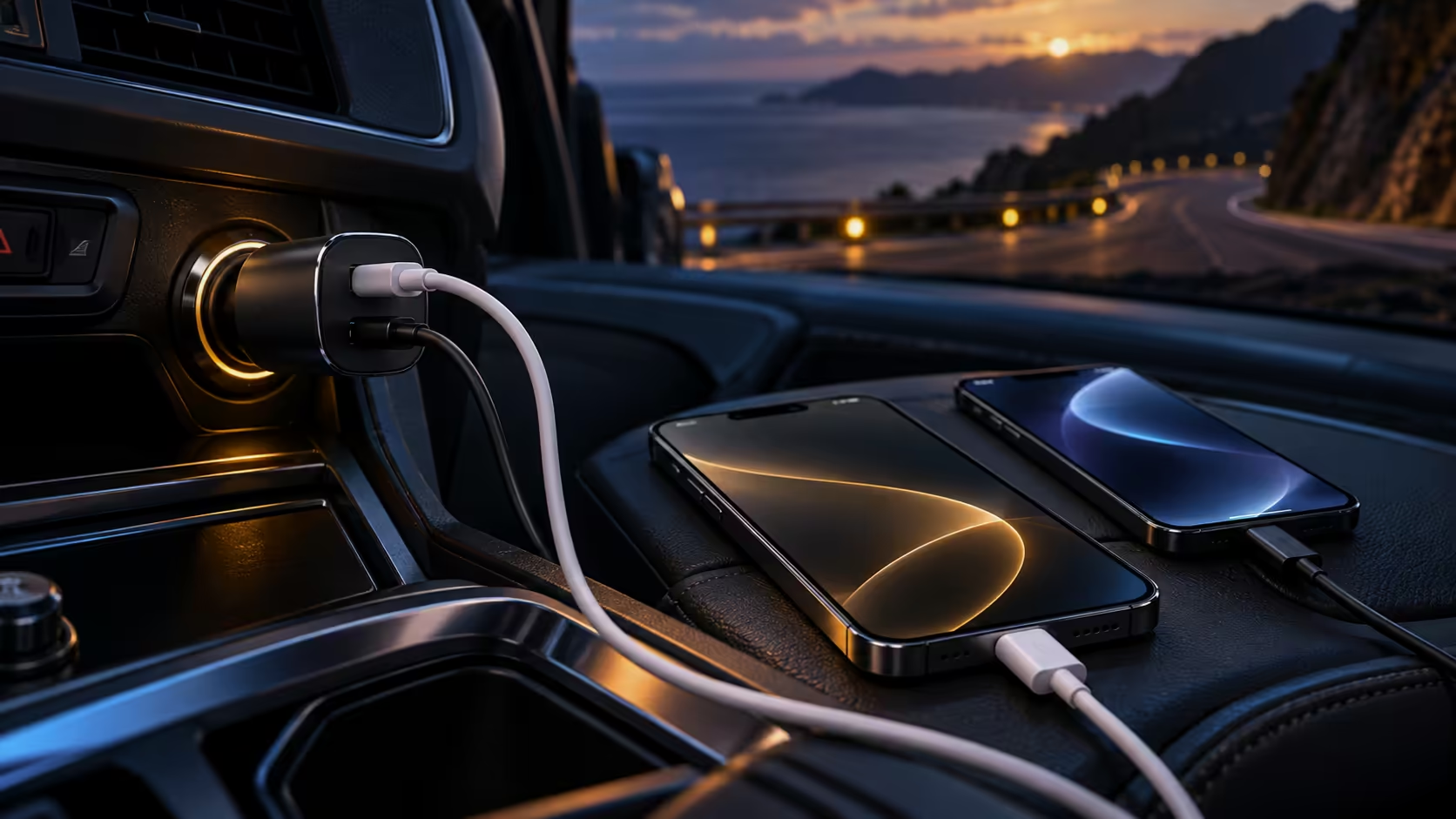
Plug an iPhone 15 into a USB-C car charger and the phone itself decides how quickly it fills, not the number printed on the charger's box. That is not a dodge; it is how USB Power Delivery has always worked. Here is what the port actually does, and what still comes down to the phone, the cable and the trip.
Quick Answer
Yes, over USB-C: Anker's 30W two-port charger runs standard USB Power Delivery on that port, which is the same protocol an iPhone 15 uses to fast-charge from any compliant source. How many minutes that turns into depends on the phone's starting charge, its own internal limits and the cable carrying the current, not on the charger alone. The unit also carries a 22.5W USB-A output for a second phone and costs R349.
⚡ What the port is actually offering
USB Power Delivery works as a negotiation. The charger announces the voltages it can supply, commonly 5V, 9V, 15V and 20V, and the phone picks whichever one lets it draw the most current within its own safe limits. A 30W USB-C output covers that whole negotiation up to its ceiling.
An iPhone with a USB-C port speaks this same protocol, because Power Delivery is the standard Apple builds against rather than something proprietary to one charger brand. Plugging it into a PD-compliant car charger starts the same handshake it would run against any wall adapter that follows the spec.
🔋 Why "minutes to full" is not a charger number
Charging speed on any Li-ion phone slows down on purpose as the battery fills. The fast part happens from a low charge up to roughly 80 percent; past that the phone deliberately tapers the current to protect the cell, regardless of how much power the source can still offer.
That means the same 30W port fills an iPhone at 10 percent much faster than it tops one up from 85 percent, and no charger changes that curve. What a capable port does is remove itself as the bottleneck during the fast phase, so the phone's own limits are what decide the rest.
🔌 The part people forget: the cable in your hand
A charger and a phone can agree on 30W and still not deliver it if the cable between them cannot carry the current cleanly. A worn or very thin USB-C cable introduces resistance that shows up as a slower, cooler charge or an outright drop back to a lower rung.
For a car specifically, a lead that lives permanently in the door pocket or under a seat takes more physical wear than one on a desk, so it is worth checking occasionally rather than assuming the first cable that came in the box still performs like new. The cable range covers replacements built for the current a 30W port actually pushes. Anyone standardising on Apple gear elsewhere in the car can also see fit accessories in the Apple accessories range.
Frequently Asked Questions
Does an iPhone 15 need a special charger to fast-charge over USB-C?
It needs a USB Power Delivery source. Any PD-compliant charger, including a standard car unit, is enough to start the fast-charging handshake.
Why does charging slow down near a full battery?
The phone tapers its own current intake once the cell approaches full, to protect the battery, regardless of how much power the charger can still supply.
Can the second USB-A port charge an iPhone too?
Yes, though older Apple cables built for that port cap the rate below what the USB-C side offers under Power Delivery.
Does cable quality really change charging speed?
Yes. A thin or damaged cable adds resistance that can force a lower negotiated rung or cause an unstable connection, independent of what the charger itself supports.
Ready to sort out your iPhone's charging setup in the car?
Check the car charger range and pair it with a cable rated for the current it carries.