


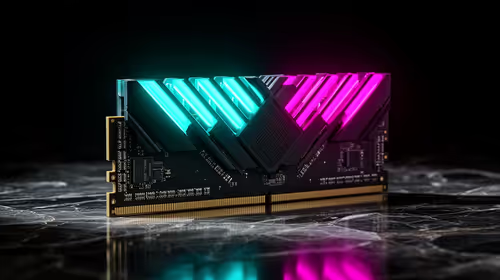
FPS Drops Troubleshooting for DDR5 build
DDR5 build FPS drops needs a methodical troubleshooting pass. Review drivers, thermals, power settings, background apps, cables and game settings before replacing parts in an SA gaming setup.
Read moreDoes latency matter for competitive gamers should be shortlisted around the job it must do. South African buyers should compare WiFi standard, coverage, latency, and device support, warranty path, and upgrade room before treating any pick as best.
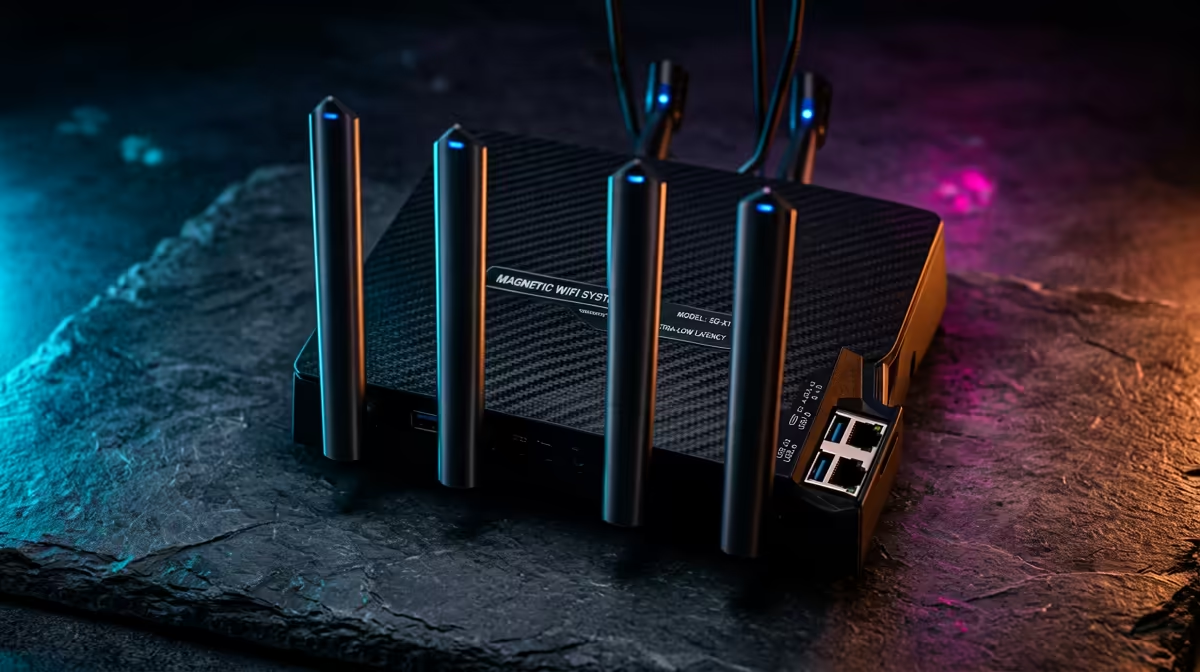
Yes, the right mesh Wi-Fi kit can be worth buying when it fixes a real limitation in SA buyers. Use two nodes, Gigabit backhaul support, WPA3, and app-based device naming as the minimum, then compare TP-Link Deco X50, ASUS ZenWiFi XD5, and Mercusys Halo H80X around R1,800-R6,500 before paying for premium extras. SA buyers should check local stock, warranty support, delivery timing, and whether the part fits the actual room or desk.
Start by matching the mesh Wi-Fi kit to the actual job, not the longest feature list. The useful baseline is two nodes, Gigabit backhaul support, WPA3, and app-based device naming. That baseline keeps the purchase practical for SA buyers and avoids paying for a feature that will not be noticed after the first week.
Price also needs context. A broad R1,800-R6,500 band is realistic for this category, but the right point in that band changes with build quality, warranty, and whether the part solves a real bottleneck. Compare named options such as TP-Link Deco X50, ASUS ZenWiFi XD5, and Mercusys Halo H80X so the decision is tied to actual hardware rather than vague labels.
The numbers that matter are Wi-Fi 6, 2x2 radios, Gigabit Ethernet, and two-node coverage around 250-450 m2. Treat those figures as a checklist: if the cheaper option already meets them, spend elsewhere. If it misses one of them in a way that affects the room, recording, study, or gaming session, the upgrade has a clear reason.
For competitive play, aim for stable 1,000 Hz input devices, a 144 Hz or faster display where relevant, and network latency that stays consistent. Predictable feel wins more value than the highest number on the box.
Before checkout, check physical fit, connector support, and the way the product will be used every week. For PC parts, that means clearance, wattage, ports, thermals, and cable routing. For accessories, it means comfort, desk space, software simplicity, and whether settings stay saved when moved between devices.
A strong buy is easy to explain in one sentence: it fixes a specific problem at a sensible price. If the reason sounds like styling, a bigger number, or a feature you cannot test, keep the shortlist tighter and put the spend toward the part that changes daily use.
Check local stock, warranty handling, and whether the mesh Wi-Fi kit fits the space or system you already have. Then compare the spec floor against your actual use: SA buyers, study, gaming, recording, or family sharing.
The cheapest option is fine only when it meets the minimum spec floor and does not create a new problem with noise, heat, comfort, or ports. If it misses a core requirement, a mid-range option in the R1,800-R6,500 band is usually the cleaner buy.
The easiest spec to overpay for is the one that sounds premium but does not change your workload. Put more weight on two nodes, Gigabit backhaul support, WPA3, and app-based device naming and less weight on cosmetic extras or numbers that your PC, room, or game cannot use.
write down the one problem the mesh Wi-Fi kit must fix, then reject any option that does not solve that problem within the R1,800-R6,500 range.
DDR5 build FPS drops needs a methodical troubleshooting pass. Review drivers, thermals, power settings, background apps, cables and game settings before replacing parts in an SA gaming setup.
Read more
Fps drops on ddr5 build in south africa usually needs a settings, driver, thermal, or power check first. Work through safe SA troubleshooting steps before replacing parts or assuming a full upgrade.
Read more
X870E motherboard frame pacing issues needs a step-by-step check before replacing parts. Review drivers, settings, thermals, power, background apps, display limits, cables, and game options before changing hardware.
Read more
4K monitors cost more as sharp panels raise the bar. See why 4k monitors still expensive for gamers in cape town before choosing screen specs, GPU targets, and value trade-offs.
Read more
4K monitors still feel expensive for Gqeberha gamers because panel quality, higher refresh rates, and GPU demands raise total setup cost. Compare 1440p, screen size, ports, and refresh rate before paying more for 4K.
Read more
ARGB cases explain mid-tier SA build appeal with visible style, airflow room, and cable control. For SA buyers, the smarter choice is a case where lighting, fan layout, and GPU clearance work together instead of just looking bright.
Read more
The Epomaker RT75 is a tri-mode 75% keyboard with a removable TFT screen. Local screen-equipped compact boards started at R1,199 in our snapshot.
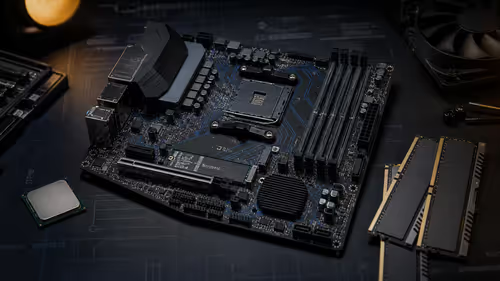
Gigabyte has launched two B450M D3HP boards for Ryzen 3000 to 5000 CPUs. The exact models had no confirmed Evetech listing on 15 August.

Attackers are exploiting a patched Mac screen-sharing flaw to gain root access. Update macOS and remove public port 5900 exposure immediately.
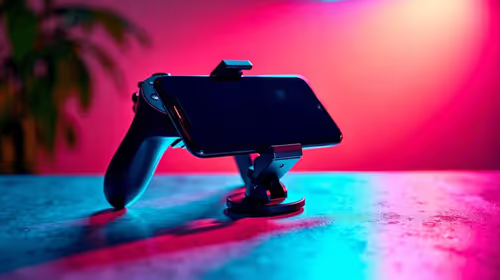
An auto-clamping phone holder offers seamless, one-handed convenience for your vehicle. Discover how it compares to manual cradle mounts to see which keeps your device secure during your daily drive. 🚗📱
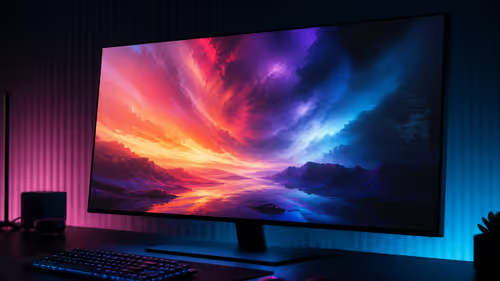
A 10,000-hour test found similar image retention across older and newer OLED TVs, while newer panels were brighter and more efficient. Local OLED monitors started at R9,999.
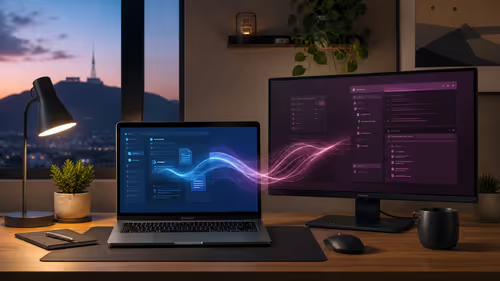
Canonical expects Ubuntu on WSL users to outnumber native Ubuntu desktop users before the end of 2026. The software is open source and runs inside supported Windows PCs.
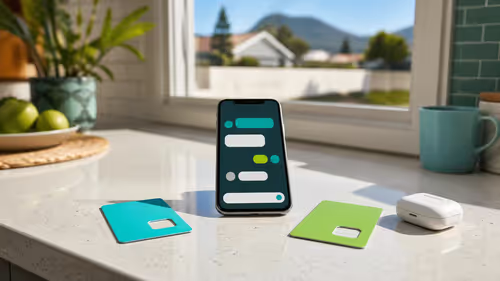
Telkom's daily bundles pair WhatsApp access with 10 all-network voice minutes. The R15 option includes 300MB, while the R17 option uses a fair-use threshold.
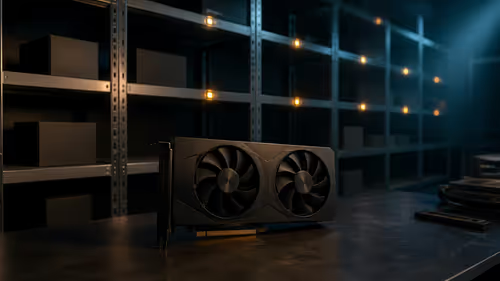
PC Partner expects entry-level graphics-card shortages to worsen in the second half of 2026. Current Evetech GPU listings started at R4,399 in our snapshot.

YouTube will count public views from the first frame across video formats from 24 August, while earnings and eligibility remain tied to engaged viewing.
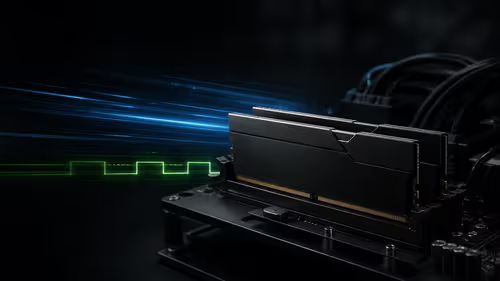
CXMT memory has been demonstrated at DDR5-9000 and DDR5-6000 CL28, but the results depend on tuned hardware and do not represent a broad retail specification.
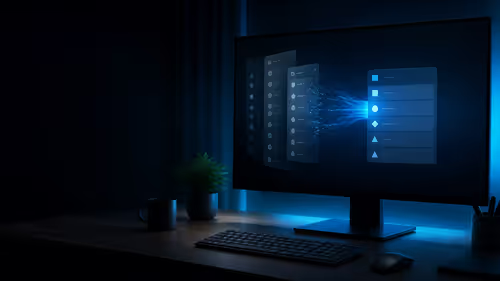
Microsoft is testing a simpler File Explorer context menu with controls for built-in commands, app extensions, icon labels and the position of Properties.
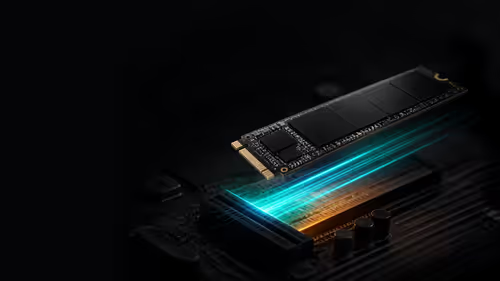
Lexar's THOR ULTRA is a DRAMless PCIe 5.0 SSD rated up to 11,000MB/s reads and 10,000MB/s writes, with capacities from 512GB to 4TB.